

West Virginia ADU Laws (2026): What's Settled, What's Still Local
Yes, inside any West Virginia city or town, by right. West Virginia's ADU law has been in force since June 4, 2026, and conflicting city rules are void from Jan. 1, 2027. It skips county land and doesn't address owner occupancy, which your city may still require. Last verified Nov 17, 2026.
- W.i.P.Statewide law, with gaps
- 1,000 sq ftMax size, or 75% of the house if less
- Not addressedOwner occupancy in state law
- NoneExtra parking a city can require
On this page
- Can You Build an ADU in West Virginia?
- What's Settled, What's Still Local
- Size and Design Limits
- Owner-Occupancy and Parking
- How Approval Works
- What Your City Still Decides
- How to Check Your City's Rules
- West Virginia in the News
- How HomeWiP Helps
- FAQ
The short answer
Can You Build an ADU in West Virginia?
Yes, inside any city or town, by right. Conflicting city rules are void from Jan. 1, 2027.
SB 659, now W. Va. Code §§ 8-42-1 to 8-42-3, was signed March 14, 2026 and took effect June 4, 2026. A municipality "shall not adopt a policy, regulation, or ordinance that restricts, prohibits, or otherwise regulates the use of at least one accessory dwelling unit by right" on a lot with a single-family home. By right means no public hearing, variance or special permit, only a code check.
The gaps: it doesn't reach unincorporated county land or mention owner occupancy. Until Jan. 1, 2027, your city's current rules may still apply.
The top-ranking guides we checked still say West Virginia has no statewide ADU law. That changed on June 4, 2026.
At a glance
West Virginia's ADU Law: What's Settled, What's Still Local
Last verified Nov 17, 2026 against W. Va. Code § 8-42. The law covers cities and towns, and conflicting local rules are void from Jan. 1, 2027.
W.i.P.: W. Va. Code § 8-42 (SB 659)
A state law with gaps: cities and towns only, and silent on owner occupancy.
Settled: by right, no hearing
No public hearing, variance or special permit. Staff check only that the plans meet code.
Not settled: owner-occupancy
Not in the law, so your city may still require it. It can't require a family, marital or job tie between occupants.
Settled: no extra parking
Your city can't require extra parking for an ADU or a fee in lieu of parking.
Settled: attached, detached, internal
All three count, plus a manufactured home on a permanent foundation wherever ADUs are allowed.
Settled: 1,000 sq ft and $250 caps
Attached or detached: 75% of the house or 1,000 sq ft, whichever is less. Impact fees and the application fee are capped at $250 each.
Size and design
What Are West Virginia's ADU Size and Design Limits?
Set by state law for cities and towns. Your city can be more generous.
Attached or detached
- Or 75% of the house's habitable area, if less
- The 1,000 sq ft cap applies from a house of about 1,334 sq ft
Internal ADU
- The state size cap doesn't apply
- Every ADU must be smaller than the house
Height and setbacks
- Height, setback, lot-size, coverage and frontage rules no stricter than for the house
- Design matching only in historic districts
ADUs per lot
- One by right on a lot with a single-family home
- No separate water and sewer service required
Occupancy and parking
Does West Virginia Require Owner-Occupancy or Parking for an ADU?
Parking is settled: no extra spaces or in-lieu fee. Owner occupancy isn't.

What the law says
It says nothing about owner occupancy. An earlier SB 659 draft banned owner-occupancy rules, but that line was cut before the Senate vote.
What cities do
Some have required it: Charleston's guidance says the owner must live in the main house. Ask your city and get its answer in writing.
Approval
Is ADU Approval By-Right in West Virginia, or Does It Require a Public Hearing?
By right inside cities and towns: no public hearing, variance or special permit, only a check that your plans meet code.
Your city checks only that the site and construction plans meet its building, fire, zoning and other rules.
No review deadline in the statute; your city's queue sets the pace.
Up to $250 per ADU to apply, plus usual building fees. Impact fees up to $250. No street or sidewalk upgrades unless construction damaged them.
Conflicting local rules are invalid from Jan. 1, 2027. Until then, ask your city which rules it applies.
Attached and detached ADUs top out at 1,000 sq ft, or 75% of your house if that's less.
Start with our 1,000 sq ft house plans or 900 sq ft floor plans, then check the plan against your city's rules before you apply.
Local control
What Does West Virginia Law Still Leave Up to Your City or County?
Even inside city limits, these stay local. Outside them, county rules decide.
Not covered: county land
Outside city and town limits, your county's rules decide.
Short-term rentals
Your city can still regulate stays of 30 days or less. Ask before planning nightly rentals.
Water and sewer sign-off
Your city can ask for water and sewer will-serve letters, or Department of Health approval where service isn't available.
Historic districts
A preservation ordinance can require matching design, roof pitch and materials.
Private covenants and HOAs
Private deed covenants still apply. Your city just can't require one or tie your permit to one.
Building and fire codes
The law doesn't override building, fire or other code rules.
Checklist
How to Check Your City's ADU Rules in West Virginia
Confirm you're inside city or town limits
On unincorporated county land, the state law doesn't apply.
Find your current ADU rules
Ask if your city has updated its code, as Parkersburg began to in October 2026. Current rules may apply until Jan. 1, 2027.
Ask about owner occupancy
Get your city's answer in writing.
Check historic district status
Design-matching rules can still apply there.
Read your deed and HOA rules
The state law doesn't override private covenants.
Line up water and sewer early
Get will-serve letters, or Department of Health approval if service isn't available.
West Virginia in the News
"Planning commission: City should push back on ADU law"
Nov 17, 2026 · The Dominion Post
In a majority advisory opinion, Morgantown's Planning Commission said the city should push back on the state ADU law. Commissioners cited water and sewer service rules and the comprehensive plan.
"Parkersburg City Council approves pavilion rates, reporting requirement"
Oct 15, 2026 · Parkersburg News and Sentinel
Council voted 8-1 on first reading to allow at least one ADU on single-family lots, reflecting the new state law. Final readings were set for Oct. 27.
Read at Parkersburg News and Sentinel →
"Senate Concurs and Completes 5 Bills"
Mar 6, 2026 · WV Legislature Blog
SB 659 completed legislative action that day. It bars cities from blocking at least one ADU by right.
How HomeWiP helps
How HomeWiP Helps West Virginia Homeowners
7+ years designing ADUs, 700+ pre-designed plans, 20+ California cities. Start from a pre-designed plan, then confirm the details with your city.
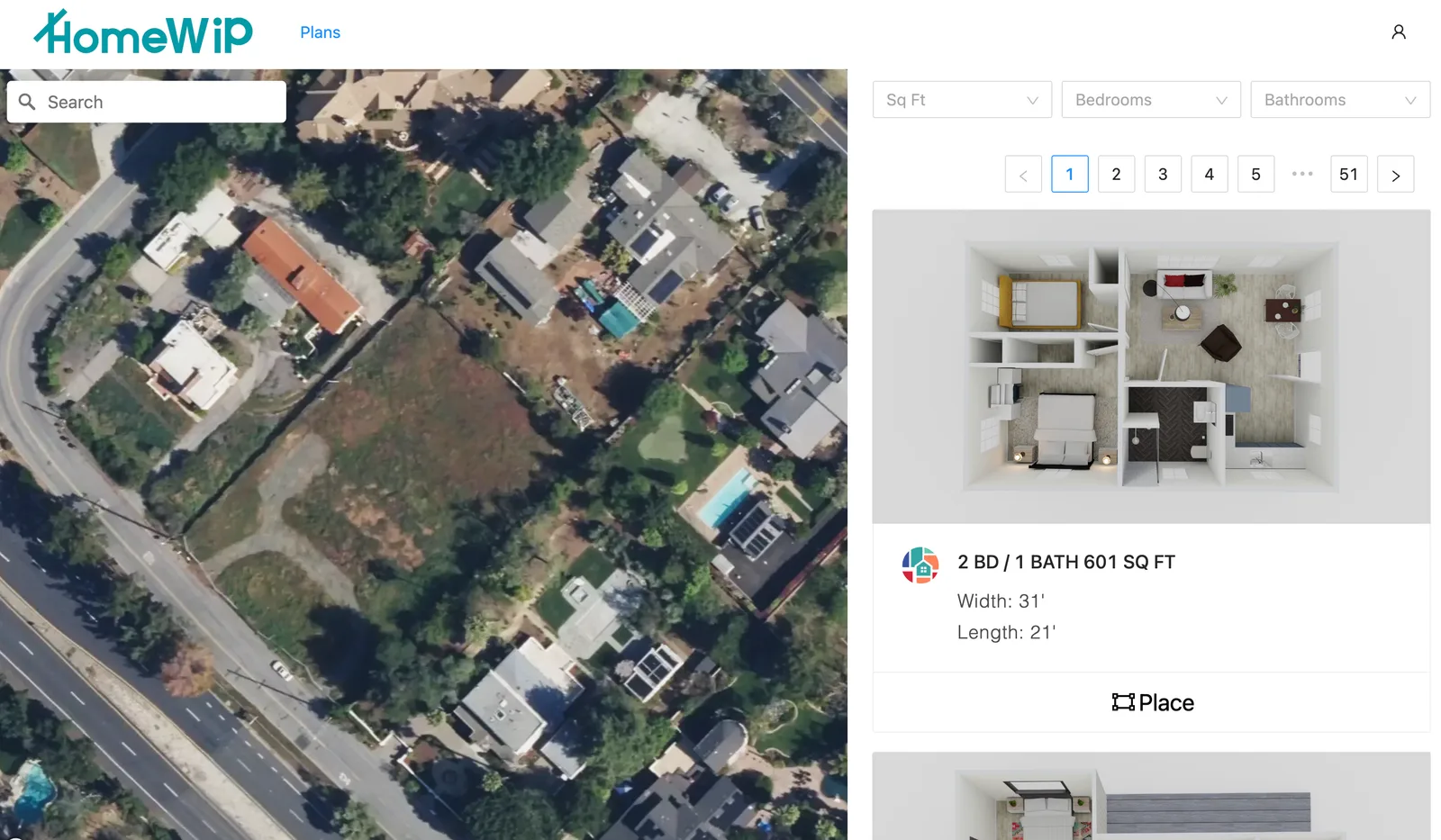
- View pre-designed plans in your backyard
Pre-designed ADU plans
Browse 700+ plans and see one placed in your own backyard.
- Contact HomeWiP
Questions about our plans
Have questions about our plans? Send them to us.
FAQ
West Virginia ADU Laws: Frequently Asked Questions
Yes, for cities and towns. SB 659 took effect June 4, 2026: cities must allow at least one ADU by right on a lot with a single-family home. County land isn't covered, and conflicting city rules are void from Jan. 1, 2027.
The state law doesn't say, so your city may still require it. An earlier draft banned owner-occupancy rules, but that line was cut before the Senate vote. Charleston has required the owner to live in the main house. Ask your city in writing.
No. West Virginia's ADU law binds municipalities only. On unincorporated county land, county rules decide whether you can build an ADU, and the state's by-right approval, size cap and fee limits don't apply. Check with the county before you pay for plans.
A HUD-code manufactured home on a permanent foundation can be an ADU by right wherever your city allows ADUs. It's taxed as real property and can't face stricter design or age rules than a site-built ADU of similar size. The law doesn't address tiny homes on wheels.
Attached or detached: 75% of the house's habitable area or 1,000 sq ft, whichever is less, so 1,000 sq ft needs a house of about 1,334 sq ft. Internal ADUs have no state cap, but every ADU must be smaller than the house.
Any city rule in effect on or after that date that conflicts with the state law is invalid to that extent. Until then, current rules may still apply. The law doesn't list which existing rules conflict, so ask your city.
It can. The state law doesn't override private covenants, so if your deed or HOA rules bar a second unit, they still apply. Your city just can't require a covenant or tie your permit to one. Read both before you pay for plans.
Start Your West Virginia ADU From a Pre-Designed Plan
Next step
Browse pre-designed plans and see one placed in your own backyard, then check it against your city's rules before you apply.
Keep exploring
- See ADU laws in every state
- Browse pre-designed ADU plans
- Estimate your ADU budget and return
- ADU plans and designs explained
- See an ADU in your yard with the AR viewer
- Converting a garage into an ADU
- How to finance an ADU
- What to know about modular ADUs
- Virginia ADU laws
- Maryland ADU laws
- ADU cost breakdown (California example)
Sources
- W. Va. Code §§ 8-42-1 to 8-42-3
- Enrolled SB 659 (2026)
- SB 659 bill history
- SB 659 as introduced
- Mercatus Center, A Taxonomy of State ADU Laws (tier criteria only)
- Last verified: November 17, 2026.