
Homes With Mother-In-Law Suites: Buy One or Build One?
A mother-in-law suite is a separate living space with its own entrance, bath, and kitchen. What drives cost, and buy-vs-build math.
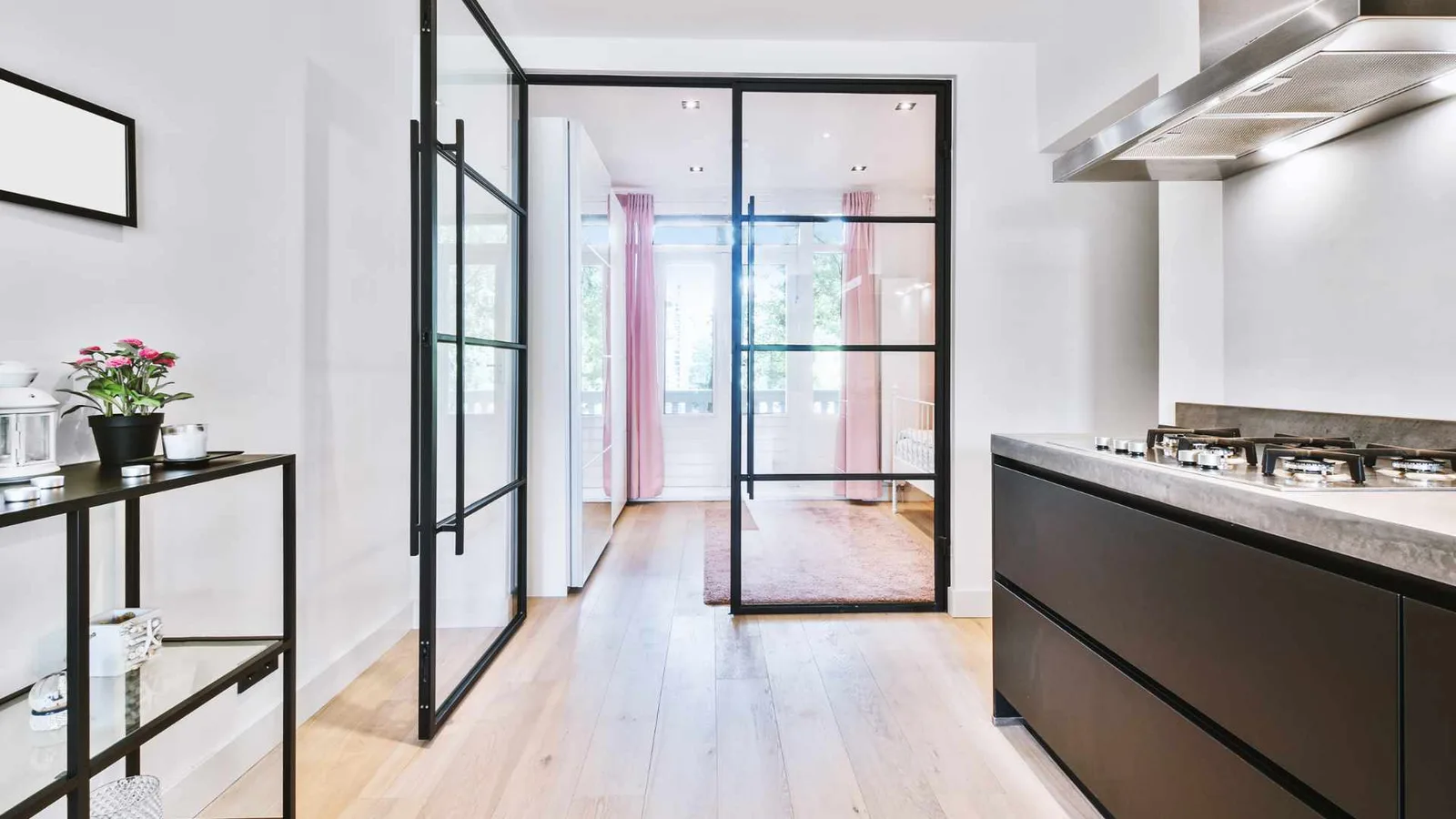
Homes with mother-in-law suites have a self-contained living space inside, attached to, or behind the main house: private entrance, bathroom, sleeping area, and at minimum an efficiency kitchen. You can buy one, or add one to the house you already own. In California, adding one is more predictable than most homeowners expect.
What counts as a mother-in-law suite?
Four things: a separate entrance, a bathroom, somewhere to sleep, somewhere to cook. Take away the cooking facility and you have a guest room.
The informal names multiply: in-law apartment, granny flat, guest house, guest suite, secondary suite, casita. None appear on a permit application. The terms that decide what you may permit are accessory dwelling unit (ADU) and junior accessory dwelling unit (JADU), because those are what California law defines. A JADU is capped at 500 square feet, sits within the walls of an existing single-family residence, and needs an efficiency kitchen and its own exterior entrance. Larger or detached, and you are building an ADU.
What makes it legal versus just a spare bedroom
The kitchen is usually the line. California defines an efficiency kitchen as a cooking facility with appliances, a food-preparation counter, and storage cabinets of reasonable size. Add that to a bedroom with its own bath and door, and a private room becomes a dwelling unit. That is what makes it rentable, and what puts it in front of a plan checker.
Should you buy a home that has one, or add one to the home you own?
There is no universal answer, but four questions settle it for most households.
Do you already own a house you want to keep? If so, moving to add a suite means transaction costs on two properties, plus giving up a mortgage rate and a neighborhood for a layout someone else chose.
Does your lot have room? Most suburban lots do. Your city cannot adopt standards that preclude an ADU of at least 800 square feet with four-foot side and rear setbacks, so the question is rarely whether anything fits. It is what fits alongside the driveway, the protected trees, and the sewer lateral.
How fast do you need the space? A purchase closes in weeks. A build runs months, plus design and permitting ahead of it. If a parent is being discharged from a hospital in March, that difference may outweigh the rest.
Is the suite on that listing actually permitted? This is the one buyers miss. Many existing in-law apartments are unpermitted garage or basement conversions, and buying one means inheriting the code issues, the insurance exposure, and the legalization work if you ever rent it out. Ask for the permit record. Ask for a big discount if the (buyers') market allows.
Own the house, lot has room
Need the space within months: Bridge the gap with a rental and start the build now
Need it a year or more out: Add. Usually the better trade
Own the house, tight lot
Need the space within months: Interior conversion or JADU, if the floor plan allows one
Need it a year or more out: Weigh a conversion against building an attached mother-in-law suite in the backyard before you assume you'd have to sell
Moving anyway
Need the space within months: Buy a home with a permitted suite
Need it a year or more out: Buy for the lot, then build within the rules
The five ways to add one, and what drives the cost
Every mother-in-law suite is one of five projects, and your existing house usually picks which one.
Interior conversion or JADU
Carving a unit out of the existing floor plan. Cheapest route, because there is no foundation and no new roof. JADU is capped at 500 square feet, within the existing walls. The size of interior conversion is flexible, most investors tend to convert a primary bedroom into a separate unit.
Garage conversion
The most common candidate, because the slab, walls, and roof exist already. Converting in place requires no setback, and a JADU converted from an attached garage cannot be required to replace the parking. See converting a garage into an ADU.
Basement or bonus-room conversion
The constraint is rarely square footage. It is egress, ceiling height, and light: a bedroom needs a way out and a window, and a basement often needs excavation at the window wells.
Attached addition
New square footage sharing a wall with the main house or attached via a breezeway. Under the state baseline it may not exceed 50% of the primary dwelling, and your city must allow 25 feet of height, or the zone's limit if lower. See attached versus detached ADU.
Detached ADU
A separate building in the yard, up to 1,200 square feet under the baseline standards, with a height floor of 16 feet, or 18 within a half-mile of a major transit stop plus two more for a roof pitch.
What moves the budget and square footage number is not the label on the project. It is site work and foundation, how far the new plumbing sits from the sewer stack, whether the panel has capacity, how much structure you keep, and the level of finish. A garage conversion 40 feet from the stack and one 8 feet from it are different projects. Get a real scope before you get attached to a number, then read how to finance an ADU.
What California law lets you build, and what your city can't stop
State law is written as a set of floors your city may exceed but may not go below.
Size, setbacks, and height
No local agency may adopt standards that preclude an ADU of at least 800 square feet with four-foot side and rear setbacks, and converting a structure in place needs no setback. Height floors: 16 feet detached, 25 attached or the zone's limit if lower. A local ordinance's size cap may not go below 850 square feet, or 1,000 with more than one bedroom.
How fast approval has to happen
Ministerially: no hearing, no discretionary review. Your city has 15 business days to say whether the application is complete, then 60 days to approve or deny, and it is deemed approved if the city misses. Cities also had to post preapproved plans publicly. See what ADU permits cost.
Fees you don't have to pay
An ADU under 750 square feet is exempt from local impact fees; at 750 and above, fees are proportional to the ADU's share of the primary dwelling, which by HCD's example puts a 1,000-square-foot ADU behind a 2,000-square-foot house at 50% of a new home's fee. Units under 500 square feet are exempt from school impact fees, and an ADU is not a new residential use for water and sewer connection charges, unless built concurrently with a new single-family home. One trap: a 150-square-foot expansion for egress counts toward the 750 threshold.
JADUs, and what changed on January 1, 2026
A JADU cannot be required to provide parking. Owner-occupancy used to apply to every JADU; since January 1, 2026, under AB 1154, it applies only where the JADU shares sanitation facilities with the main house. Details in junior ADU rules in California.
Three rules that surprise people
Your city cannot make you live on the property to have a full ADU. Your HOA cannot impose restrictions that effectively extinguish your ability to build or use one. And building an ADU cannot trigger a sprinkler retrofit of your existing house.
Does a mother-in-law suite add value?
Probably, but nobody has measured it cleanly, and the repeated "up to 35%" figure is unsourced.
The appraisal record: in California, properties with an ADU had a median appraised value of $1,064,000 in 2023 against $715,000 without, and grew 9.34% a year over the decade versus 7.65%. Read it carefully: it compares properties, not the same house before and after, and ADUs cluster in higher-value markets, so part of the gap is the market.
Multigenerational households bought 17% of all homes purchased, an all-time high, with cost savings the leading reason at 36%. Freddie Mac identified about 1.4 million single-family properties with an ADU by text-mining MLS listings through 2019, a floor, not a census of the housing stock. California, Florida, Texas and Georgia held about half, but that raw count tracks population, and Portland, Dallas and Seattle grew fastest.
The comparison that decides it for many families is care, not resale: California's median assisted-living cost is $84,000 a year. On renting, your city cannot require you to live on site, though it may require terms of 30 days or longer. Selling the unit separately needs a local condominium ordinance.
Designing it so it still works in twenty years
Build for the second occupant as well as the first. What works for an 80-year-old is invisible if you install it early and expensive if you retrofit it late.
Single-level entry, no threshold at the shower, doorways wide enough for a walker or wheelchair. Put blocking in the bathroom walls now so grab bars go in later without opening drywall or damaging tile. Keep the light natural and the turning room generous, and it reads as an apartment, not a hospital room.
Privacy is the other half, and it is a design problem. Where the separate entrance faces decides whether your mother sees every visitor you have, and a shared wall between a bedroom and the main living room needs real sound separation.
Then plan the second life. When a parent no longer needs the suite, a flexible layout becomes an adult child's apartment, a home office, or a rental. Design the plumbing and entrance for it now.
Frequently asked questions
"Mother-in-law suite" and "guest house" are informal descriptions, not legal categories. ADU and JADU are the California terms that decide what you can build. A JADU is up to 500 square feet inside the existing walls of a single-family home, with an efficiency kitchen and its own entrance. An ADU is larger.
To be a dwelling unit, yes. A JADU must have an efficiency kitchen: a cooking appliance, a food-prep counter, and reasonable storage. Without one it is a bedroom with a bath.
Not on discretion. Review is ministerial, with no hearing, and your city has 60 days from a complete application to approve or deny, with deemed approval if it misses. It also cannot adopt standards that preclude an 800-square-foot ADU. What that does not cover: the objective standards your city sets above the state floors, and building-code plan check, a separate review your drawings must still clear.
Long-term, generally yes. No local agency may impose an owner-occupancy requirement on an ADU, and an HOA cannot block a rental, though it can ban stays of 30 days or less. Your city may require terms of 30 days or longer, and for conversion ADUs that floor is state law. Treat short-term rental as unavailable unless you confirm it locally. JADU owner-occupancy still applies where it shares sanitation.
On the new construction, yes. An ADU is assessable new construction, and the assessor gives it its own separate base year value while your existing home's base year value stays untouched. That new value is the market value the ADU adds, not what you spent building it, and it arrives as a supplemental bill after completion. The rate is 1% plus voter-approved debt service; your county assessor sets the valuation.
Statutory clock: 15 business days for a completeness check, then 60 days to approve or deny. Design, plan check, and construction sit outside it.
What to do next
Measure your lot against the 800-square-foot, four-foot-setback floor your city has to allow. Check whether it posts preapproved ADU plans. Then price the conversion route against a detached build before you assume the answer is to move. HomeWiP designs and builds ADUs and in-law suites in California, and that feasibility question for your lot is where we start.