

Vermont ADU Laws (2026): What's Settled, What's Still Local
Under Vermont ADU laws, every town must allow one ADU as a permitted use (§ 4412(1)(E)), and since July 1, 2026 towns can't require an owner-occupied lot. Size is capped at 900 sq ft or 30% of the home, whichever is greater. Parking outside sewer areas is still up to your town. Last verified Nov 12, 2026.
- W.i.P.Statewide law, with gaps
- 900 sq ft+Max size, or 30% of home
- Not requiredOwner-occupancy, since Jul 2026
- 1 maxParking in sewer + water areas
On this page
- Can you build one?
- Settled vs. local
- Size limits
- Owner-occupancy and parking
- Approval and timeline
- Cost
- Grants
- What your town decides
- Check your town's rules
- In the news
- How HomeWiP helps
- FAQ

Is it legal?
Can You Build an ADU in Vermont?
Yes. Vermont's first statewide ADU law dates to 2005. Under 24 V.S.A. § 4412(1)(E), every town must allow one ADU by right inside, attached to, or on the same lot as a single-family home. The ADU gets the same review as the house would get without it.
The latest change took effect July 1, 2026, when Act 179 struck the words "on an owner-occupied lot" from the statute. The state planning office confirmed it to towns that month. Older guides that require an owner-occupied lot are out of date.
A few things are still local, mainly parking outside sewer areas and flood hazard or river-erosion bylaws.
Settled vs. local
Vermont's ADU Law: What's Settled, What's Still Local
Parking outside sewer areas is the main gap state law leaves open to local interpretation.
W.i.P.: statewide law with gaps
Covers every town. Mercatus rated the reforms weak in 2025, before the owner-occupancy change.
Settled: allowed by right
One ADU is a permitted use in every town.
Settled: no owner-occupancy rule
Towns can't require it for zoning since July 1, 2026.
Partly local: parking
Capped at 1 space per unit, but only in sewer + water districts.
Settled: attached, interior, detached
Barn and garage conversions can't face stricter rules than a house.
Settled: max size
30% of the home or 900 sq ft, whichever is greater.
Size and design
What Are Vermont's ADU Size and Design Limits?
Max size
- Whichever is greater
- A 3,500 sq ft home allows 1,050 sq ft
Interior or attached
- Needs its own sleeping, cooking and sanitation
- May be exempt from the state wastewater permit on the existing service; a licensed designer certifies it
Height and setbacks
- Check your zoning district for the numbers
ADUs protected
- Towns can be less restrictive and allow more
Occupancy and parking
Does Vermont Require Owner-Occupancy or Off-Street Parking for an ADU?
Vermont ADU regulations no longer require owner-occupancy, and they cap parking only where town sewer and water serve the district.

Owner-occupancy: not for zoning
Your town can't require you to live on the property. VHIP money still requires it, and renting the ADU brings in state fire-safety rules.
Parking: 1 space max in sewer + water districts
Not sure your district has both? Ask the zoning office. Elsewhere, your town sets the number.
Approval
Is ADU Approval By-Right in Vermont, or Does It Require a Public Hearing?
By right. A Vermont ADU is a permitted use, reviewed like a house.
One ADU per single-family home. Flood hazard and river-erosion bylaws are the exception.
No action on a complete application in 30 days means the zoning permit is approved automatically. That's the town permit only. State permits are separate.
Get your town's fee schedule. State permits add fees, such as Fire Safety permits from $50 (2021). If you rent the ADU, state fire-safety law treats the property as a public building.
Cost
How Much Does It Cost to Build an ADU in Vermont?
Vermont public figures from 2021 and 2024. Treat them as a rough range and get local bids.
Interior conversion
DHCD checklist, 2021, citing VSHA.
Backyard cottage or addition
DHCD checklist, 2021, citing VSHA.
Contractor-managed work
Central Vermont RPC, 2024. Smaller spaces cost more per sq ft, and a permit to expand water capacity was about $1,000.
Start With a Plan Sized for Vermont's 900 Sq Ft Allowance
On a single-family lot with enough wastewater capacity, a Vermont ADU can be up to 900 sq ft, or 30% of the home if that's larger. Start with a 900 sq ft floor plan, then check it on your lot with the site visit tool.
Grants
Are There ADU Grants or Financing Programs in Vermont?
Yes. The main state program is VHIP 2.0, and it still requires an owner-occupied property, even though zoning no longer does.
Vermont ACCD
VHIP 2.0 (Vermont Housing Improvement Program)
- Forgivable loan over a 5- or 10-year term
- 20% owner match; in-kind work can count
- Rent at or below HUD Fair Market Rent for the term
- The 5-year option means leasing through homeless service organizations
- Apply through a regional Homeownership Center
- $4 million in base funding; program-wide average award about $40,000 per unit
Local rules
What Does Vermont Law Still Leave Up to Your Town?
These six things still depend on where you build.
Parking outside sewer areas
No state cap applies there, so your town's number stands.
Permit fees
Ask your zoning office. State permits add their own fees.
Flood and river-erosion zones
The one exception to the state ADU protection.
Wastewater capacity
The lot needs enough capacity. A detached ADU needs a state permit; an internal one may be exempt if a licensed designer certifies the existing system has capacity.
Short-term rentals
Towns can regulate short-term rentals like Airbnb separately from other rentals.
HOA and deed covenants
Private covenants can block an ADU even where zoning allows one.
Check your town
How to Check Your Town's ADU Rules in Vermont
Confirm sewer and water service
Not on municipal sewer and water? Ask how many parking spaces an ADU needs.
Find your zoning district
Look it up on the town zoning map and note its dimensional rules.
Search the bylaw under every name
Search for "accessory dwelling unit," "accessory apartment" and "in-law apartment."
Check overlays and covenants
Look for flood or river-erosion overlays, then have your deed and any HOA covenants reviewed.
Ask about a state wastewater permit
A detached ADU needs one, prepared by a licensed designer.
Book a pre-application meeting
Bring your plan and a site sketch. A complete application starts the 30-day zoning clock; state wastewater and Fire Safety permits are separate.
The State of Vermont in the News
Burlington runs ADU workshops on its Neighborhood Code
Oct 16, 2026 · Vermont Business Magazine
Burlington scheduled "Roadmap to Your Accessory Dwelling Unit Project" workshops for Nov 11–12, covering recent changes to its Neighborhood Code.
Read at Vermont Business Magazine →
VHIP gets $4 million in base funding
Aug 26, 2026 · Vermont Public (with VTDigger)
The Vermont Housing Improvement Program has awarded nearly $49 million across 1,229 units, a program-wide average of $40,000 per unit, with a 20% owner match. ADUs are eligible.
How HomeWiP helps
How Does HomeWiP Help With ADUs in Vermont?
We don't handle permits in Vermont. Our tools come from 7+ years focused on ADUs, 700+ plans and end-to-end projects in 20+ California cities and counties. Houses are built in similar ways and need similar utility connections across states. Have a Vermont-licensed designer or engineer adapt any plan to local code.
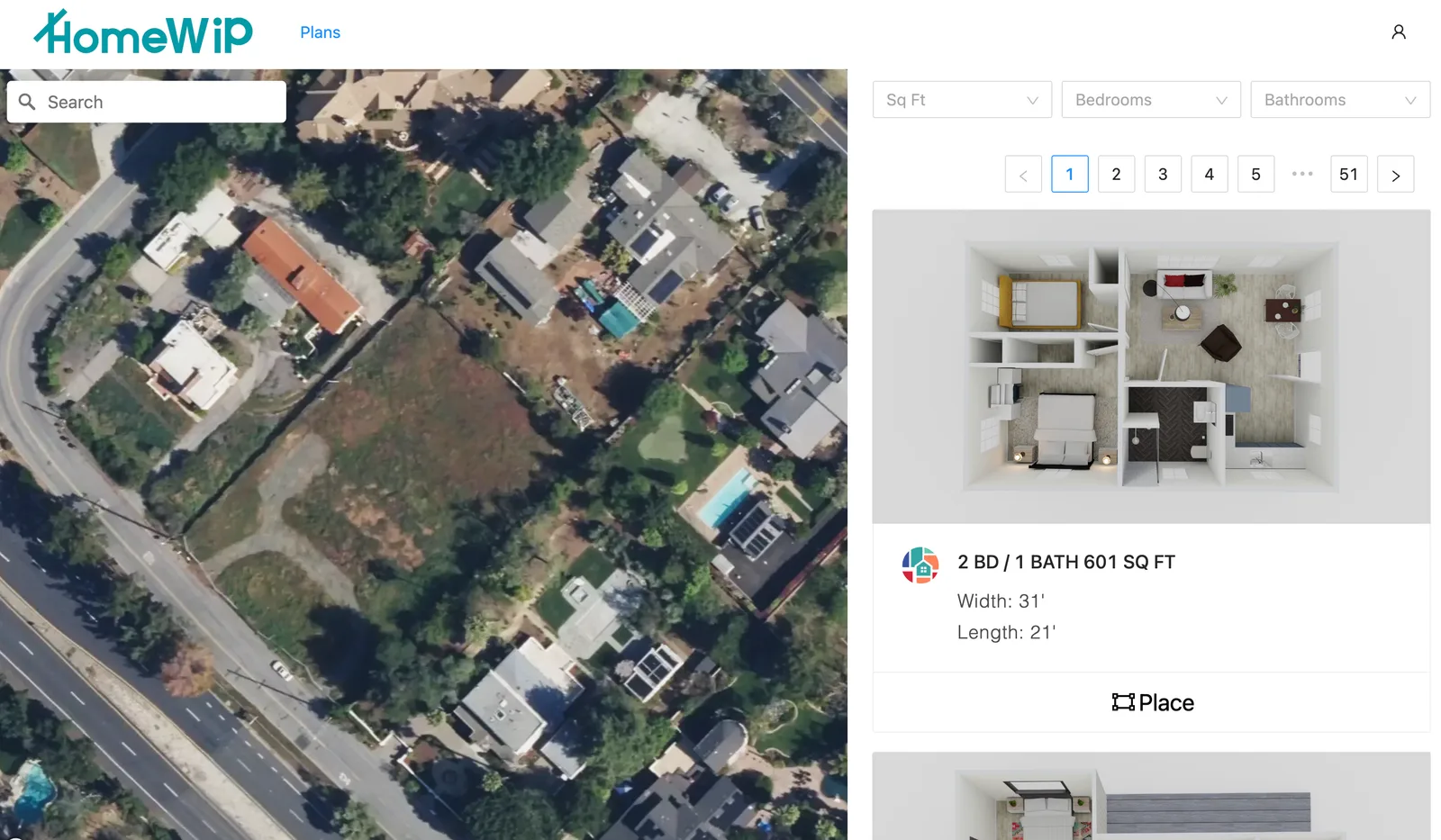
- Try the site visit tool
Plan it and test it for free
Pick a plan and place it on your lot with the site visit tool. The map, calculator and AR viewer test size and placement; get local bids for Vermont costs.
- Contact HomeWiP
Take it to your town
Bring your plan to the zoning administrator and run the six checks above. Questions about a plan or our tools? Ask us.
FAQ
Vermont ADU Laws: Frequently Asked Questions
Yes. State law says every Vermont town must allow one ADU by right inside, attached to, or on the same lot as a single-family home. The only exception is flood hazard and river-erosion bylaws. A town may be less restrictive than the state.
Not for zoning. Since July 1, 2026, Vermont towns can't require an owner-occupied lot for an ADU. Occupancy still matters in two places: VHIP loans require an owner-occupied property, and renting the ADU, overnight or longer, makes the property a public building under state fire-safety law.
It may. The state's 2021 checklist warns that covenants and deed restrictions can block an ADU. Legislative Counsel was ordered to report by Nov 15, 2026 on requiring common interest communities to permit ADUs on land reserved for a unit owner's exclusive use. Have your covenants reviewed before you design.
Your town's zoning administrator has 30 days to decide on a complete application or refer it to the town's zoning board. Otherwise, the zoning permit is approved automatically on day 31. That's the town permit only: a detached ADU also needs a state wastewater permit, and Fire Safety permits are separate. The state's 2021 checklist says Fire Safety reviewed 90% of applications within 30 days.
Mostly parking outside sewer and water districts, plus flood and river-erosion rules. Wastewater capacity and private covenants depend on your lot and deed. Your town may also set separate rules for Airbnb-style short-term rentals, and any rental brings in state fire-safety rules.
"Accessory apartment" is the common Vermont term. You'll also see "mother-in-law apartment" and "granny flat," while state law says "accessory dwelling unit." Search your town's bylaw for all of them, plus "in-law apartment," because the rule you need may sit under a heading you don't expect.
Yes, if it's detached. Vermont's definition requires enough wastewater capacity, and the state checklist says a detached ADU needs a state water and wastewater permit. An internal or attached ADU on the existing service may be exempt if the pipes are big enough. A licensed designer has to certify it.
Plan Your Vermont ADU With a Free Pre-Designed Plan
Vermont's size cap is 900 sq ft, or 30% of the home if that's larger. Pick a plan in that range and see it on your lot. A pre-designed floor plan is not a set of construction drawings.
Sources
- 24 V.S.A. § 4412
- 24 V.S.A. § 4303 (definitions)
- 24 V.S.A. § 4414 (parking)
- 24 V.S.A. § 4448 (30-day rule)
- Act 179 of 2026, as enacted
- DHCD 2026 legislative summary
- DHCD ADU checklist (2021)
- ACCD: VHIP
- Mercatus 2025 ADU taxonomy, for tier criteria only
Last verified Nov 12, 2026. We review this page twice a year.