

New Hampshire ADU Laws (2026): What's Settled, What's Still Local
Yes. New Hampshire ADU laws let you build one attached or detached ADU by right wherever a single-family home is allowed. RSA 674:72 has required towns to allow ADUs since 2017; a 2025 amendment made one attached or detached ADU a by-right use. Your town can still require owner-occupancy. Last verified Nov 11, 2026.
- W.i.P.Statewide law, with gaps
- 950 sq ftDefault max; towns can't go below 750
- Set by your townOwner-occupancy rule
- 1 maxExtra parking spaces
On this page
- Can You Build an ADU in New Hampshire?
- The Rules New Hampshire Settles, and the One It Doesn't
- What Are New Hampshire's ADU Size and Design Limits?
- Does New Hampshire Require Owner-Occupancy or Parking for an ADU?
- Is ADU Approval By-Right in New Hampshire?
- How Much Does an ADU Cost in New Hampshire?
- What Does New Hampshire Law Leave Up to Your Town?
- How to Check Your New Hampshire Town's ADU Rules
- The State of New Hampshire in the News
- How Does HomeWiP Help With ADUs in New Hampshire?
- New Hampshire ADU Laws: Common Questions
The short answer
Can You Build an ADU in New Hampshire?
Yes. Since June 1, 2017, New Hampshire ADU laws have required every town with zoning to allow ADUs wherever single-family homes are allowed. Since July 1, 2025, that means one ADU, attached or detached, "as a matter of right". If your ordinance says nothing about ADUs, you need only building permits.
The accessory dwelling unit laws in New Hampshire leave one gap: towns may still require owner-occupancy. That's why we list New Hampshire as W.i.P.
Older guides that call detached ADUs optional or say you need a special exception are out of date.
Read the statute: RSA 674:72
The 5 rules
The Rules New Hampshire Settles, and the One It Doesn't
New Hampshire legalized ADUs in 2017 and expanded the law in 2025. Four of these five rules are settled statewide.
W.i.P.: RSA 674:72
Covers every town with zoning, with one local gap.
Settled: by right
One ADU as a matter of right. Towns can no longer require a special exception or conditional use permit.
Left to your town: owner-occupancy
Your town may require the owner to live in one of the two units.
Settled: 1 extra space max
Only if your town already requires parking for the house.
Settled: attached and detached
Towns must allow either type, including a backyard cottage.
Settled: at least 750 sq ft
950 sq ft unless your town sets a cap, never below 750. Impact fees are local.
Size and design
What Are New Hampshire's ADU Size and Design Limits?
New Hampshire ADU size limits: 950 sq ft by default, and no town cap below 750 sq ft.
Detached ADU
- Default cap if your town sets none
- Your town can lower it to 750 sq ft or raise it
Attached ADU
- Same 950 / 750 sq ft rule
- You choose the entrance, not the town
Setbacks and lot coverage
- No extra setback, frontage or lot-size rules
- Structures built on or before Jul 1, 2025, garages included, can be converted even if nonconforming
ADUs per lot
- Your town may allow more
- Condo sale of the ADU only if your town allows it
Occupancy and parking
Does New Hampshire Require Owner-Occupancy or Parking for an ADU?
New Hampshire ADU regulations settle parking statewide and leave owner-occupancy to your town.

Owner-occupancy: left to your town
If your town requires it, you can live in either unit, and it can't require the tenant to be family.
Parking: 1 space max
Only where your town already requires parking for the house. On your lot or a dedicated off-site spot, your choice.
Approval
Is ADU Approval By-Right in New Hampshire?
Yes. One ADU per lot is allowed as a matter of right, without a special exception or conditional use permit.
If your ordinance is silent on ADUs, you need only building permits. Before July 1, 2025, many towns required planning board review and a public hearing.
New Hampshire law sets no review deadline. Ask your building department how long permits take.
State law doesn't cap ADU fees. New Hampshire Housing puts typical permits and fees at $500–$2,000.
Cost
How Much Does an ADU Cost in New Hampshire?
Source: New Hampshire Housing, A Guide for NH Homeowners (March 2026). Excludes unusual site work and major utility upgrades; design, permits and contingency usually add 10–20%.
Detached (site-built)
Backyard cottage, typically 600–1,000 sq ft at $300–$600 per sq ft.
Attached addition
Typically 500–900 sq ft at $250–$400 per sq ft.
Prefab or modular
Typically 400–800 sq ft at $185–$350 per sq ft.
Interior conversion
Basement or attic, typically 400–800 sq ft at $150–$300 per sq ft.
See an ADU on your own New Hampshire lot
Our 900 sq ft floor plans stay under New Hampshire's 950 sq ft default cap, unless your town sets a lower one. A town can go as low as 750 sq ft, so check yours first.

Local rules
What Does New Hampshire Law Leave Up to Your Town?
State law sets the floor; your town sets these.
Owner-occupancy rule
If your town requires it, you'll live in one unit, so plan the rental around the other.
Design standards
Aesthetic standards apply to an ADU only if they also apply to the main house.
Setbacks and lot coverage
Same as for a house in your zoning district, never stricter.
Utilities and septic
No separate septic system needed, but septic approval is. Separate electric service can't be denied.
Short-term rentals
The ADU statute is silent, so check your town's rental rules.
Size cap and bedrooms
Your town may cap size at 750 sq ft or more and set a two-bedroom limit, but not a one-bedroom limit.
Checklist
How to Check Your New Hampshire Town's ADU Rules
Settle these before you pick a plan.
Ask about owner-occupancy
Does your town require the owner to live in the house or the ADU?
Find your size cap
No town cap means 950 sq ft; the floor is 750 sq ft.
Search the code under every name
Try "accessory dwelling unit", "accessory apartment" and "in-law apartment".
Read your HOA rules and deed
State law doesn't stop an HOA from barring ADUs.
Ask about septic, meters and connection fees
Septic approval is required. Ask about meters and connection fees.
Book a pre-application meeting
NH Housing advises starting with your planning department. Bring a plan.
The State of New Hampshire in the News
NH builders celebrate law enabling more tiny home construction in the state
Aug 21, 2026 · NHPR
Tiny homes and yurts can now count as single-family homes or ADUs statewide. A tiny home must be detached, permanent, 600 sq ft or less, and built to the state building code. HB 1681 took effect Sep 13, 2026.
New law aims to cut through zoning red tape for accessory dwelling units
Jul 8, 2026 · NHPR
HB 1079 removes the zoning variance step for converting nonconforming structures built before July 1, 2025. The sponsor said some towns kept sending owners to the zoning board anyway.
Under new state law, will New Hampshire see a boom in tiny homes?
Feb 3, 2026 · Concord Monitor (via Valley News)
Bow permitted one in-law unit in 2023 and one in 2024. After the town changed its rules, it permitted 11 in 2025.
HomeWiP in New Hampshire
How Does HomeWiP Help With ADUs in New Hampshire?
HomeWiP doesn't handle permits in New Hampshire. We've worked on ADUs for 7+ years, built 700+ plans, and run projects end to end, design to final inspection, in 20+ California cities and counties. Permit rules differ by state; houses and utility hookups mostly don't. You can also preview a plan with the AR viewer and check the budget with the ROI calculator.
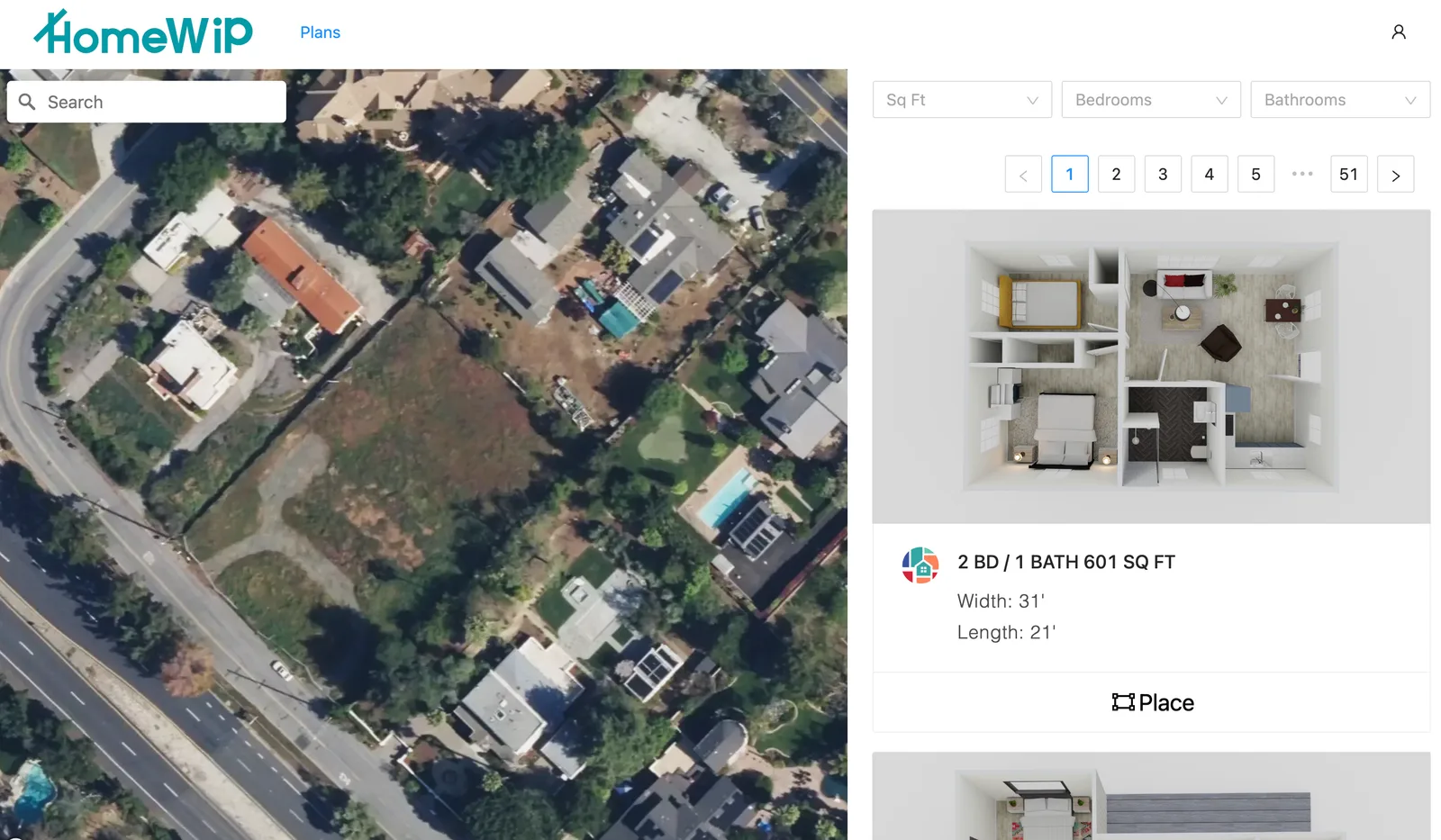
- View pre-designed plans in your backyard
Start with a free plan
Pick a plan, enter your New Hampshire address, and use the site assessment tool to see how it sits on your lot. Plans are free.
- Contact HomeWiP
Talk to your town, then reach out
Take the plan to your planning department, then tell us what your town requires and we'll adapt it.
FAQ
New Hampshire ADU Laws: Common Questions
Statewide, with one local exception. Every town with zoning must allow one attached or detached ADU by right wherever a single-family home is allowed. If the ordinance is silent on ADUs, you need only building permits. Your town can still require owner-occupancy.
It depends on your town. New Hampshire doesn't require owner-occupancy statewide, but a town may. If yours does, you can live in either the main house or the ADU, and the town can't choose for you. Check before you plan to rent out both units.
Possibly. The ADU statute limits what towns can do and says nothing about private associations, so HOA rules and deed covenants still apply. New Hampshire Housing notes that some HOAs, especially in townhome communities, don't allow ADUs. Read your covenants before you pay for design.
New Hampshire law sets no review deadline, so timing depends on your town's building department. Since July 1, 2025, towns can't require a special exception or conditional use permit for an ADU. Ask for the current turnaround when you apply.
State law sets the floor: one ADU by right, attached or detached, at least 750 sq ft, and at most one extra parking space. Your town can require owner-occupancy, set a cap of 750 sq ft or more, and apply the same setbacks it uses for houses.
Often, yes. The statute says "accessory dwelling unit," but you'll also see in-law apartment, accessory apartment, granny flat, secondary suite and carriage house. Search your zoning ordinance under each name before you call, and ask your planner which term it uses.
Yes, if it existed on or before July 1, 2025. Since August 31, 2026, towns must allow conversions of existing structures, detached garages included, even if they break current setback or lot-coverage rules. You don't need a variance. Building permits and septic approval still apply.
Plan Your New Hampshire ADU With a Free Pre-Designed Plan
Next step
Your town's cap can be anywhere from 750 sq ft up. Pick a plan, check it with the site assessment tool, and take it to your planning department.
Sources
- RSA 674:72, Accessory Dwelling Units
- New Hampshire Housing: ADU guidance
- Mercatus Center: A Taxonomy of State ADU Laws 2025
Last verified: Nov 11, 2026. We review this page twice a year.