

Hawaii ADU Laws (2026): What's Settled, What's Still Local
Hawaii's 2024 ADU law, HRS §46-4.8, requires every county to allow at least two ADUs on residentially zoned lots in the state urban district. It doesn't reach rural, coastal or hazard-area lots. Size, parking, owner-occupancy and approval stay with your county. Last verified Nov 14, 2026.
- W.i.P.Hawaii's ADU law tier
- Set by your countyMax detached ADU size
- Set by your countyOwner-occupancy
- Set by your countyParking
On this page
- Can you build an ADU in Hawaii?
- What the state settles vs. what your county decides
- Size limits
- Owner-occupancy and parking
- Approval, timeline and fees
- What Hawaii leaves up to your county
- How to check your county's rules
- Hawaii ADU news
- FAQ
- Sources

The short answer
Can You Build an ADU in Hawaii?
Yes, if your lot is residentially zoned and inside the state urban district. HRS §46-4.8, from Act 39 (signed May 28, 2024), tells every county to allow at least two ADUs, "or the reasonable equivalent," on those lots. It doesn't cover coastal special management areas, urban areas your county rates high-risk for flooding, lava or fire, or rural, low-density and open-space districts.
Inside that scope, a county can still deny a permit if utilities can't serve the unit. The law gave counties until Dec 31, 2026 to bring their codes in line, and it spells out what happens to counties that don't (see the county rules below).
Settled vs. local
What Hawaii's ADU Law Settles, and What Your County Still Decides
Hawaii law fixes how many ADUs a county must allow and, on covered lots, protects long-term rental. Most other rules belong to the county.
W.i.P.: HRS §46-4.8
A statewide ADU law with gaps. It covers only residentially zoned lots in the state urban district.
Approval: county-run
Counties review and decide ADU permits within the limits of state law.
Occupancy: county rule
Whether you must live on the lot is up to your county. On lots the state law covers, long-term rental is protected.
Parking: county rule
The statute is silent on parking.
Settled: at least 2 ADUs per lot
Counties must allow at least two ADUs, or the reasonable equivalent, per residential lot. The law doesn't say attached or detached.
Size and fees: mostly county
Size follows county standards. Act 39's one rule here is on fees: impact fees must consider square footage.
Size limits
How Big Can an ADU Be in Hawaii?
Hawaii's law sets how many ADUs a county must allow, not how big they can be. Every dimension comes from county development standards.
Floor area
- Example: Honolulu allows up to 500 sq ft on lots under 5,000 sq ft and up to 1,000 sq ft on lots of 5,000 sq ft or more
ADU types
- Example: Honolulu allows attached and detached units, plus conversions of a legal structure, attic or basement
Height and setbacks
- ADUs are subject to all county development standards
ADUs per lot
- Or the reasonable equivalent, on residentially zoned urban lots
- Example: Hawaiʻi County allows up to 3 ADUs per property
Occupancy and parking
Do Hawaii ADUs Require Owner-Occupancy or Parking?
Hawaii's law doesn't address either one, so the answer comes from your county code. Honolulu's rules show what that can look like.

Owner-occupancy
Example: Honolulu's ADU rules carry no owner-occupancy condition. ʻOhana units permitted after Sept 10, 1992 must house relatives of the main-house family.
Parking
Example: Honolulu requires 1 off-street space per ADU. It waives that within 0.5 mile of a rail station and, in two plan areas, within 800 ft of a city bus stop.
Approval
How Are ADUs Approved in Hawaii?
Your county runs the review. HRS §46-4.8 adds no by-right path and no deadline.
The statute creates no vested rights. Your application goes through your county's own permit process, and the county keeps its authority to approve or deny.
HRS §46-4.8 sets no review timeline for ADU permits. Ask your county for current review times at a pre-application meeting.
Impact fees must consider the ADU's square footage, with existing space deducted for a conversion. Water and sewer fees may use fixture count instead. HRS §46-4.8 sets no fee cap.
See an ADU on your own Hawaii lot
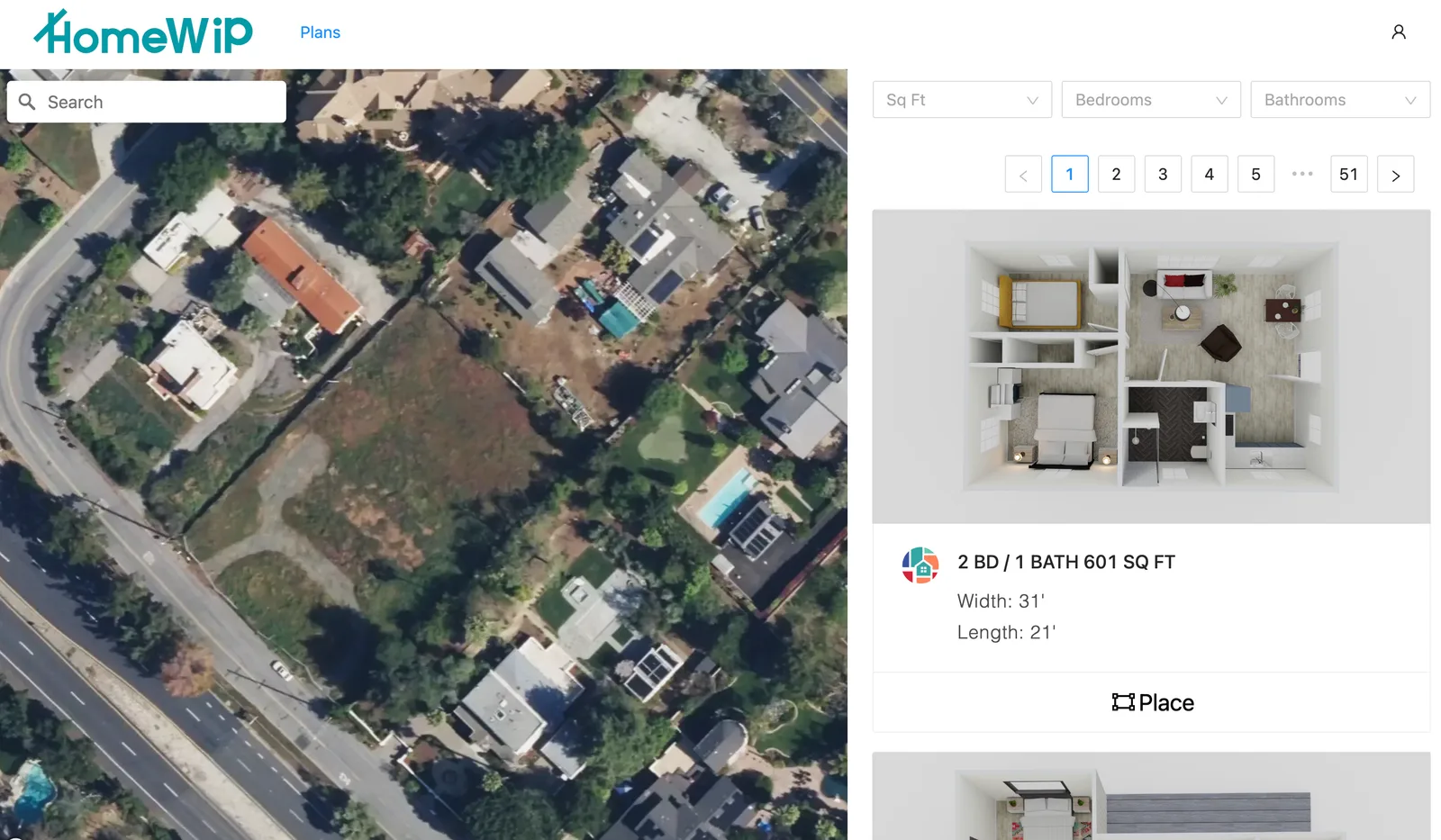
Your county sets the size limit. Honolulu, for example, caps ADUs at 500 sq ft on lots under 5,000 sq ft, so a plan at or under 500 sq ft is a reasonable place to start. Your county confirms floor area, setbacks and lot coverage. Browse 500 sq ft ADU floor plans, then place one on your property with the site visit tool.
County rules
What Does Hawaii Law Still Leave Up to Your County?
Check these six things with your county before you pay for drawings.
Not covered: rural, coastal, hazard lots
Some lots fall outside the state law entirely. Steps 1 and 2 below show how to check yours.
The Dec 31, 2026 fallback
A county that misses the deadline can't deny up to two ADUs over the lot's unit limit. It can still deny on infrastructure, design or standards.
ʻOhana unit or ADU?
Counties differ. Honolulu treats them as separate categories. Hawaiʻi County's Bill 123 replaces its former ʻohana dwelling restrictions.
Utilities, sewer and septic
A county may deny an ADU permit when utility infrastructure can't serve it. Ask your water and wastewater provider early.
Short-term rentals
On lots the state law covers, long-term rental is protected. Short-term use is a county call: Maui County bars vacation, short-term and B&B use in added units.
Older covenants may still apply
Pre-May 28, 2024 covenants aren't affected. Later ones on urban-district residential lots can't cap ADUs below the state count or limit long-term rental.
Check your lot
How to Check Your County's ADU Rules in Hawaii
Six steps, in order, before you pick a plan or hire a designer.
Confirm your lot is covered
Check that it's residentially zoned, inside the state urban district, and outside a special management area or county hazard area.
Find your zoning district
Look up the parcel on your county's zoning map and note the district. Rural, low-density and open-space districts fall outside the state law.
Search the county code
Search for "accessory dwelling" and "ʻohana." Honolulu, for example, regulates ADUs and ʻohana units under separate rules.
Check your covenants and HOA
Find the covenant's recording date in your deed or HOA documents. That date decides whether the state limits apply.
Ask about water, sewer and septic
Get a capacity answer from your water and wastewater provider before you design.
Book a pre-application meeting
Bring your lot details, a rough site plan and your utility answers. Ask which rules apply to ADUs on your lot and how long review is running.
The State of Hawaii in the News
Oct 6, 2026 · Honolulu Civil Beat
In a story on Hawaii's housing shortage and poverty, Pew's Alex Horowitz cites the state's 2024 ADU laws and calls its zoning changes "partial steps."
Jul 17, 2026 · Hawaii News Now (and Maui Now, Jul 16, 2026)
Maui County now allows up to two accessory dwellings plus the main home on qualifying residential lots on Maui, Molokaʻi and Lānaʻi, effective Jul 8, 2026. The added units can't be vacation rentals, short-term rentals or B&Bs. Separately, the county's ʻOhana Assistance Program offers construction grants of up to $100,000.
Read at Hawaii News Now → · Read at Maui Now →
May 28, 2026 · Honolulu Civil Beat (opinion)
In a Community Voices column, Arjuna Heim of Hawaiʻi Appleseed argues that counties can still reject ADUs lot by lot through infrastructure findings and parking requirements.
How HomeWiP helps
Test a Plan on Your Hawaii Lot First
HomeWiP doesn't handle permits in Hawaii. We've worked on ADUs for 7+ years, with 700+ plans and projects in 20+ California cities and counties, each run end to end from design through permits and construction to final inspection. Houses are built in similar ways and need similar utility connections, though Hawaii's building code and county rules differ. In Hawaii, a county can deny an ADU permit when utility infrastructure falls short. We've worked through utility connections on our California projects, so we know which water and sewer questions to settle before you design. Your Hawaii provider has the answers.
- View pre-designed plans in your backyard
Try plans online
Pick a plan, place it on your lot with the site visit tool, then test it with the map, the ADU calculator and the AR viewer.
- Contact HomeWiP
Take it to your county
Bring your plan and your water, sewer and septic questions to a pre-application meeting. If you want a second opinion on the layout from our California design-build team (we don't review Hawaii code), get in touch.
FAQ
Hawaii ADU Laws: Frequently Asked Questions
Yes. HRS §46-4.8, from Act 39 of 2024, requires every county to allow at least two ADUs, or the reasonable equivalent, on residentially zoned lots in the state urban district. Rural, coastal special management and county hazard areas are outside it. The statute settles the count. For almost everything about the building itself, your county code is the rulebook.
State law doesn't say, so your county decides. Honolulu's ADU rules have no owner-occupancy condition, though its ʻohana units must house relatives of the main-house family. On lots the state law covers, counties can't prohibit long-term rental of an ADU. Short-term use is a county call, and Maui County bars vacation rentals in added units.
It depends on when the covenant was recorded. Under HRS §205-20, a covenant recorded after May 28, 2024 on an urban-district residential lot can't cap ADUs below the state count or limit long-term rental. Covenants recorded before that date aren't affected by this law, so what they say about ADUs may still apply. Your deed and HOA documents show the recording date.
HRS §46-4.8 offers no by-right approval and gives your county no deadline to review, approve or deny each application. Water and sewer capacity is the issue to settle early, because a county can deny a permit over insufficient infrastructure. Ask for current review times at a pre-application meeting.
The state requires at least two ADUs per residential urban lot, protects long-term rental on those lots, limits newer HOA covenants, requires impact fees to consider square footage, and sets a Dec 31, 2026 fallback for counties that don't update their codes. The rest is county law: dimensions, parking, who may live there, short-term rental and the review itself.
Honolulu treats them as separate categories. There, an ʻohana unit doesn't count toward the one-ADU limit, and one permitted after Sept 10, 1992 must house relatives of the main-house family. An ADU (accessory dwelling unit) has no family condition. Hawaiʻi County's Bill 123, signed Oct 2024, replaces its former ʻohana dwelling restrictions. Whether "ʻohana" still means a separate unit depends on your county.
If a county hasn't adopted or amended its ordinance by Dec 31, 2026, it can't deny a permit for up to two ADUs because the lot would exceed its maximum number of housing units. It can still deny on infrastructure, design or development-standard grounds. Check whether your county has updated its code before you apply.
Picture an ADU on Your Hawaii Lot Before You Pay for Drawings
Start planning
Your county sets ADU size in Hawaii, so start with a plan instead of a permit application. Pick a pre-designed plan and place it in your backyard. Then bring that layout and your questions to your county's pre-application meeting.
Sources
- HRS §46-4.8, Accessory dwelling units on residentially zoned lots
- HRS §205-20, Private covenants; residentially zoned lots; urban district
- Act 39, Session Laws of Hawaii 2024 (SB 3202 CD1)
- City & County of Honolulu Ordinance 25-2 (Land Use Ordinance, ADUs)
- Mercatus Center, A Taxonomy of State ADU Laws 2025 (tier criteria only)
Last verified: November 14, 2026. We review this page twice a year.