

Connecticut ADU Laws (2026): What's Settled, What's Still Local
Yes, but your town matters more than the state. Connecticut's ADU law, CGS § 8-2o, has required towns to allow one ADU as of right next to a single-family home since 2022. By 2023, though, 115 of 169 towns had opted out, and covered towns can still require owner-occupancy. Last verified Nov 12, 2026.
- PartialState ADU law, with town opt-outs
- 30% of home or 1,000 sq ftLowest cap a covered town may set (lesser of)
- Set by your townOwner-occupancy rule
- 1 maxParking spaces a covered town can require
On this page
- Can You Build an ADU in Connecticut?
- Connecticut's ADU Law: What's Settled, What's Still Local
- What Are Connecticut's ADU Size and Design Limits?
- Does Connecticut Require Owner-Occupancy or Off-Street Parking for an ADU?
- Is ADU Approval By-Right in Connecticut, or Does It Require a Public Hearing?
- What Does Connecticut Law Still Leave Up to Your Town?
- How to Check Your Town's ADU Rules in Connecticut
- Connecticut ADU Law News
- How Does HomeWiP Help With ADUs in Connecticut?
- Connecticut ADU Laws: Frequently Asked Questions

The short answer
Can You Build an ADU in Connecticut?
Yes, if your town is covered or you qualify for the transit exception.
Public Act 21-29 created CGS § 8-2o, in effect since Jan 1, 2022. Towns could opt out by two-thirds votes, but not on or after Jan 1, 2023. By a 2023 count, 115 of 169 had, and they write their own rules.
Public Act 25-1 (Jan 1, 2026) added an exception. If you've owned property in a transit-oriented district for 3+ years, you can build as of right even in an opted-out town, subject to its structural and architectural zoning rules. Public Act 26-7 (Oct 1, 2026) renamed accessory apartments as ADUs and reached special-act towns.
None of these laws bars owner-occupancy rules, and HB 5507, a 2026 bill to end opt-outs and ban these rules, was tabled.
At a glance
Connecticut's ADU Law: What's Settled, What's Still Local
Checked against CGS § 8-2o and Public Act 26-7.
Partial coverage: CGS § 8-2o
Two gaps: towns that opted out before 2023, and owner-occupancy rules.
By right, decided in 65 days
Covered towns must allow one ADU as of right and decide within 65 days.
Owner-occupancy: your town decides
Not barred by state law. Ask zoning first.
One parking space at most
A covered town can require one space at most, and no fee in place of parking.
Attached, inside or detached
Covered towns must allow all three types on a single-family lot.
Size floor, hookup fee limits
In covered towns the cap can't go below 30% of the home or 1,000 sq ft, whichever is less. No new hookup fees unless built with a new home.
Size and design
What Are Connecticut's ADU Size and Design Limits?
Minimums a covered town must meet; it can allow more. Opted-out towns set their own.
DETACHED
Detached ADU
- Whichever is less
- A 2,000 sq ft home gets at least 600 sq ft
ATTACHED OR INSIDE
Attached or interior ADU
- No required passageway to the main house
- No extra exterior door unless code requires one
PLACEMENT
Height and setbacks
- Same or looser setbacks, lot size and frontage
- Height and design no stricter than for a house
PER LOT
ADUs per lot
- As of right on single-family lots in covered towns
- Can't be required to be affordable housing
Occupancy and parking
Does Connecticut Require Owner-Occupancy or Off-Street Parking for an ADU?
In covered towns, Connecticut ADU regulations cap parking but leave owner-occupancy to your town.

Owner-occupancy: up to your town
The state law doesn't bar it, and 67% of towns required it in 2023.
Parking: 1 space at most
A covered town can't require more than one space for the ADU, or a fee in place of parking.
Approval
Is ADU Approval By-Right in Connecticut, or Does It Require a Public Hearing?
In covered towns it's as of right, with a 65-day decision clock.
Covered towns can't add standards beyond what § 8-2o allows. Opted-out towns set their own process, so ask yours whether a hearing applies.
A decision is due within 65 days of receipt, plus up to 65 more only with your consent.
In covered towns, unless the ADU comes with a new single-family home, the town and utilities, now including water companies, can't charge new hookup or capacity fees or require a separate hookup. The town can't require sprinklers unless the main house or fire code needs them.
Work out your size number first. In a covered town, the cap can't go below 30% of your home's floor area or 1,000 sq ft, whichever is less: 600 sq ft for a 2,000 sq ft home. Opted-out towns set their own limits. If your number is 500 sq ft or more, browse our 500 sq ft ADU floor plans, then try the site visit tool.
Local rules
What Does Connecticut Law Still Leave Up to Your Town?
Even where the state law applies, these stay local.
Owner-occupancy
The main local barrier. The checklist below covers what to ask.
Not covered: opted-out towns
Towns that opted out before 2023 set their own rules. Transit-district owners of 3+ years may still build as of right, under the town's design rules.
Short-term rentals
Your town can ban or limit short-term and vacation rentals of an ADU.
Wells and septic
Off sewer, the health director must find a code-complying septic area first.
Design standards
Your town sets them, no stricter than for a single-family home.
HOA covenants
Connecticut's ADU statute doesn't address HOA covenants. Read yours early.
Checklist
How to Check Your Town's ADU Rules in Connecticut
Settle these before you pay for drawings.
Did your town opt out?
Get a written answer on whether your town opted out before Jan 1, 2023, and whether your lot is in a transit-oriented district.
Owner-occupancy
Ask if you must live on site, and whether renting either unit changes that.
Search both names
Check local regs under both "accessory apartment" and "accessory dwelling unit."
HOA and overlays
Check covenants for limits on a second unit, and ask zoning about overlay districts.
Septic or well
Off public sewer? Have the health district confirm a code-complying septic area first.
Pre-application meeting
Bring a plan and site sketch. Ask what makes an application complete; the 65-day clock starts at receipt.
Connecticut ADU Law News
May 7, 2026: Public Act 26-7 signed. Effective Oct 1, 2026, it renames accessory apartments as ADUs, covers special-act towns and extends the hookup-fee ban to water companies. Sources: Public Act 26-7, OLR 2026 housing acts summary
Apr 15, 2026: HB 5507 tabled in the House. It would have ended opt-outs and banned owner-occupancy rules, among other changes. It was not enacted. Sources: CGA bill status, OLR bill analysis
Nov 26, 2025: Governor Lamont signs HB 8002. Public Act 25-1 created the transit-district exception described above, effective Jan 1, 2026. Sources: Public Act 25-1, OLR bill analysis, Greenwich Free Press
HomeWiP in Connecticut
How Does HomeWiP Help With ADUs in Connecticut?
We don't handle permits in Connecticut. In 7+ years we've made 700+ plans and taken projects in 20+ California cities and counties from design through final inspection. Houses are built much the same way across states, with similar utility hookups, but Connecticut's code and your town decide what's approved.
- View pre-designed plans in your backyard
Start with a plan
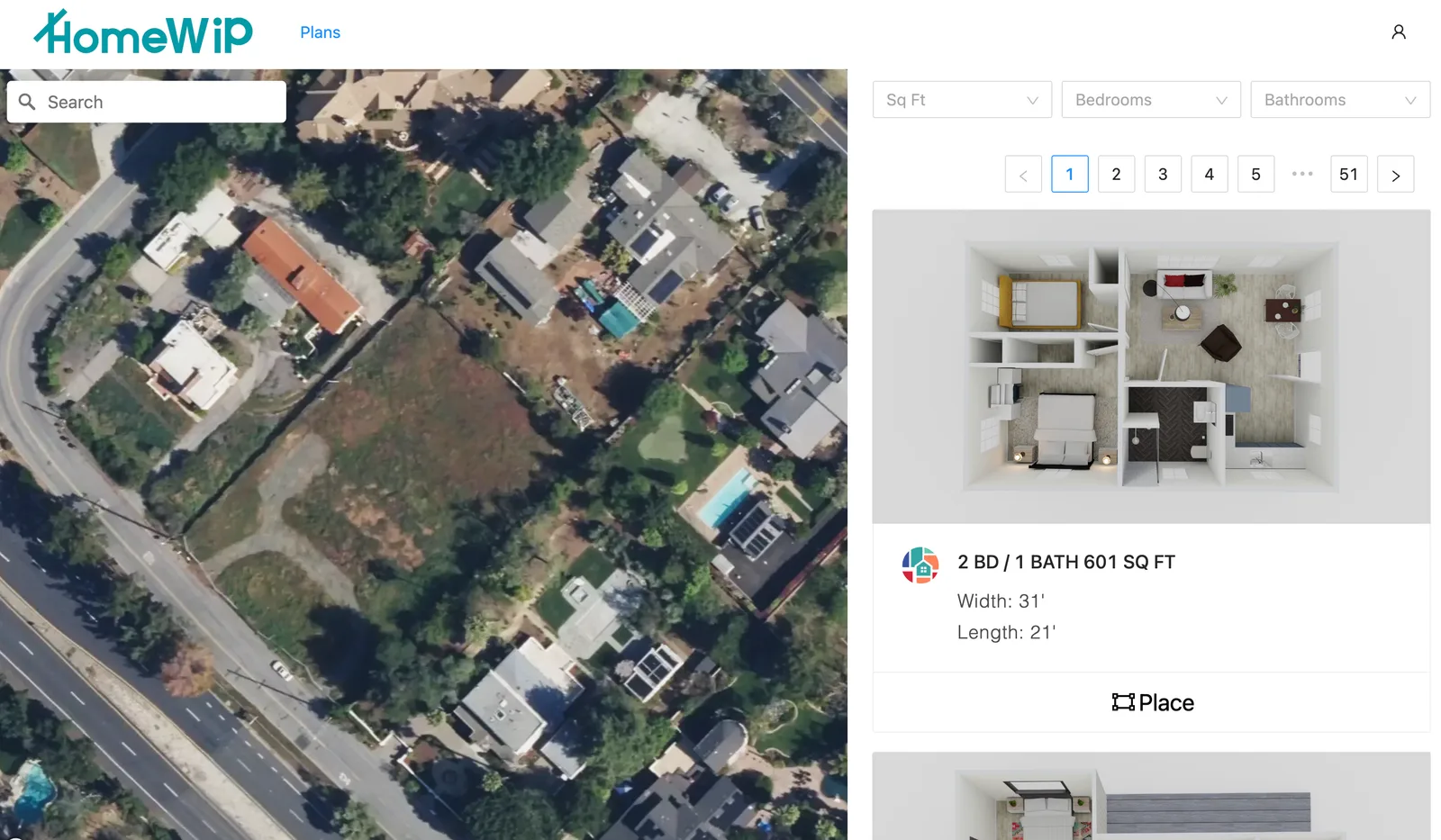
Pick a plan, then use the site visit tool, map, ADU calculator and AR viewer for early planning on a Connecticut lot.
- Ask us a question
Talk to your town, then to us
Take the checklist to zoning. Questions about a plan? Reach out.
FAQ
Connecticut ADU Laws: Frequently Asked Questions
It depends on your town. Towns could opt out of the as-of-right law before Jan 1, 2023, and 115 of 169 had by a 2023 count. If you've owned property in a transit-oriented district for 3+ years, you can build one even in an opted-out town, subject to its structural and architectural zoning rules.
Maybe. Connecticut's ADU law doesn't bar owner-occupancy rules, so your town decides. In 2023, 113 of 169 towns required owners to live on site, and a 2026 bill to ban those rules was tabled. Towns can also limit short-term rentals, so ask before counting on Airbnb income.
It can try. Connecticut's ADU statute governs towns and utilities and doesn't address HOA covenants, so the statute doesn't settle whether yours can block an ADU. Read your HOA documents early. If they restrict a second unit, ask a real estate attorney whether those limits hold up.
In a covered town, the zoning decision is due within 65 days of the town receiving your application, plus up to 65 more only if you agree. Off public sewer, add the local health director's review, which must find a code-complying septic area.
In covered towns, state law sets a minimum size cap, a one-space parking limit, the 65-day decision and no new hookup fees unless the ADU is built with a new house. Your town still controls owner-occupancy, short-term rentals and design standards, though design can't be stricter than for a house. Opted-out towns set their own rules.
Yes. Until Oct 1, 2026, the statutes said "accessory apartment." Public Act 26-7 changed it to "accessory dwelling unit," but your town's zoning regulations may still use the older name, so search for both. You'll also see "granny flat" for the same kind of unit.
Not in covered towns, unless the ADU is built with a new single-family home. Since Oct 1, 2026, that includes water companies.
Plan Your Connecticut ADU With a Pre-Designed Plan
Next step
Once zoning confirms your town's size limit, pick a plan that fits, preview it with the AR viewer, then take it back to zoning.
Sources
- Connecticut General Statutes § 8-2o, 2026 supplement
- Public Act 26-7 (sHB 5288)
- Public Act 25-1, Nov. Special Session (HB 8002)
- OLR 2026-R-0090, 2026 Acts Affecting Housing and Real Estate
- CT DPH, Public Health Code § 19-13-B100a
- DesegregateCT, Public Act 21-29 Initial Findings (2023)
- Mercatus Center, Taxonomy of State ADU Laws 2025 (tier criteria)
Last verified: Nov 12, 2026.