
Building a Guesthouse in Your Backyard
What it costs to build a backyard guesthouse in California, from studios to two-bedroom ADUs, plus permits, sizing, and design ideas.
Building a guesthouse in your backyard is a trend. Despite space being an asset in California, backyards remain vastly underutilized. When was the last time you enjoyed al fresco dining in your backyard? Naturally, savvy homeowners want to reclaim that space, turning to a modern backyard guesthouse as the answer to their desire to add extra space to the main home. A backyard guesthouse refers to any living quarters detached from the primary residence.
In California, every city treats a guest house differently. You may be thinking of a tiny home, pool house, or garden house. A city planner will think of an accessory structure or dwelling unit. For example, in Fremont, CA, a guesthouse should be less than 600 gross square feet in area, while you can opt for a 1000-square-foot accessory dwelling unit. More often, the guesthouses are described as accessory dwelling units — self-contained residences with separate bathrooms and a kitchen. A functional kitchen and bathroom are required for accessory dwelling units.
Structures less than 120 sq ft require only an electrical permit and are considered non-habitable by most local zoning regulations. Prefab guest houses or custom builds—the same regulations apply to prefabricated structures as to site-built ones.
Mind you, location and size restrictions apply to all structures, whether or not a permit is required, and they differ from city to city. This also applies to DIY backyard guest houses! Make sure to get the proper permits.
Key Takeaways:
- Building a backyard guest house can add value to our property.
- Different options like prefab and custom-built are available.
- Legal and utility considerations are crucial.
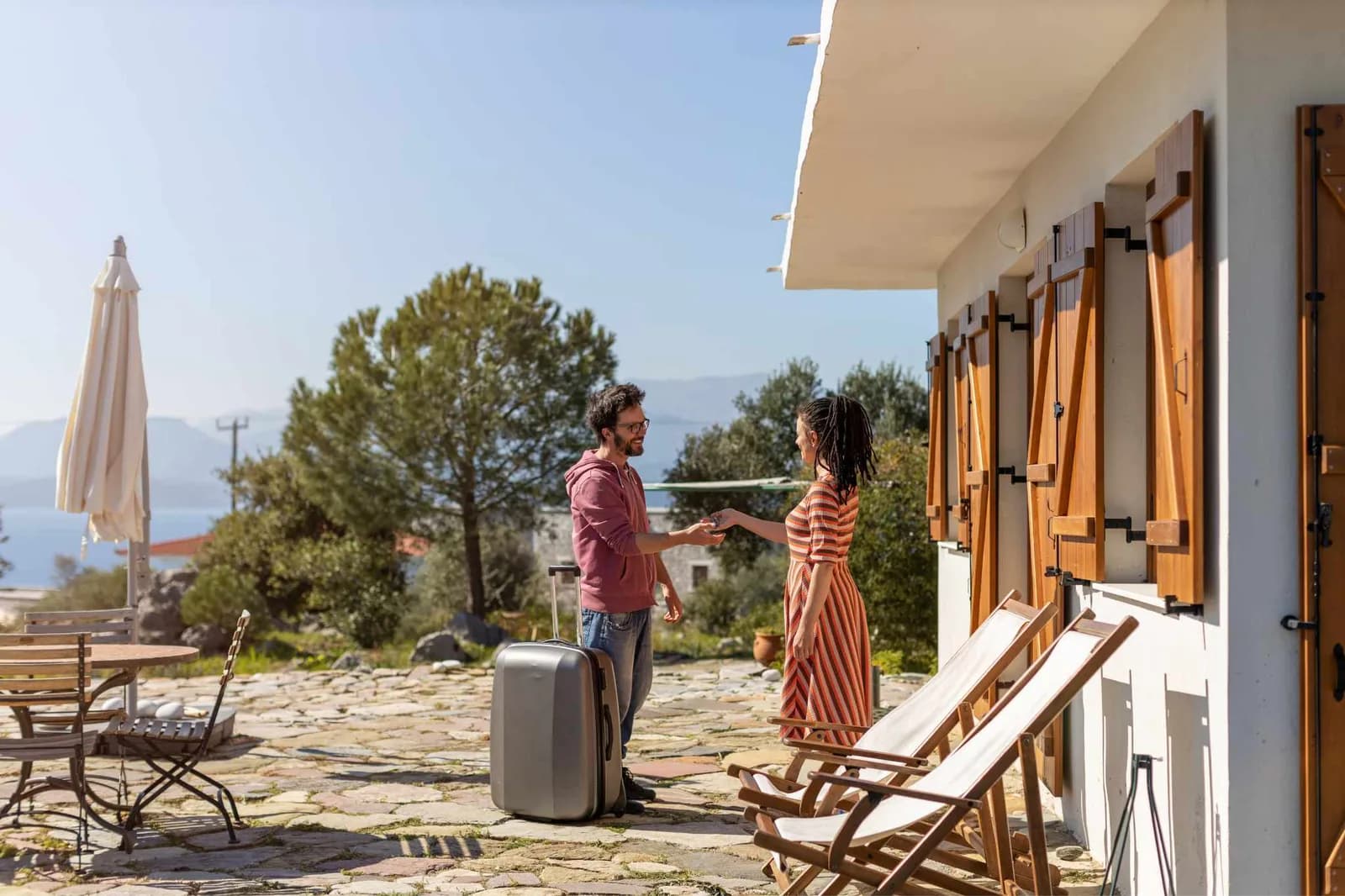
Most homeowners who consider building a backyard guesthouse do so for personal benefit. But with careful consideration, a backyard guesthouse can be the best investment you can make in your home.
Why You Should Build a Guesthouse in the Backyard?
Backyard guesthouses have many names — casita, in-law units, secondary dwellings, carriage houses, and granny flats — with similar functions or designs.
Regardless of what you call it, a backyard guesthouse is beneficial and provides several advantages.
A backyard guest house with bathroom and kitchen is an ADU! You can read about different ADU types in our dedicated post.

More Pros. Less Cons.
Why You Should Build a Guesthouse in the Backyard
Add Desirable Square Footage
If circumstances change and require you to upsize your home, a backyard guesthouse allows you to do this. It is a great way to add space to small homes. You can add space for an office, as the name suggests, a guesthouse for when guests visit, a self-contained apartment for a relative requiring assistance, and so on.
Adding a backyard guesthouse can help you avoid attempting to find a home that meets your needs and budget within the state’s competitive real estate markets.
One thing to remember: While small backyard guest houses may seem like a good idea, they have the worst cost per square foot, as you are getting the most expensive square footage (kitchen and bathroom) and not spreading it over less expensive living and sleeping areas. The average cost for construction goes down as you increase the size of your guest house, and the value of your property goes up accordingly.
Improve Without the Impact on Main House
If you dream of adding an office, an at-home gym, an art studio, or upgrading your guest facilities with a bath and bedroom, you can do it with a backyard guesthouse. It is a great project for more experienced diy-ers. Less experienced ones can hire general contractors for a concrete slab and buy a DIY backyard guest house kit or a shipping container to refurbish on weekends. Just remember building permits. Otherwise, instead of becoming a great investment, it will turn into a great headache.
Not a fan of construction projects? Hire a company to do it.
Most accessory dwelling units are built within months, as the predesigned packages expedite the permit process. The crew has built many before, so there is a more streamlined purchasing and construction process.
Additionally, you aren’t inconvenienced by construction inside the home, which can make your space unlivable.
Increase Resale Value
Naturally, home prices in California continue to rise. But homes with existing guest houses or home offices are in-demand. Many buyers prefer the second space as a guest home for a family member or just personal getaways. Be it for extra room or extra income, a high-quality backyard home offers flexibility for a growing family.
Generate Hassle-Free Rental Income
Although being a landlord or multi-property owner is desirable, it comes with the aggravation of managing a home — other than your own.
Because most starter homes in this price range are aging rapidly, you’ll likely be saddled with tremendous maintenance costs.
Backyard space is one of many things leveraged when building the guest house. You’re also leveraging the space’s low maintenance. New buildings, even if they are small houses, are built to modern building standards and thus are often of better quality than any other existing structure on the property.
The initial cost is quickly recouped because rental income isn’t squandered on maintenance. If you have decided to go for an even bigger project and had an ADU built on your property, additional property tax is manageable, as ADUs typically do not trigger tax re-evaluation of the home’s value as additions do.
What To Consider When Building Your Backyard Guesthouse
The first thing to consider is the potential guest! Is it for friends, parents or adult kids? Or is it future proofing and building in the opportunity for additional income one day?
The average costs of small structures built for people, not for storage, are high, starting from $60,000. If you’re spending five or six figures on your own guest house, assessing various factors determining how beneficial the space will be is essential. Once you commence the backyard guesthouse building, you can only turn back or make last-minute changes. The local building codes drive the structural details of any permanent structures. Once the design is documented in construction drawings and stamped by the local planning and building department, making changes will become an added expense.
Budget
Your budget will shape the kind of guesthouse you can build. Your budget should consider the loan or mortgage repayments — if you’re remortgaging your home — a realistic tax deductible or rental income provided by the guesthouse or other income generation. There are lenders offering construction loans if the rate on your old mortgage is such that you’d hate to touch it in the current market situation. Keep in mind that ADUs have a better chance of helping you increase the property value and refinance after the construction is completed. They have this magical ability to grow in value in the same way as your main house. As for accessory structures, like backyard sheds, the appraisers are valuing them at cost.
Development Restrictions
People often ask: Can I build a guest house on my property? Besides your budget, development restrictions are the next most impactful consideration in informing your thinking when pursuing guest house plans.
You’ll have to research to ascertain if your HOA permits you to add a backyard guesthouse and, if so, what restrictions they place on the build. For example, an HOA may regulate your tiny structure’s position, preventing the unit from being seen from the street, which could limit the height of the guesthouse and where it’s built in your backyard.
The state places few limitations on accessory dwelling units to encourage building these spaces to boost the rental housing supply. The same cannot be said about accessory structures. Cities have widely different rules. You may be required to go through an extensive planning review. Some towns allow neighbors to comment on your design and location, which opens endless possibilities for neighborly concerns – they may not like the location, the height, the design of the structure, you name it.
Space Limitations
Once you have the go-ahead from your HOA and/or Planning department, measure the space. For example, how far would you want an ADU or accessory structure from the back or side of your home? Where will it be located? By now, you should not be surprised that your Planning Department has an opinion about it, too – the minimal distance to another structure can be anywhere from 6 to 10 feet, with some additional requirements based on fire safety concerns.
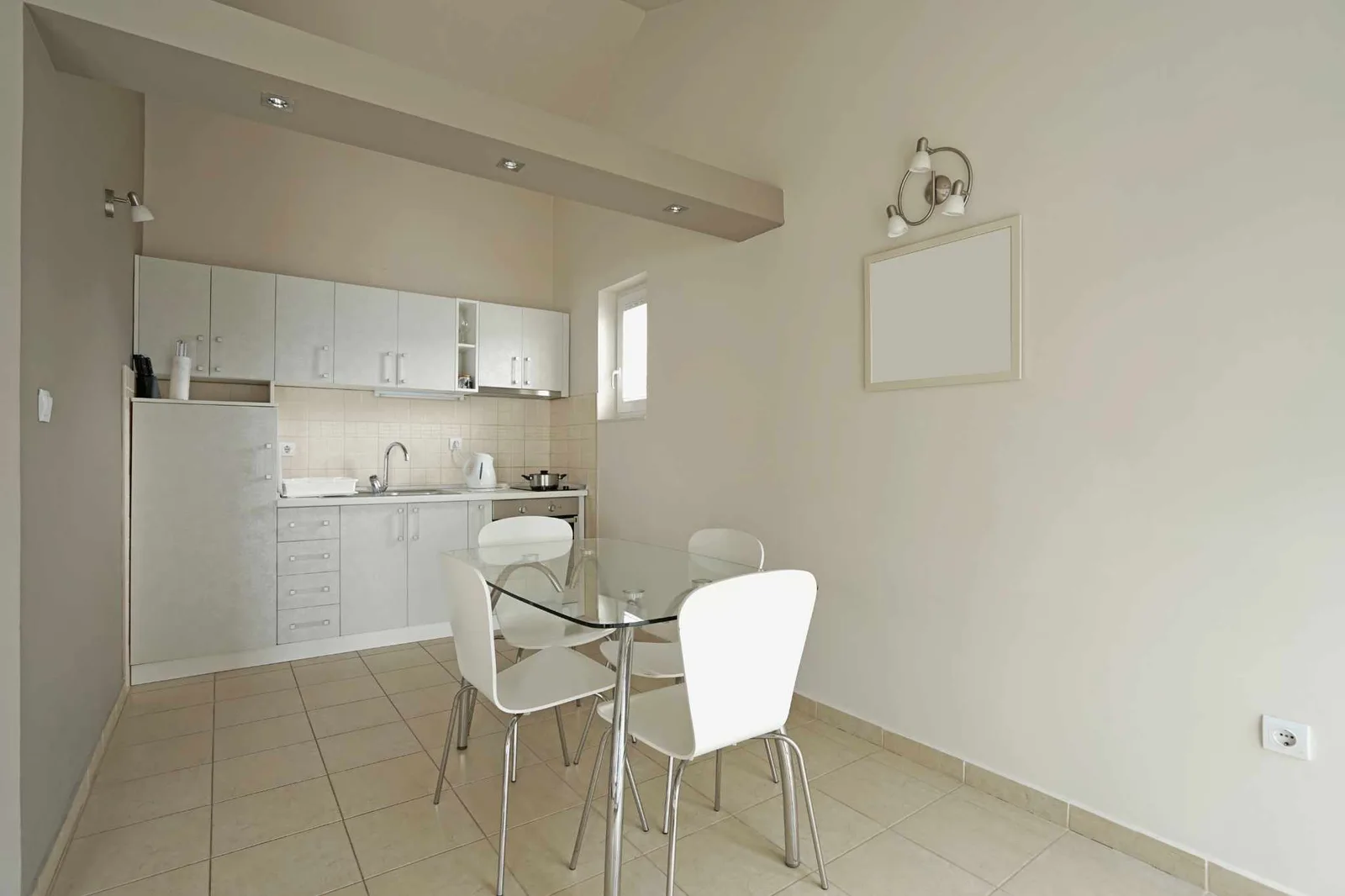
Best Backyard Guest House Ideas
An accessory structure is most beneficial when its uses aren’t limited to one thing — like a gym. Instead, the best space is versatile and can be repurposed for different stages and phases of life with only a few minor tweaks. When family members spend half a year visiting you, these versatile structures become a necessity.
Creating a guest house in the backyard is a great way to add space and value to our homes. Whether we need a cozy retreat for family and friends or a potential investment opportunity, a backyard guest house serves diverse purposes. By building a guest house, we can enjoy the benefits of additional living space while potentially increasing the value of our property.
When setting up a backyard guest house, we have many options to explore. From budget-friendly prefab units to custom-built cottages, there’s something for everyone. Each option has its own benefits, whether saving time and costs or customizing a space that fits our style perfectly.
Legal and utility considerations are also important. We need to ensure that the structure complies with local zoning laws and has the necessary connections for water, electricity, and other utilities. This ensures that the guest house is not only comfortable but also safe and functional for anyone who stays.
By law, an accessory dwelling unit in California must be larger than 150 square feet, and a new structure can be as big as 1000 square feet in most locations.
Within that square footage, you can build plenty. These are three guest house ideas that most homeowners are drawn to — and for good reason.
Studio Backyard Guesthouse
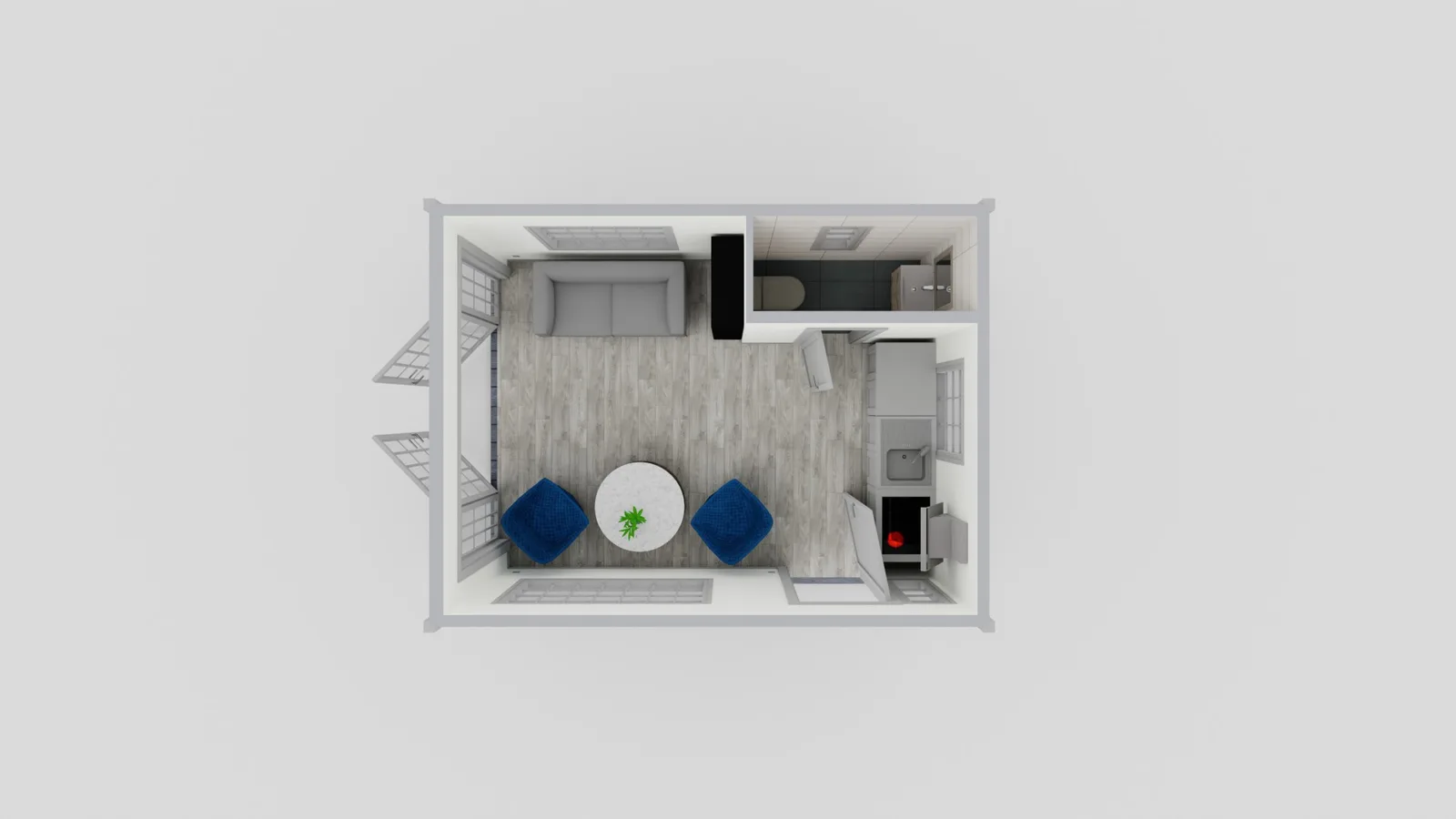
A studio backyard guesthouse can be the most versatile option. At 200 square feet, it can fit into nearly any and every backyard in California, even considering the property lines and distance to the main house walls.
The typically small guest house plans include a fully-equipped bathroom, living space, and kitchenette to make using the space pleasant and functional.
The space can be used as an office, gym, guest room, or even vacation rental. Our clients rent these studios to students or traveling nurses.
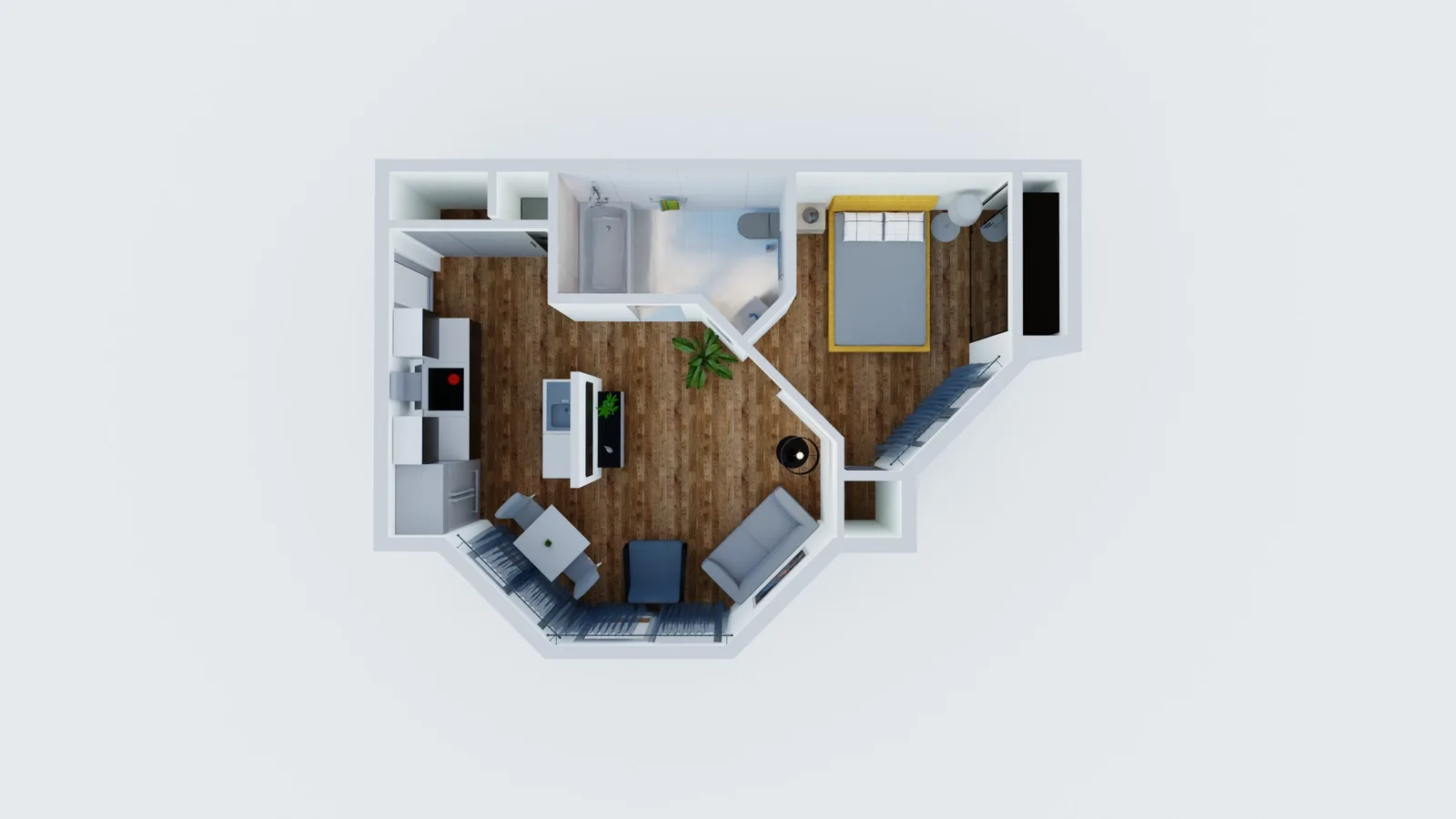
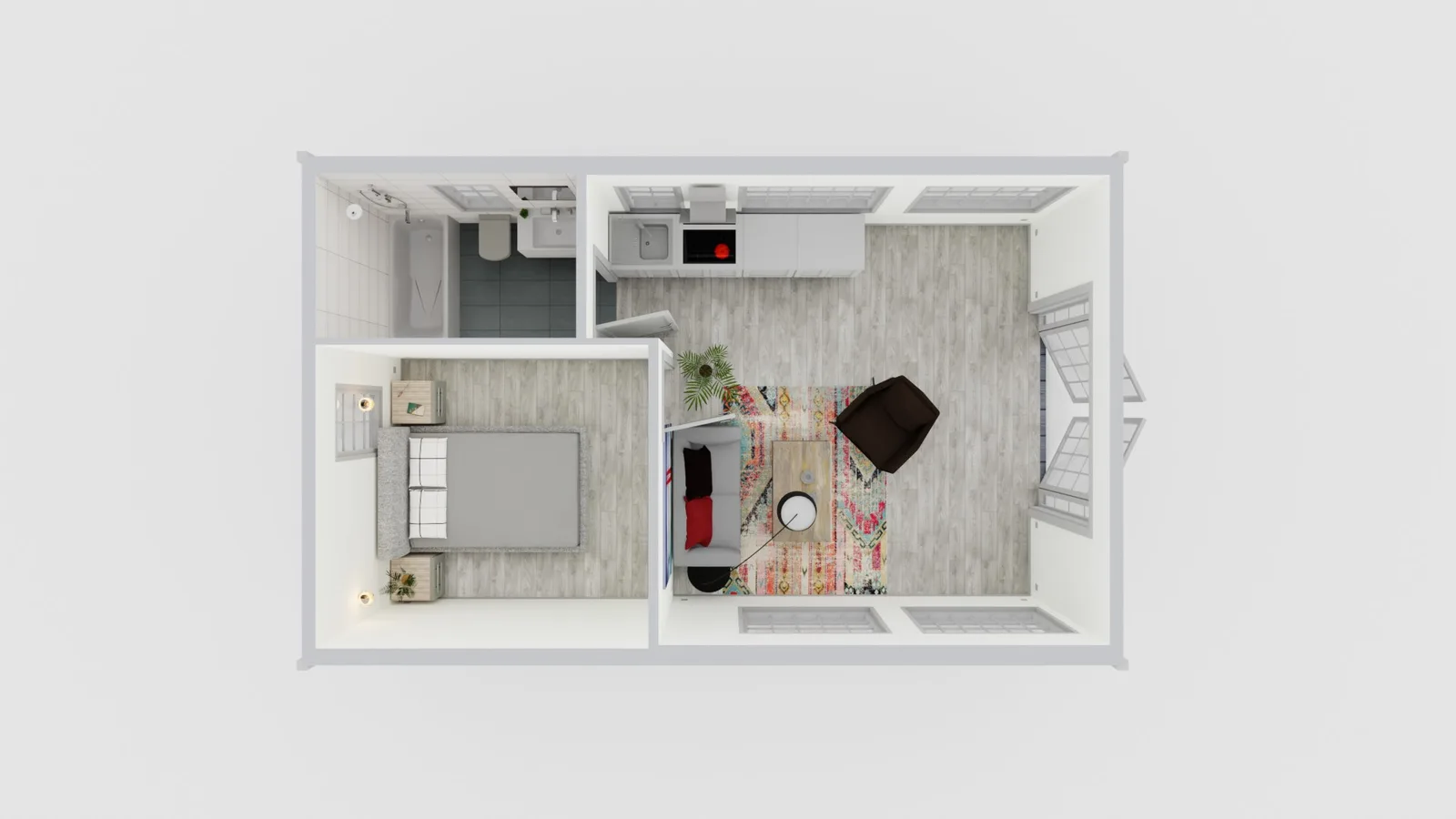
1 Bedroom Backyard Guesthouse
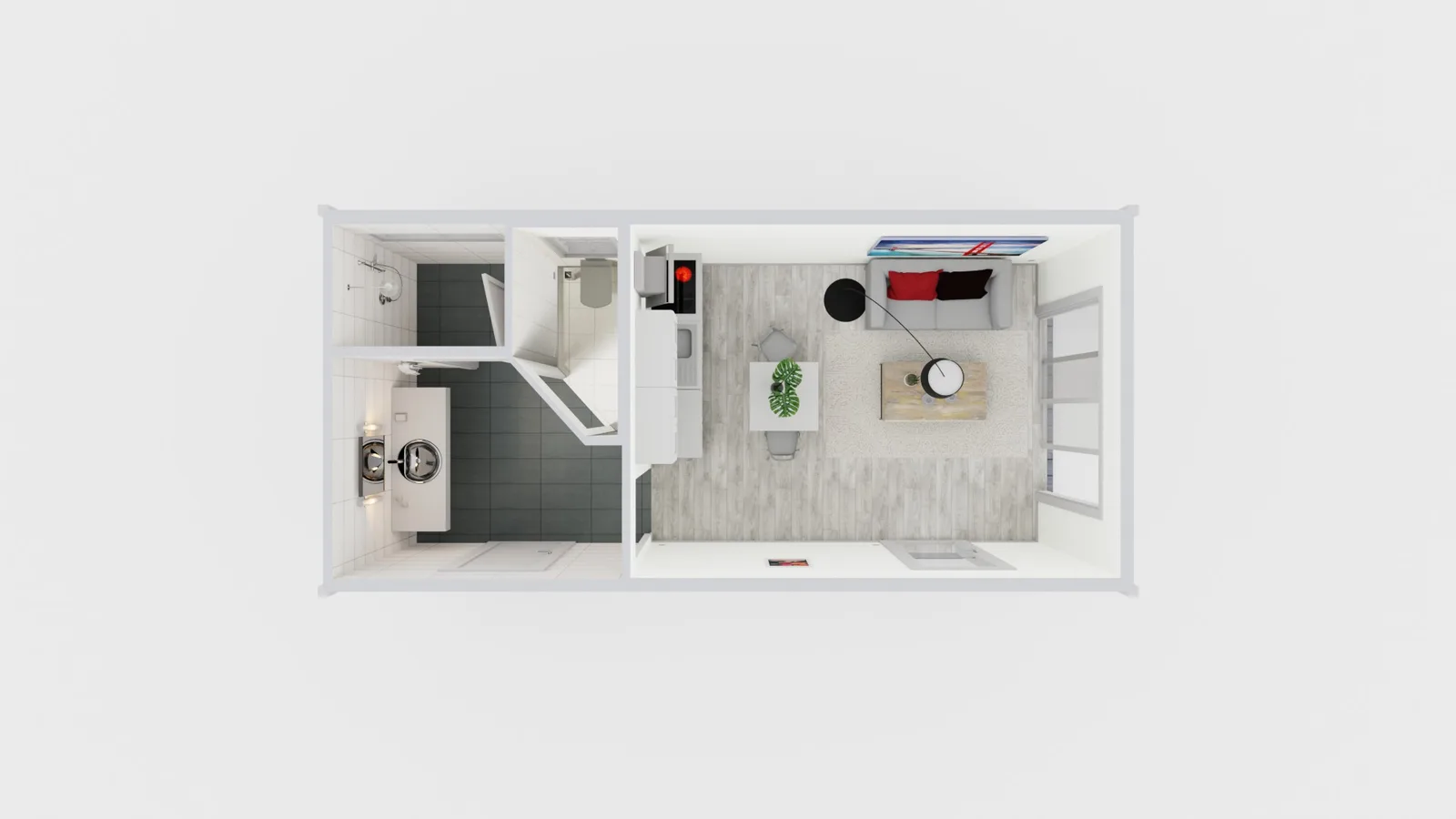
A studio means everything is within view. A one-bedroom guesthouse allows for demarcation, which many tenants appreciate.
An open-plan concept is a must in a one-bedroom ADU because it enlarges the space. But keeping rooms separate offers more privacy for guests—and yourself.
If you insert a second exterior door leading into the bedroom, your one-bedroom guest house can be used as your workspace, with the rest of the space out of view.
2 Bedroom Backyard Guesthouse
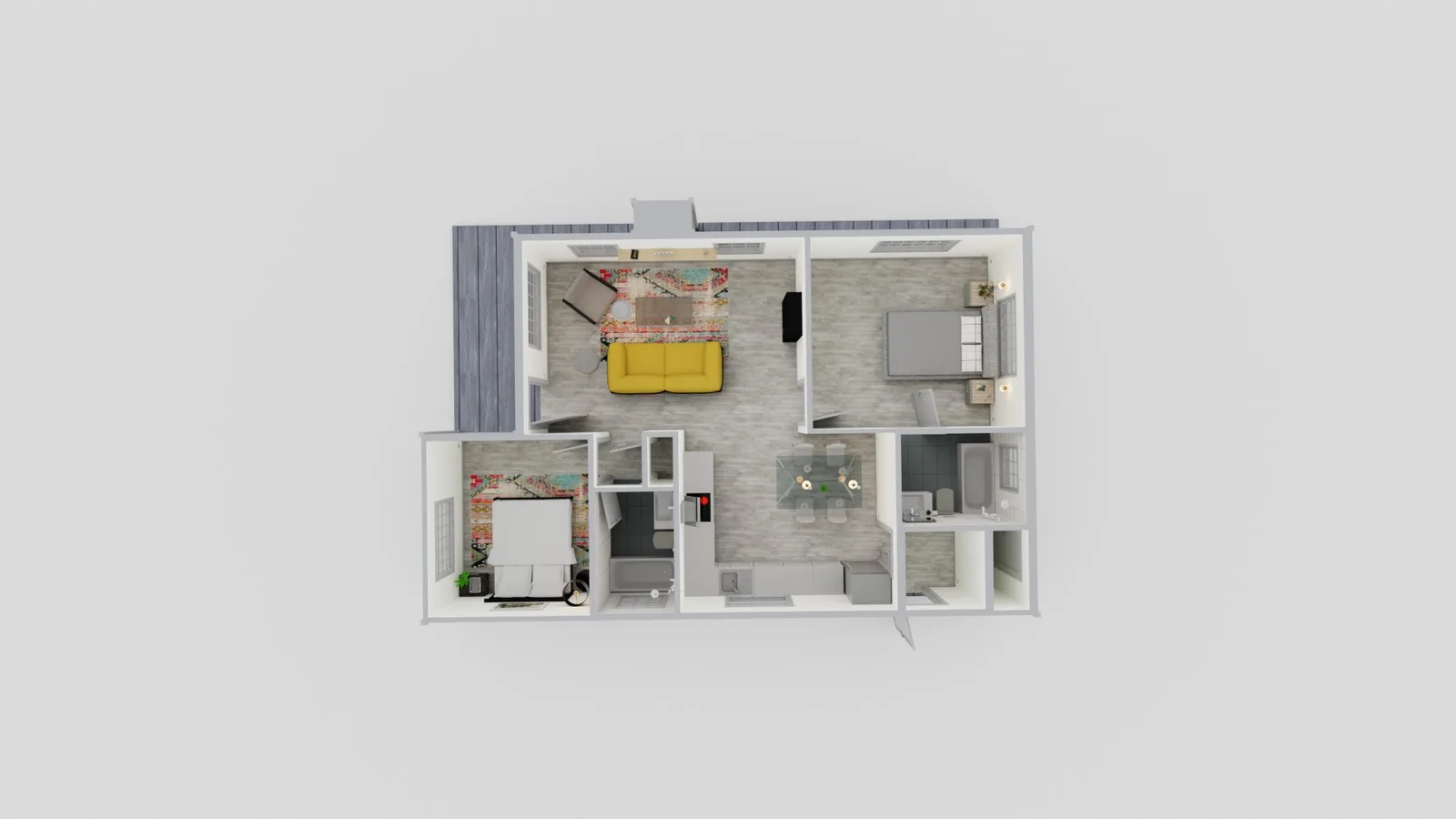
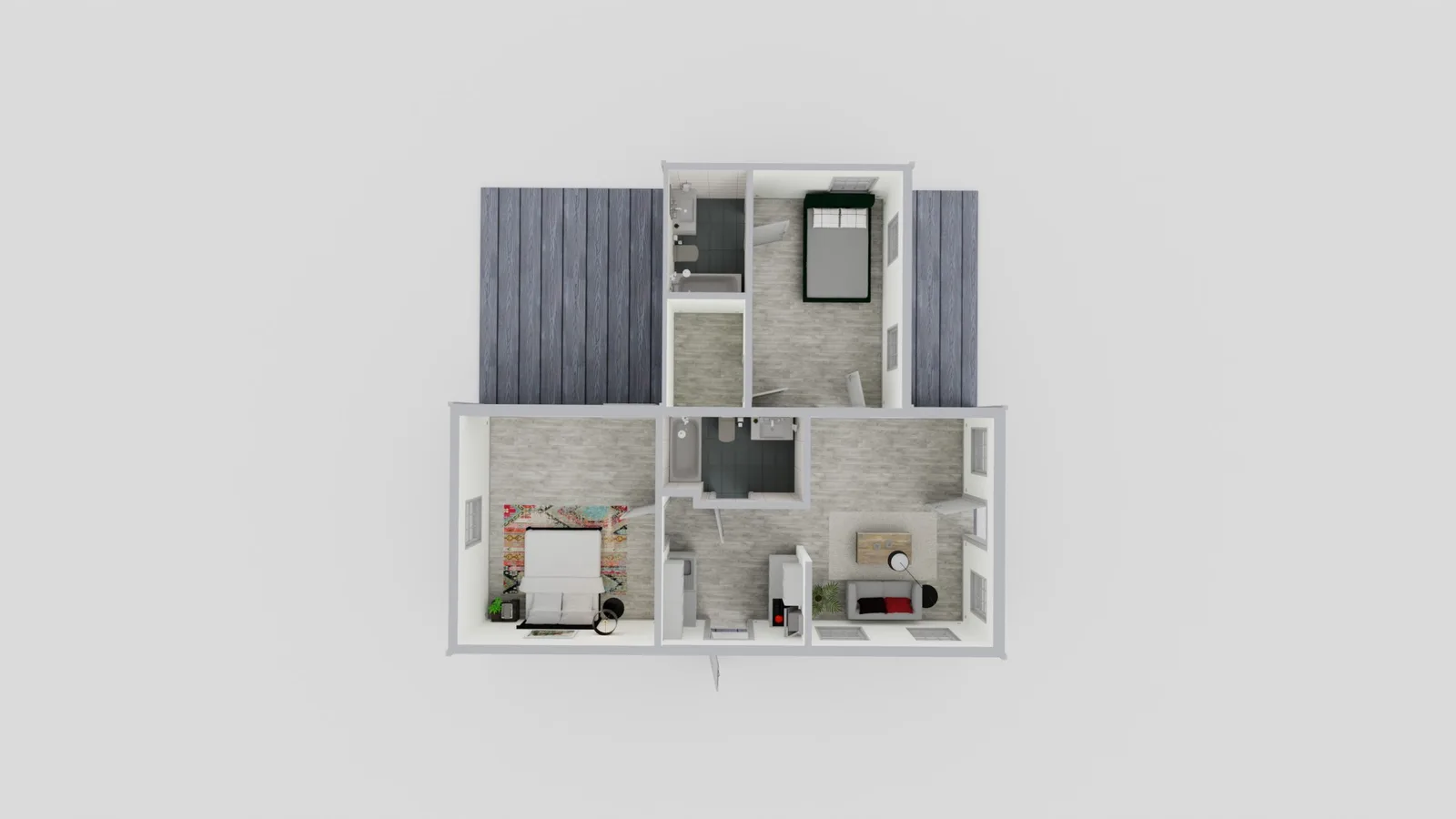
If you have the space for a 1200-square-foot accessory dwelling unit, look into guesthouse plans with two bedrooms. The bigger space enables you to charge more for long-term rentals. You will get renters looking for a rental property for their families and are interested in more permanent arrangements.
This type of floor pan also gives you more flexibility. You may decide to rent out the entire guest house. You can also plan and design it so that you have a home office for yourself and a one-bedroom unit as a rental property. Or you can use the space for two purposes, with one room acting as a guest room while the other is utilized as an office, gym, or professional studio.
The Homewip two-bedroom ADUs mostly include two bedrooms with one ensuite full bathroom, a dedicated living space, and a fully equipped kitchen.
Sometimes, your family members have specific needs that call for custom backyard guest house design. Share your particular requirements with your designer, and do not hesitate to consult an occupational therapist if the need arises. Contractors do not have medical degrees. When spending money on a custom guest house, getting the most detailed information to your designer at the very start will make for the foundation of a successful project. A perfect backyard guest house takes careful planning.
When you are building a mother-in-law suite, personal preferences will need to be considered. Make sure to involve her in the discussions. While you can go right with the French doors, you want to avoid hearing complaints about a small kitchen for the next 10 years. Make it a comfortable space.
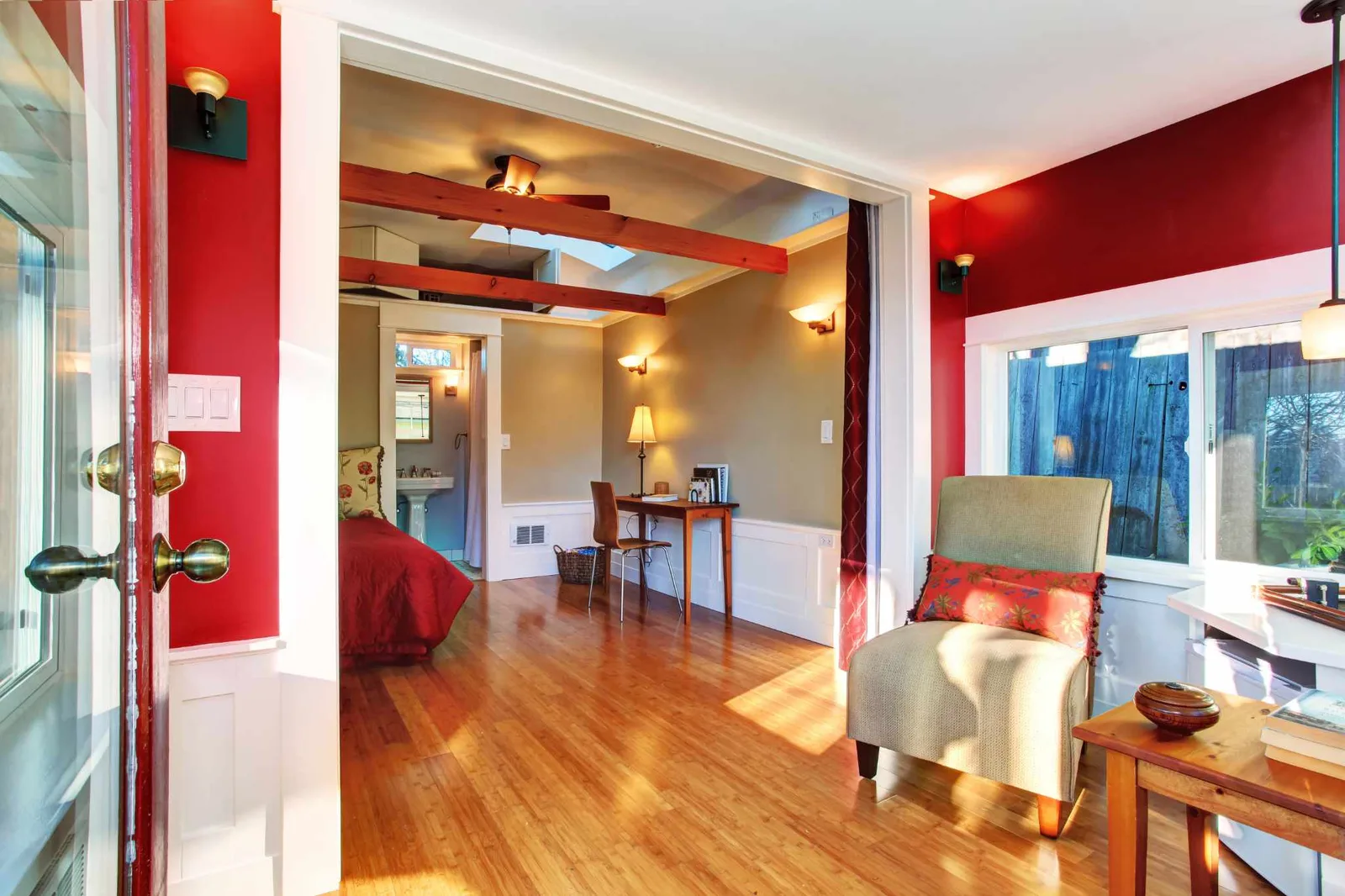
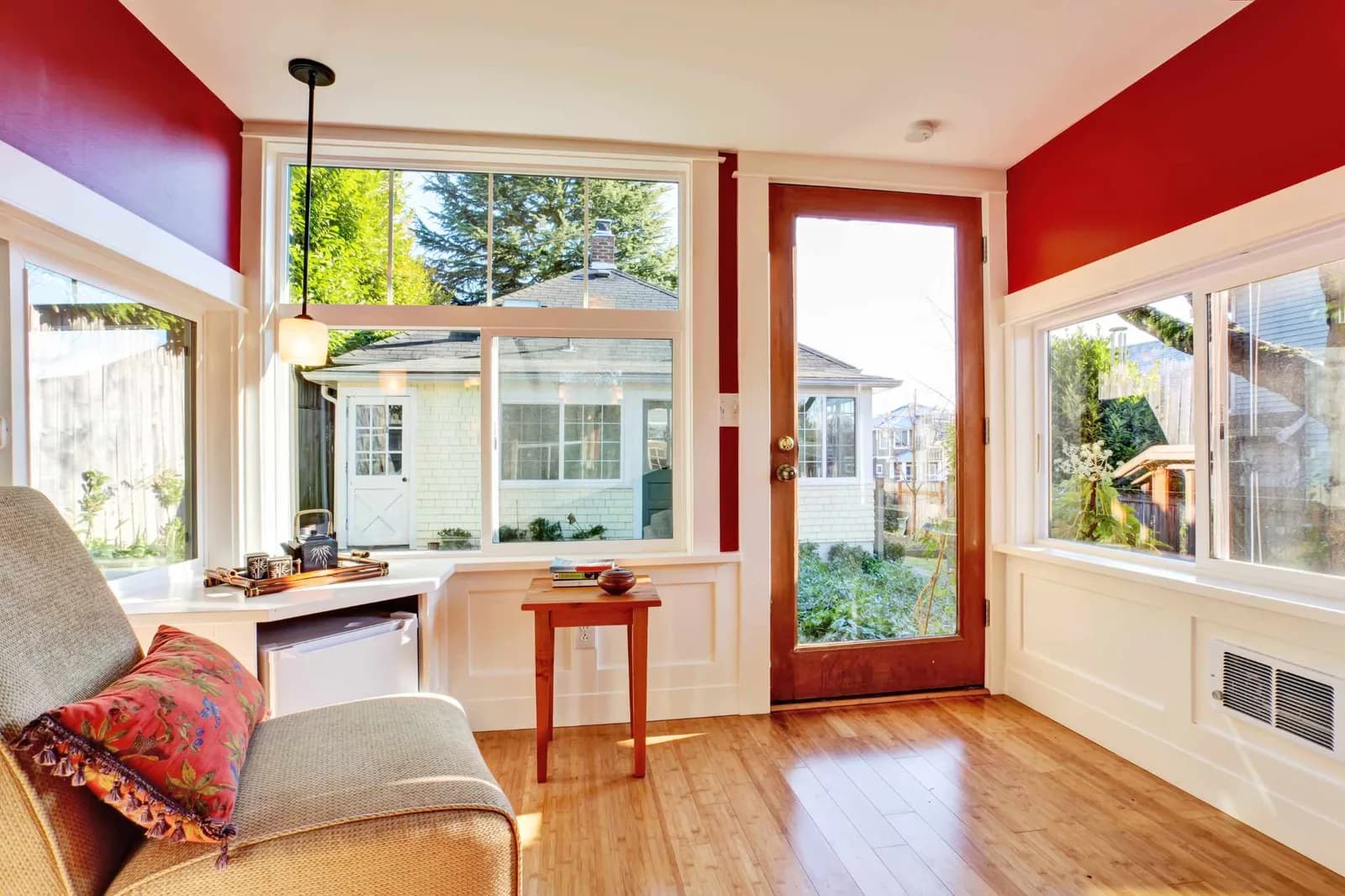
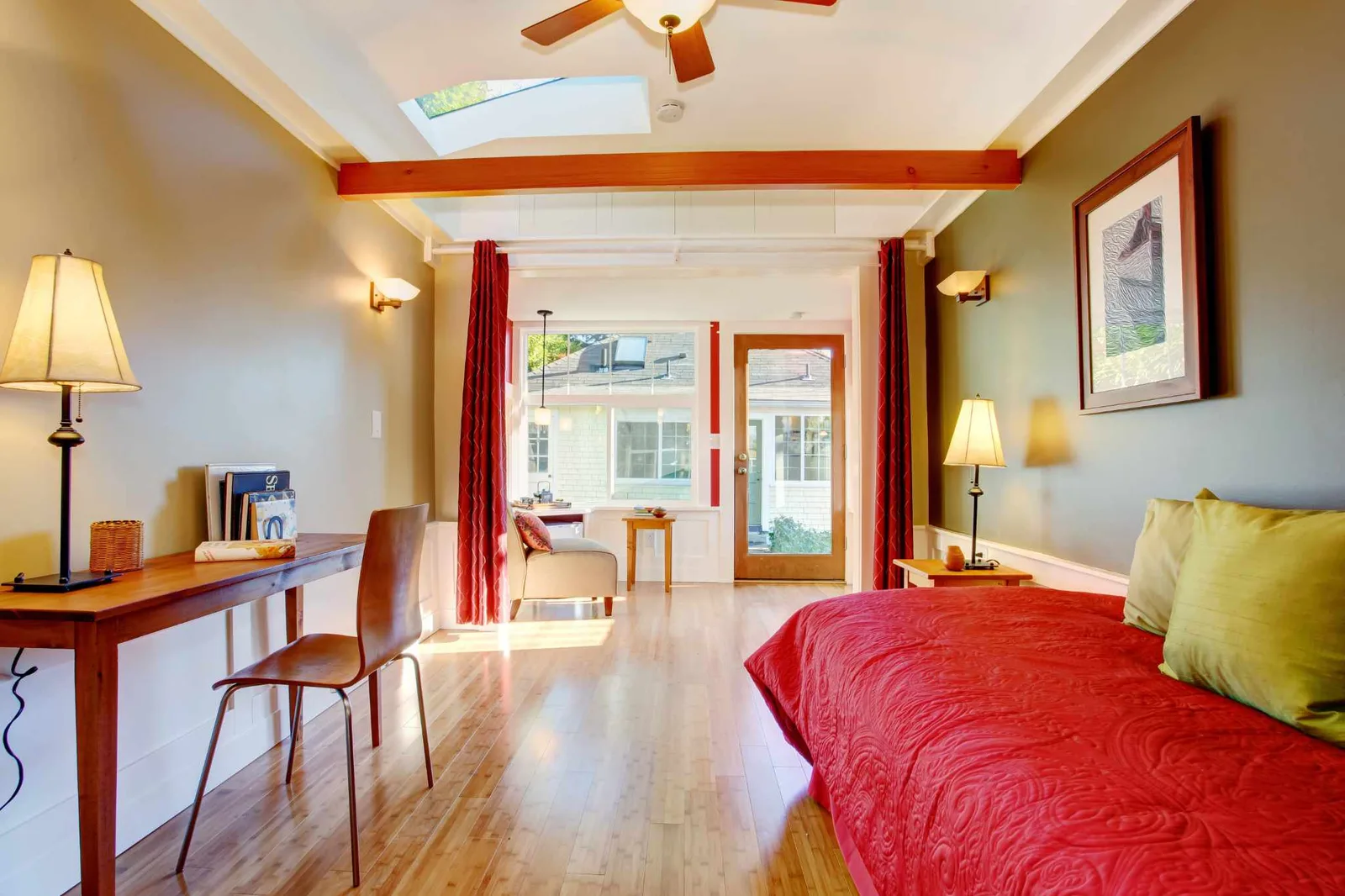
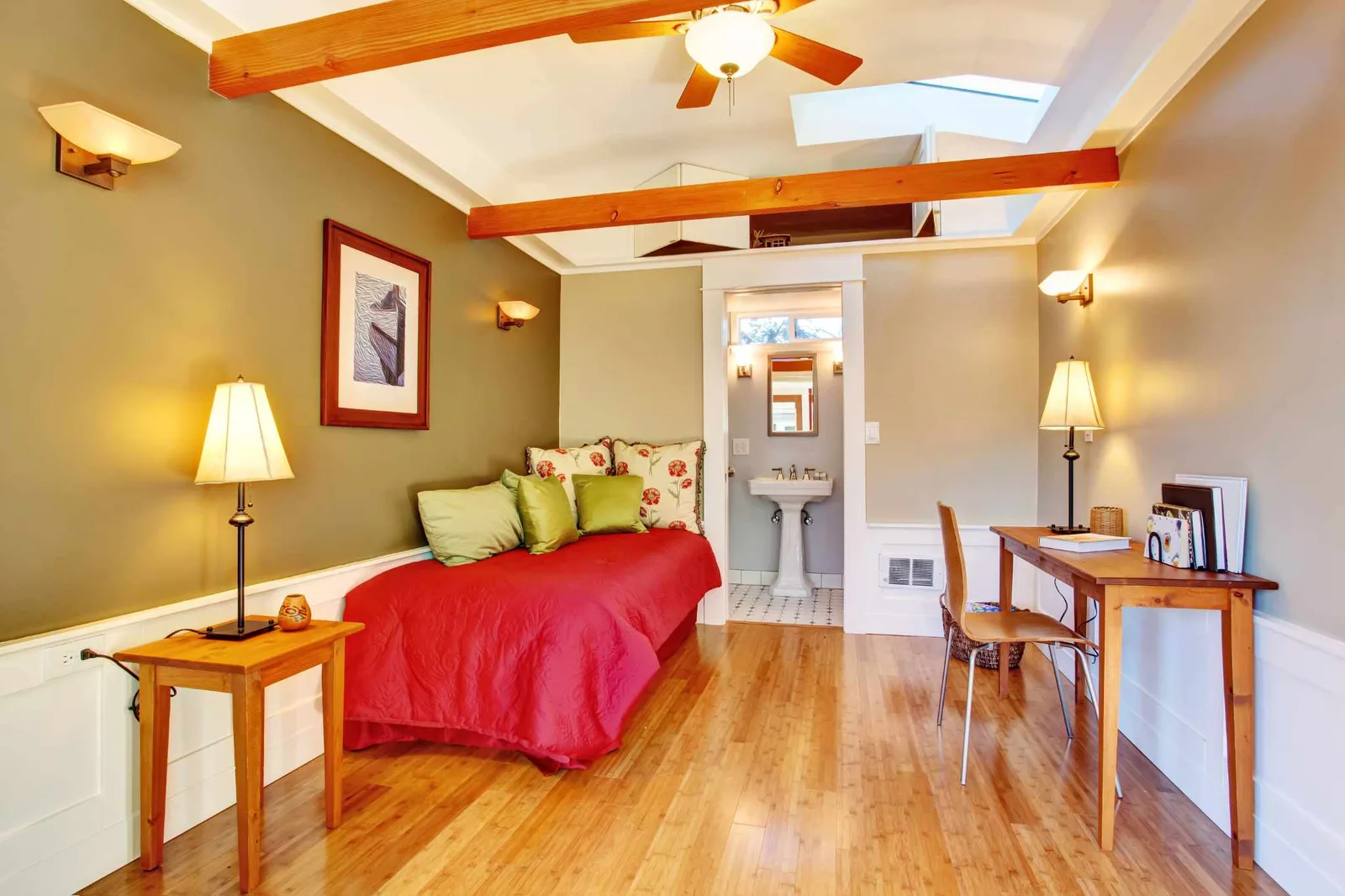
Planning to Build a Guesthouse
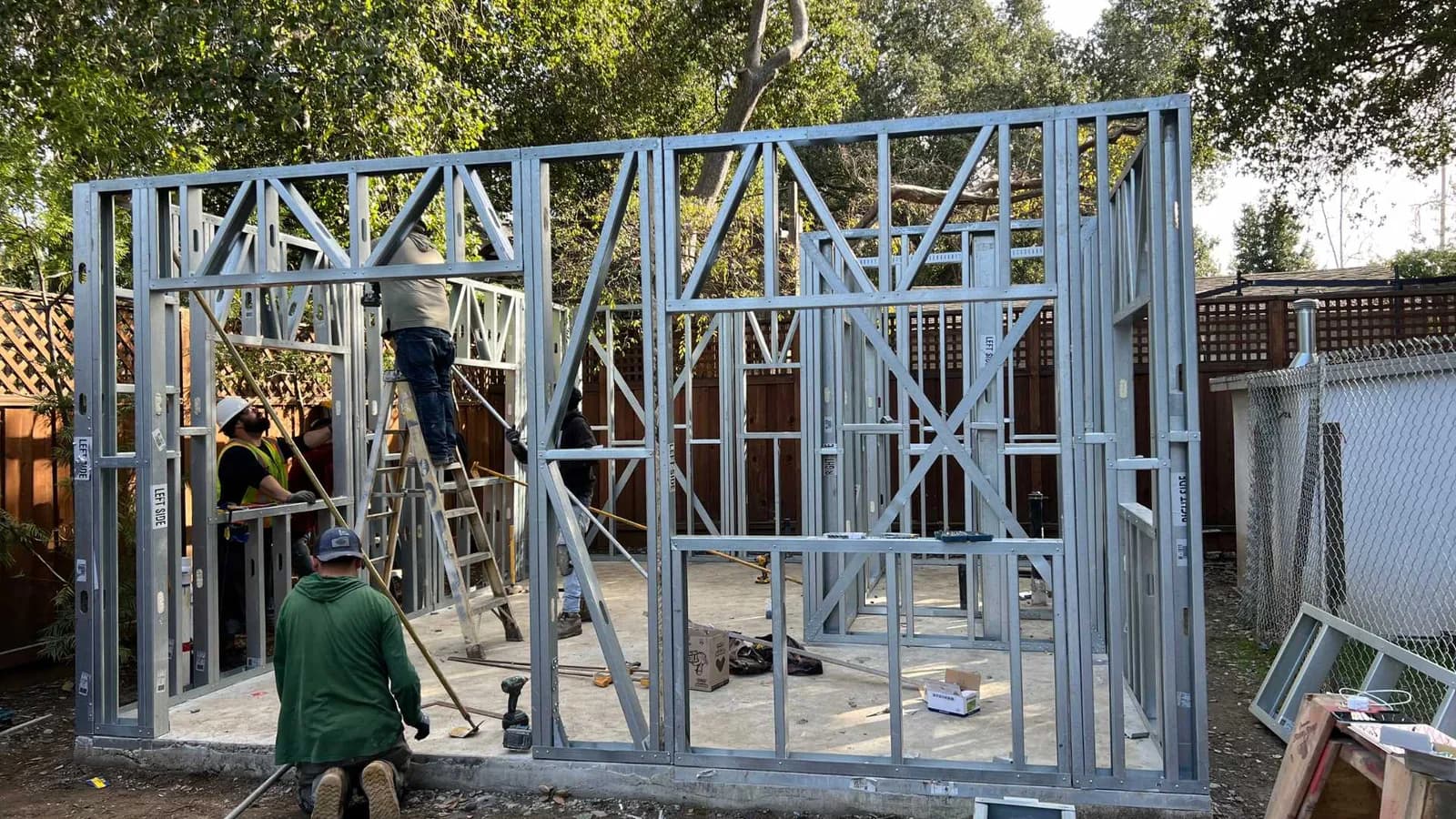
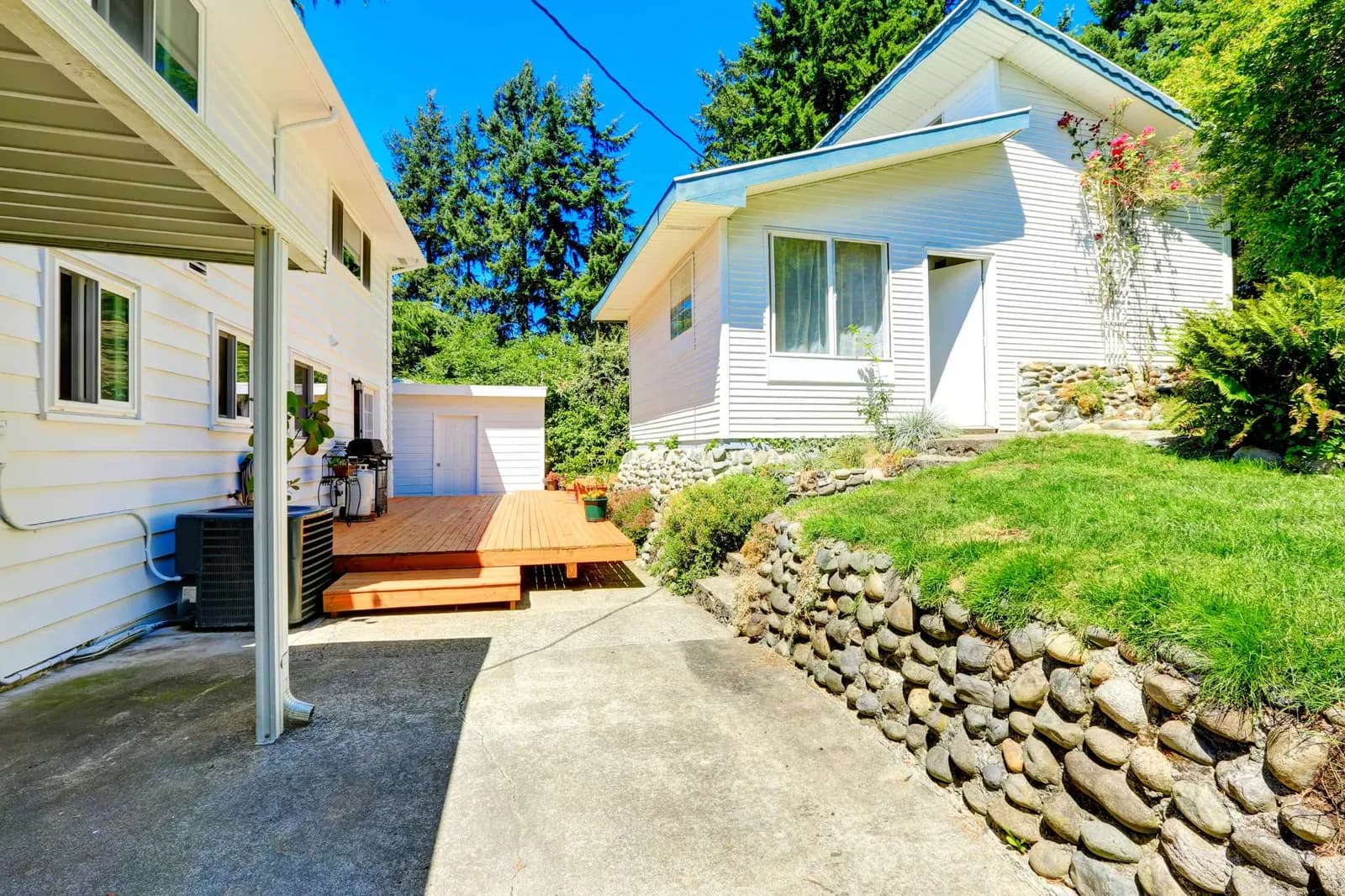
Your perfect guest house starts with available space and a site plan design that takes into account local zoning laws. Once you know the size of the guest house, you can select a design. It can be a ready-made structure – a modular house or a manufactured home. That makes it easier to get necessary permits from the local governments. If your backyard cottage needs to be site-built in the backyard, the entire process will take a bit longer. That said, you will get the size and floor plan you need and the quality of finishes you like.
When we start planning a backyard guest house, we need to pay attention to zoning laws, the location, and our budget. These factors can make the difference between smooth sailing and a complicated process.
Understanding Zoning Laws
Zoning laws vary greatly depending on where we live. These regulations dictate what we can and cannot build on our property. To avoid problems, the first step is to check local zoning ordinances. By doing this, we ensure our guest house is compliant with local regulations.
Contact local officials
Talking to city planners or visiting the local zoning office can give insights into what’s allowed. Sometimes, properties have specific restrictions that we need to know about. For those of us living in areas with a homeowner association (HOA), we might have additional rules to follow.
Choosing the Right Location
It is crucial to pick the right spot for our guest house. We should consider how it fits into the landscape to ensure easy accessibility and lovely views.
Proximity to the main house
A guest house should complement our main property. Ensuring enough space but not disrupting the natural flow of the backyard is key. We should also consider utilities, as connecting water, electricity, and sewage can be easier if our guest house isn’t too far away. Privacy plays a significant role, and we should pick a location that offers solitude for guests.
Setting a Budget
Setting a budget can help us stay on track and avoid overspending. Consider how much space guests will need, the type of construction materials, and any additional features like kitchens or bathrooms.
Breaking down the costs
Listing significant costs such as permits, construction fees, materials, and furnishing is helpful. We also need to think about future expenses like maintenance and upkeep. Sometimes, unexpected costs pop up, so having a little extra set aside can be wise. Planning carefully ensures our guest house project fits within our financial means.
Backyard Guest House Interior Design
When we’re thinking about building a backyard guest house, we should focus on maximizing space, bringing in natural light, and choosing a style that suits our home’s existing structure. Explore these key design aspects to create an inviting, functional space.
Maximizing Small Spaces
Even a small backyard can host a cozy guest house. It’s all about clever design. We can use built-in furniture like benches or foldable pieces to save space. Utilizing vertical storage solutions also helps keep the area clutter-free. Lofted sleeping areas or Murphy beds can free up floor space during the day.
Open floor plans are a good choice because they make the space feel larger. Adding mirrors can also create an illusion of more room. Efficient use of corners and multifunctional furniture turns small spaces into comfortable living areas.
Making the most of our guest house’s layout is crucial. Clever planning can significantly enhance functionality.
Open Layout: Consider an open floor plan that combines living, dining, and sleeping areas. This approach fosters an airy feel and encourages social interaction.
Multifunctional Furniture: Use furniture that serves multiple purposes, such as a sofa bed or a foldable dining table. This flexibility allows for more usable space.
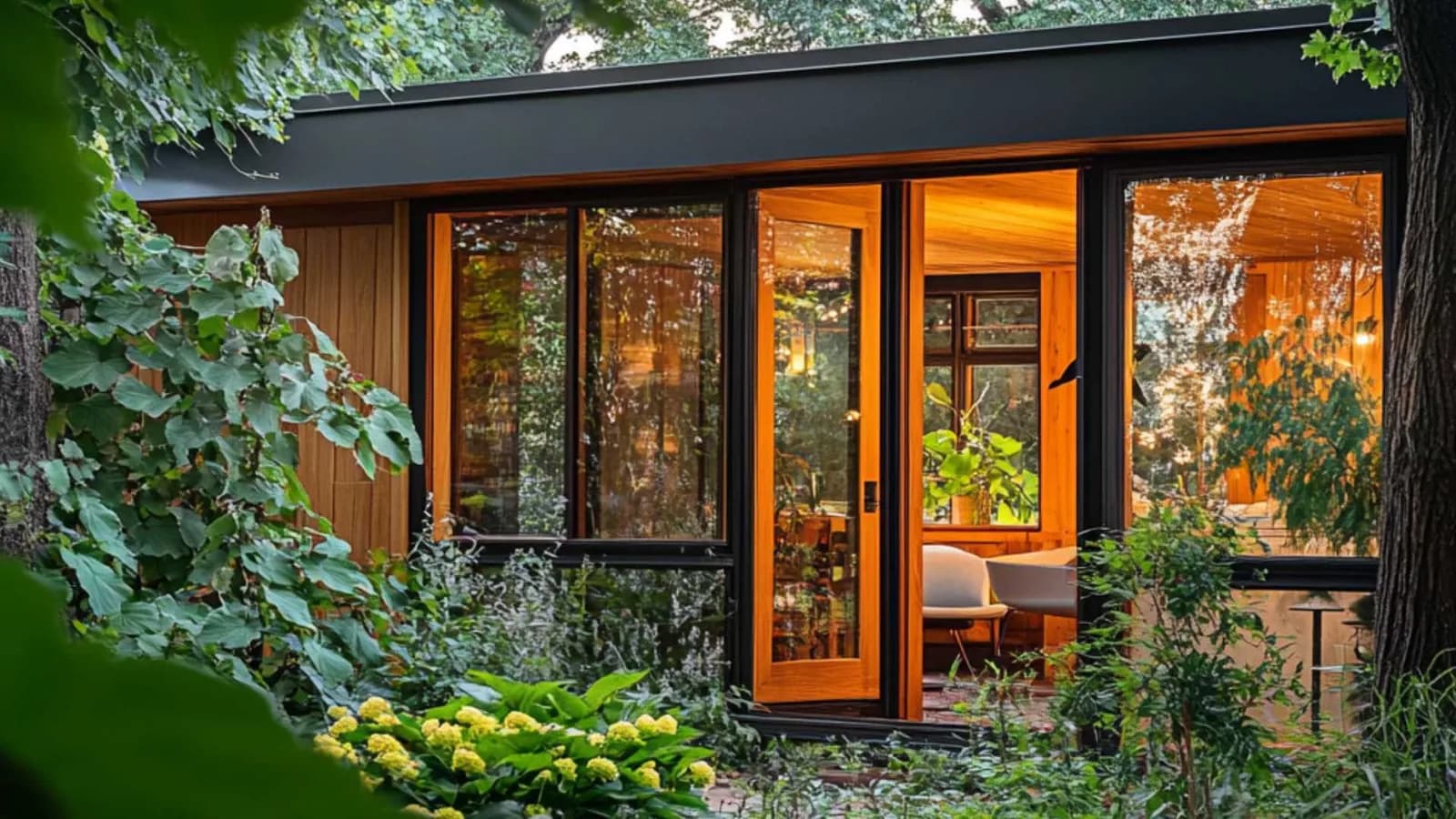
Outdoor Integration: Large doors or windows can connect the indoor and outdoor spaces, creating the illusion of more space and adding natural light.
Thoughtful space design can make even smaller guest houses feel comfortable and inviting.
Incorporating Natural Light
Natural light can help make our guest house more welcoming and energy-efficient. Large windows or skylights brighten the space, making it airy and open. Choosing light-colored walls and surfaces reflects more light, enhancing the effect.
Strategic positioning of windows ensures sunlight throughout the day. Glass doors can also connect indoor and outdoor spaces, giving an open feeling. Sheer curtains are a great way to allow light while providing privacy.
Selecting a Style
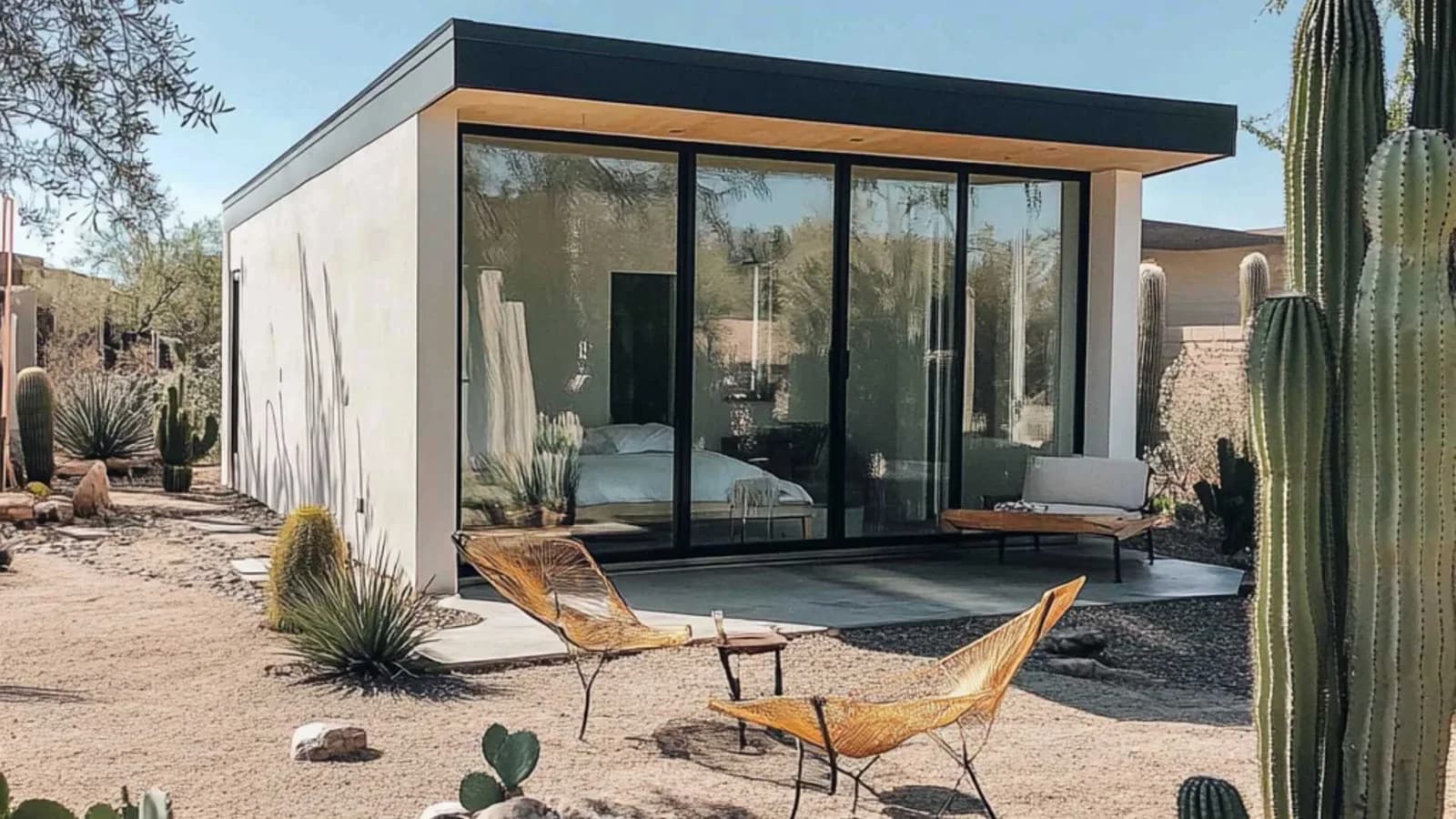
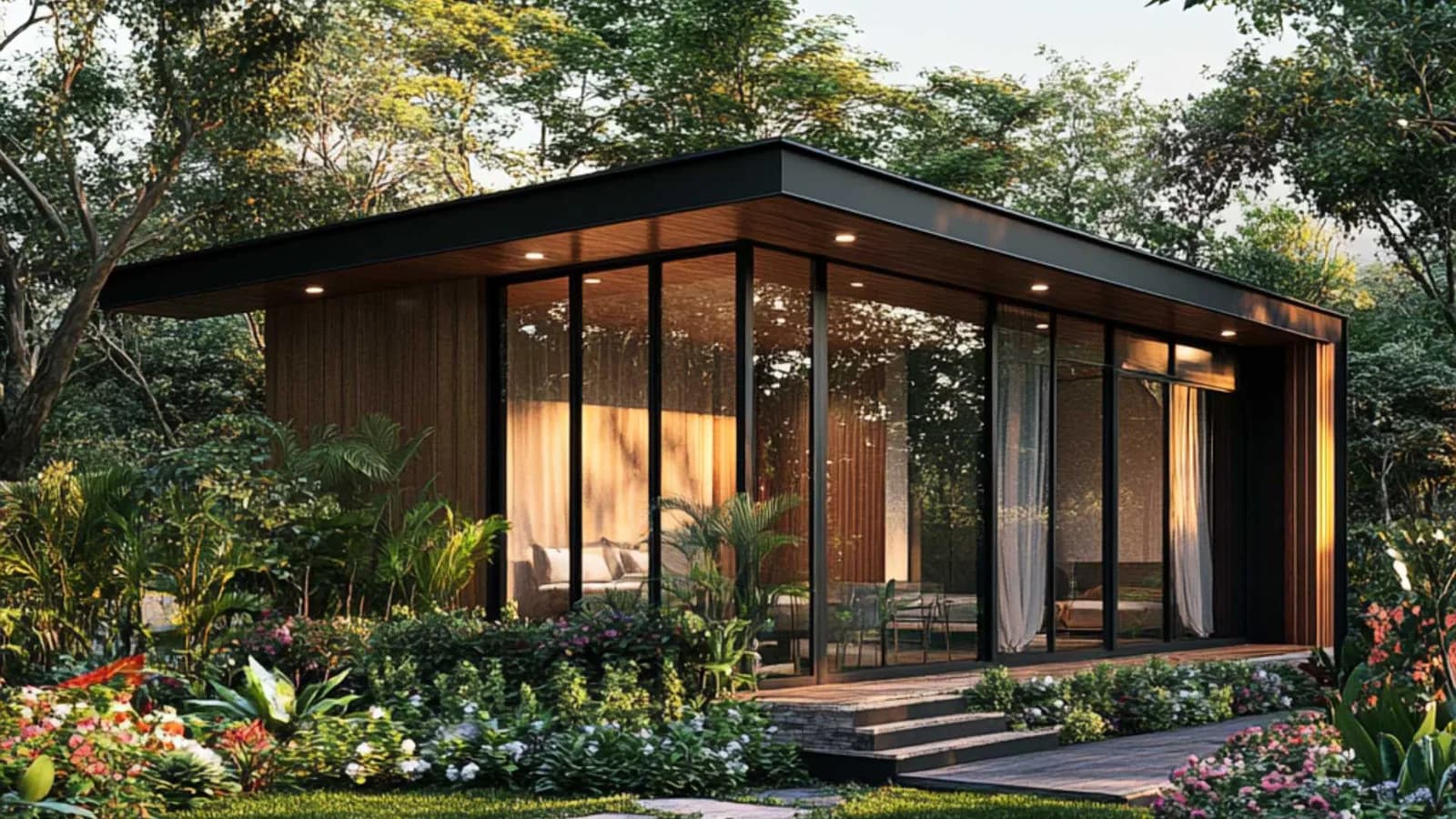
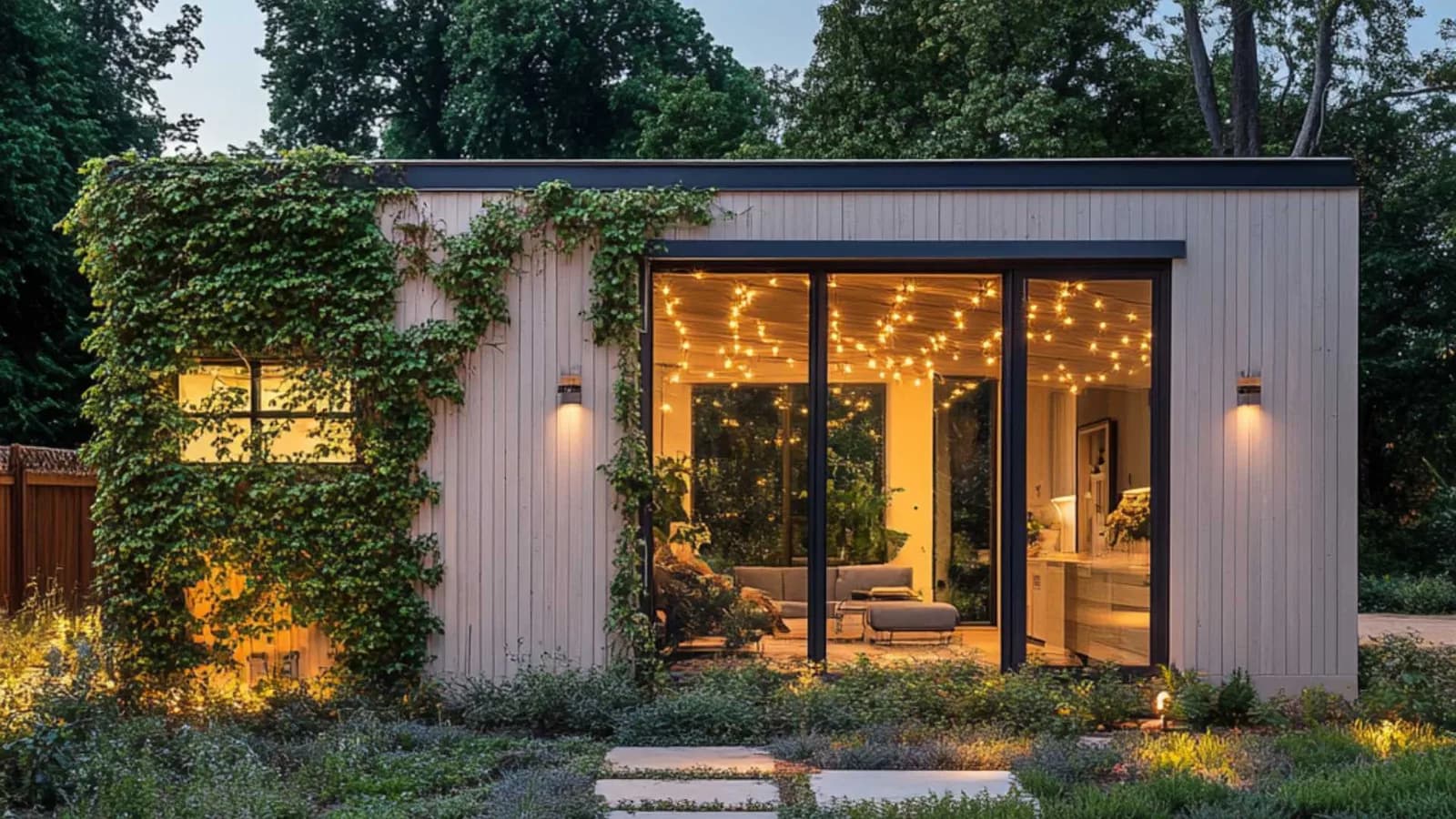
Choosing the right style sets the tone for our guest house. We prefer a modern look with clean lines and minimalistic decor. Sleek modular units are popular for contemporary spaces.
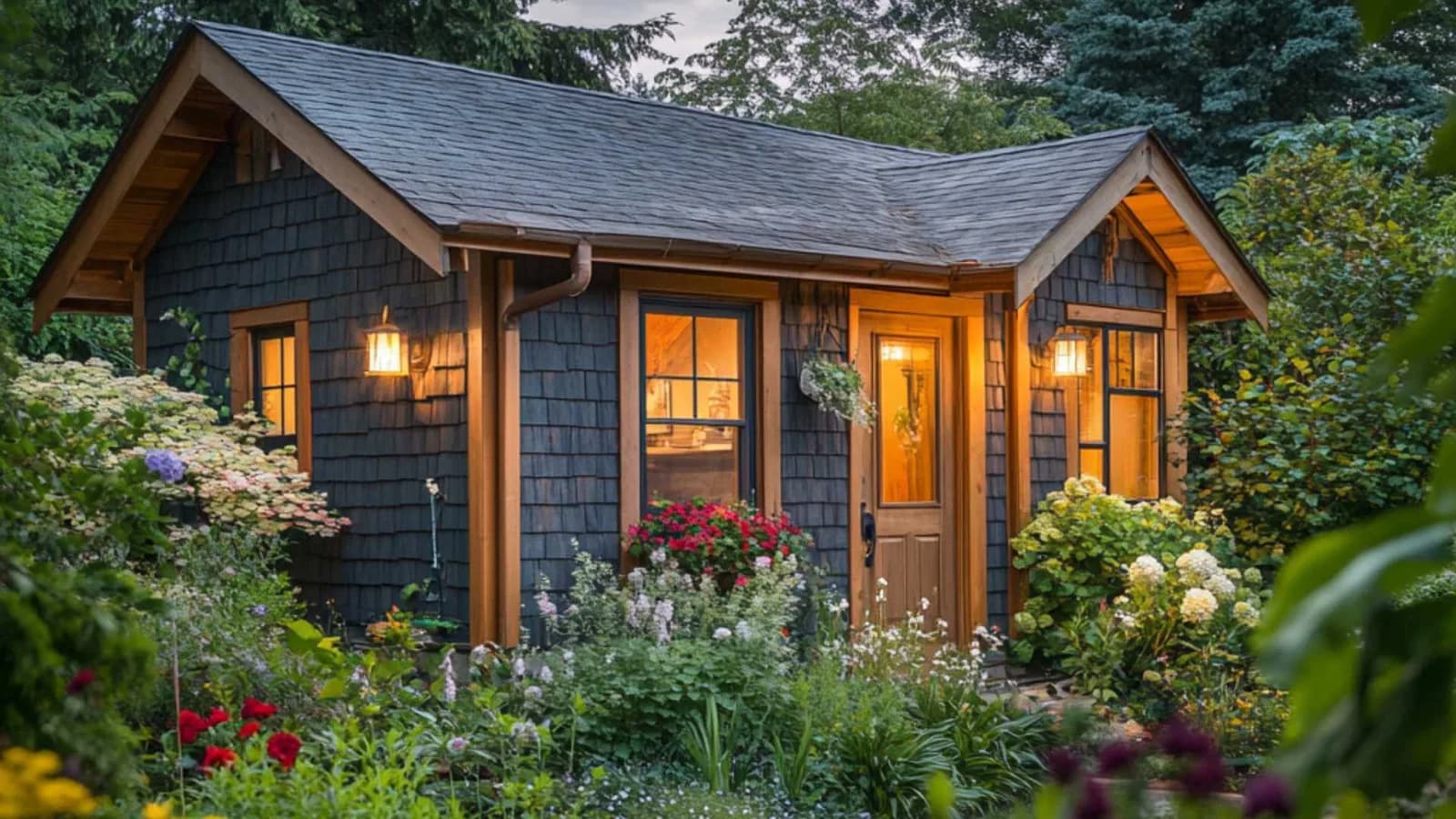
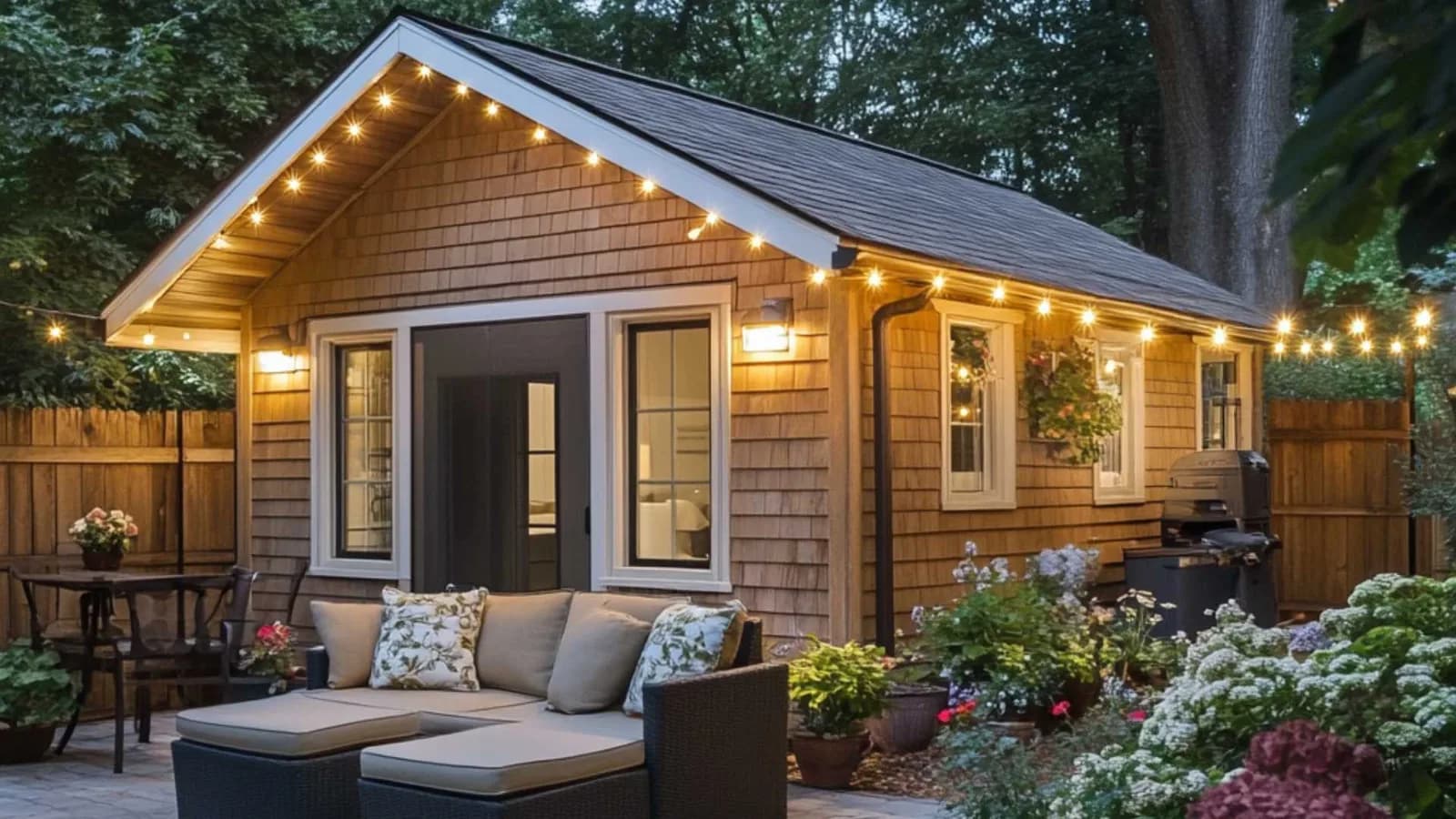
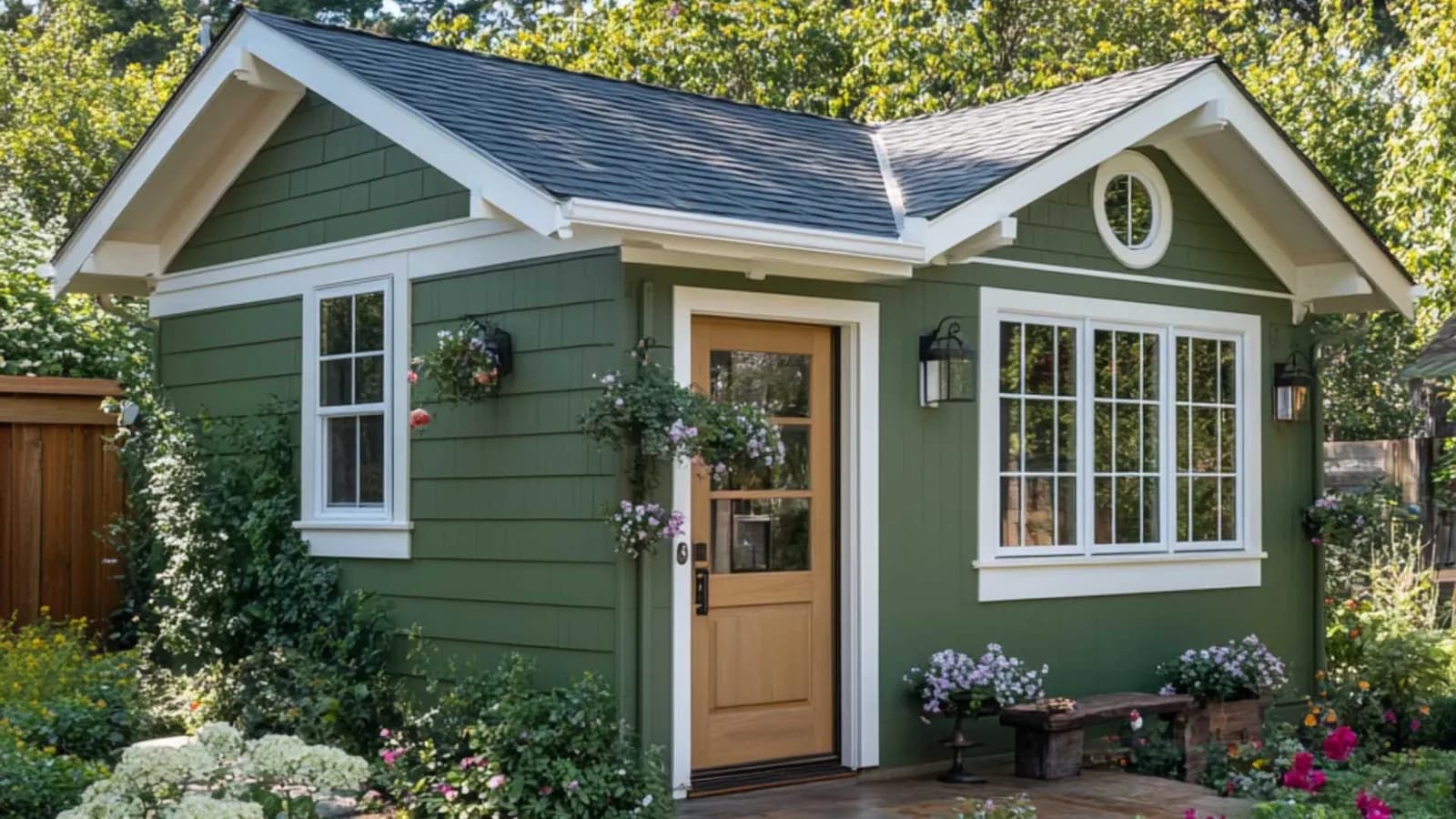
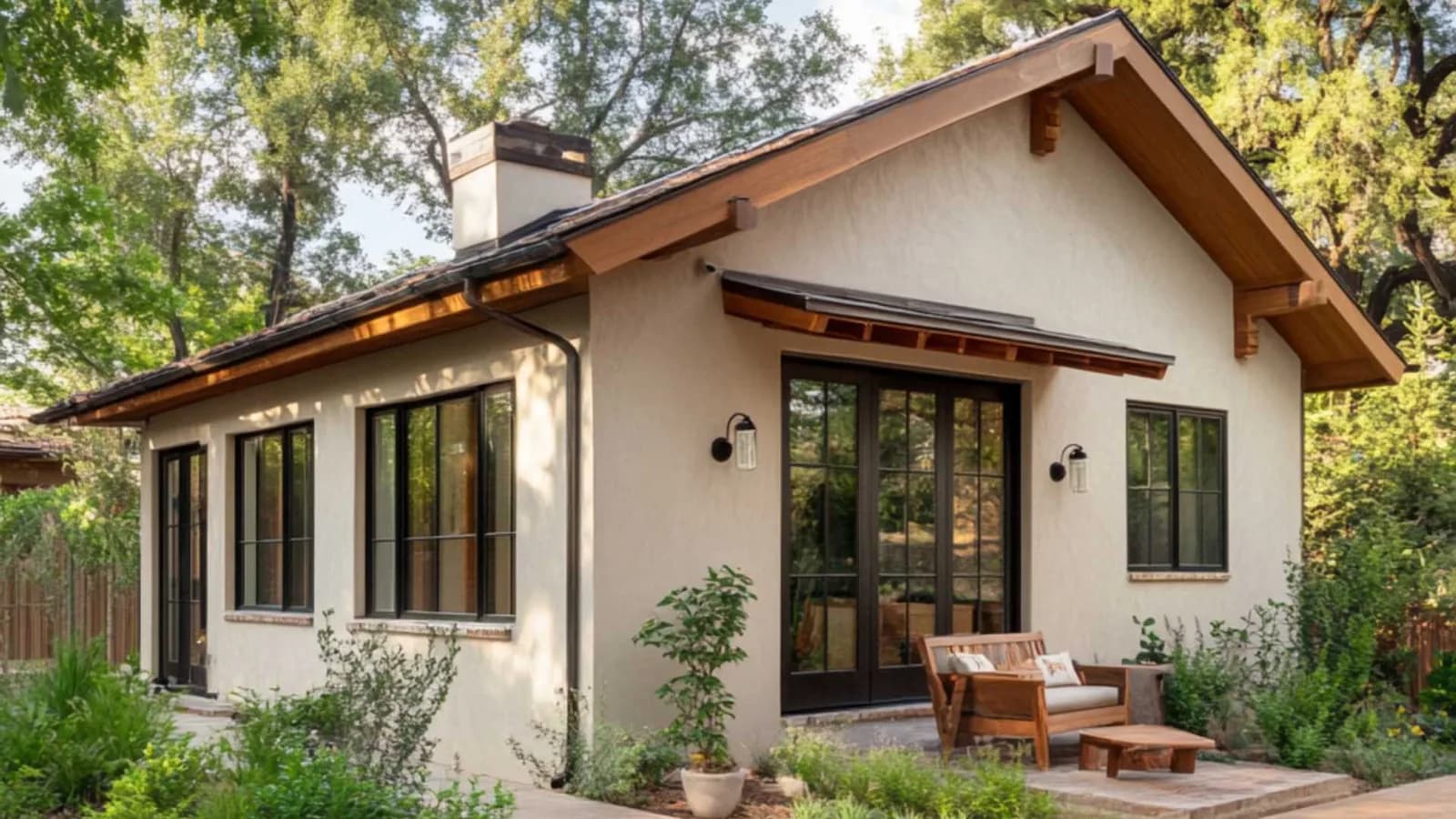
Cottage-style designs offer warmth and charm for a more traditional feel. Landscaping around the guest house can further enhance the selected aesthetic, tying it seamlessly into the outdoor environment. Materials also play a huge role; for example, wood exteriors create a rustic look, while stucco might fit a Mediterranean style.
Choosing the right architectural style sets the tone for our guest house. The style should complement our primary home, whether we prefer a modern, rustic, or traditional look.
Modern: Features sleek lines and large windows. It offers a minimalist feel with an emphasis on open spaces.
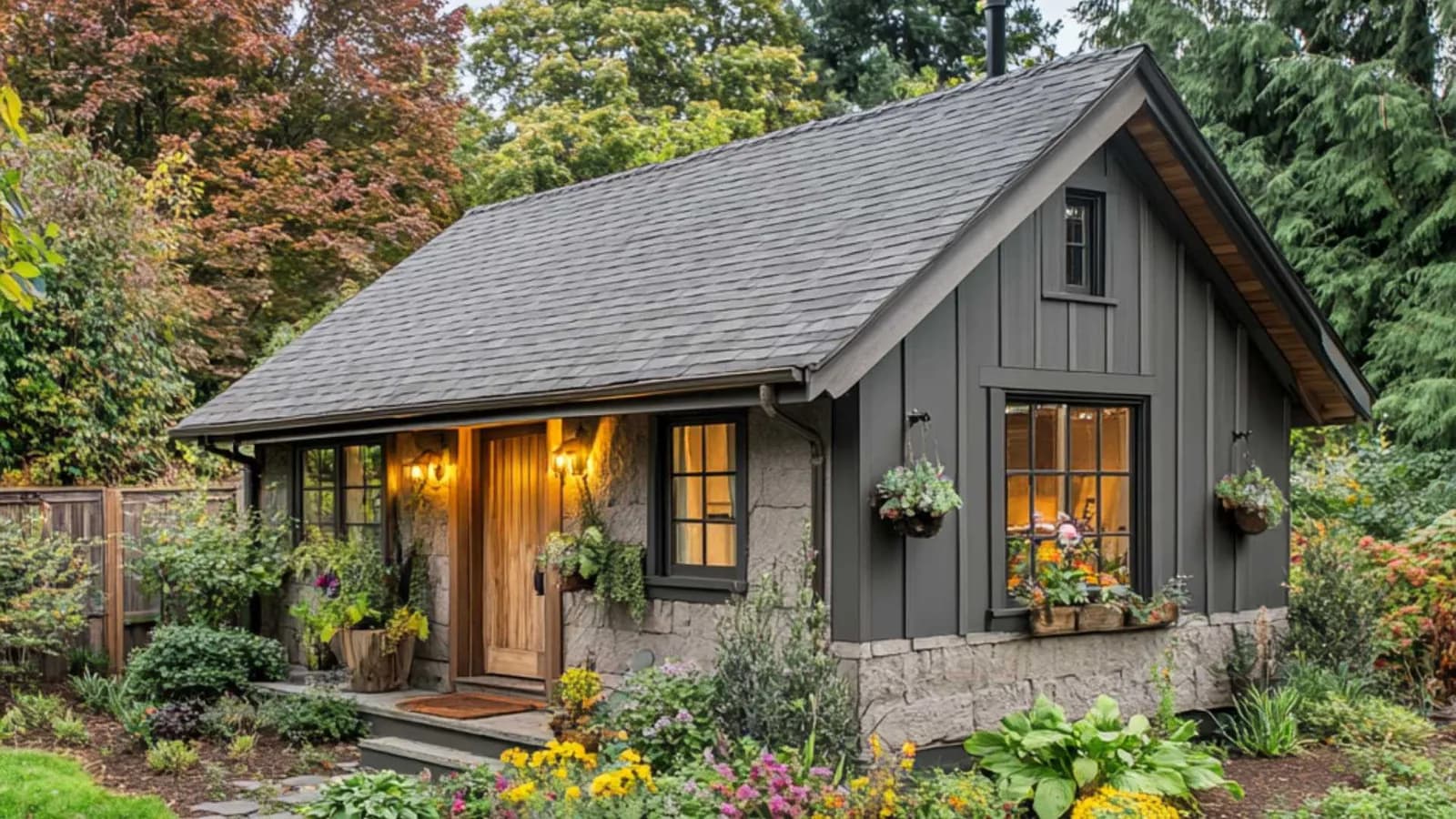
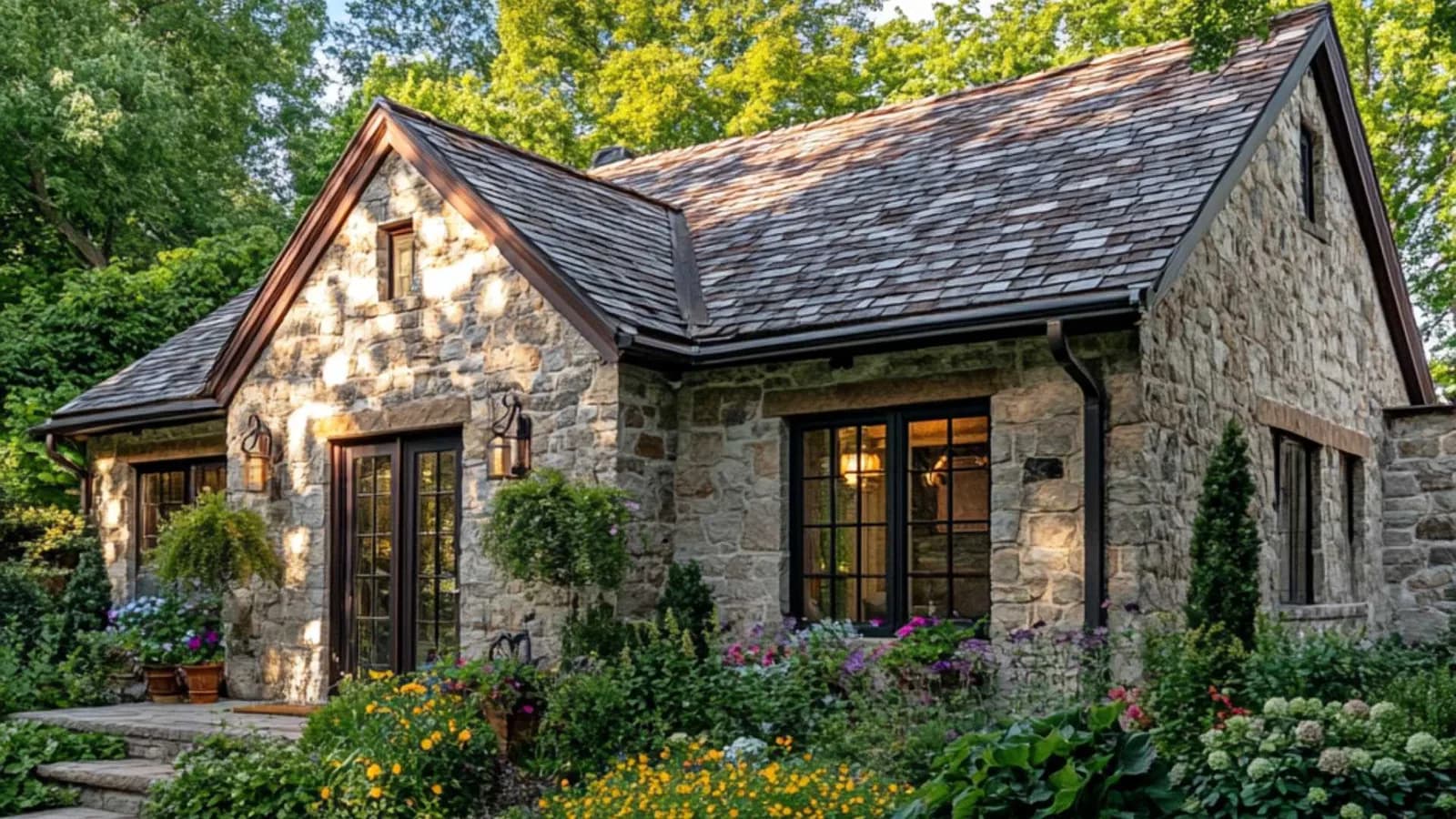
Rustic: Incorporates natural materials like wood and stone. This style creates a warm, cozy atmosphere.
Traditional: Often includes classic elements like gabled roofs and symmetrical designs. It can bring a sense of timelessness to our property.
We can create a cohesive and aesthetically pleasing environment by aligning our guest house with our personal style.
Costs to Build a Guesthouse
The precise cost of building a guesthouse will depend on the size and features of the space, the situation with site utilities, and property site specifics—e.g., whether it is on a slope or located in a flood zone. These details can easily double the cost of the new construction.
Homewip has hundreds of guesthouse plans for your various needs and property’s limitations.
This means square footage is flexible, and costs can be changed to suit your budget. You can use the pans for in-law suites or home office spaces.
That said, the typical backyard studio, with the basic amenities and features, can cost in the greater Bay Area from $120,000 to $170,000. A one-bedroom backyard guest house will most likely cost between $250,000 and $270,000. A two-bedroom guesthouse, depending on the number of bathrooms, can require a sizable budget of about $400,000 or more. The best way to get a good estimate is to show a potential general contractor your plans and get the proposal.
COST TO BUILD
Bay Area guesthouse costs by size
Ballpark budgets for the greater Bay Area. Site conditions and finishes can move these numbers, so show a contractor your plans for a real proposal.
STUDIO
Backyard Studio
- Around 200 sq ft
- Bathroom, living space, kitchenette
- Typical range $120k–$170k
ONE BEDROOM
1-Bedroom Guesthouse
- Separate bedroom for privacy
- Open-plan living area
- Typical range $250k–$270k
TWO BEDROOM
2-Bedroom Guesthouse
- Up to ~1,200 sq ft
- Two bedrooms, ensuite bathroom
- Cost rises with extra bathrooms
Where do these costs come from?
Utility Setup for Your Guesthouse
Setting up utilities is crucial when building a guest house in the backyard. We need to focus on reliable connections for water, power, internet, and communication to ensure comfort and functionality.
Connecting You Guesthouse to Water and Power
We need to start by planning the layout of our water and power lines. Connecting to our main supply is essential for water. This involves running new pipes to the guest house, which might require digging. We should also consider setting up a separate meter or submeter to monitor usage.
For power, we can extend electrical lines from our main house. Hiring a licensed electrician is necessary to ensure safety and compliance with local codes. Installing a small dedicated circuit breaker can help manage the load efficiently. We might also consider installing solar panels as an eco-friendly option.
Internet and Communication Lines
Internet access is a must for our guest house. We have a few options to consider. If our Wi-Fi signal is strong, we could use a range extender to boost coverage. Otherwise, running an Ethernet cable might offer more reliable connectivity. Setting up a smart home system could also enhance convenience, allowing one to remotely control lights and other devices.
With Homewip, that cost includes planning, fast-tracking permitting, and building the space. When considering estimates, remember to compare them apples to apples. A fixed contract is useless if it does not include half of the finishes and labor to install them.
HOW IT WORKS
See your guesthouse in three steps
Try a guesthouse on your own property before you talk to a contractor.
Pick a plan
Choose from one of the 500+ pre-designed small house plans.
Map your lot
Type in your address to view a guesthouse on the map of your property.
Get an estimate
Review a preliminary estimate for your selected guesthouse.
P.S. This service is complementary, however login is required.
Frequently asked questions
It's any living quarters detached from your main house, and every city defines it differently. Once it has its own bathroom and kitchen, it's really an accessory dwelling unit. In Fremont, for example, a guest house has to stay under 600 square feet while an ADU can reach 1,000.
Almost always, yes. Structures under 120 square feet usually need only an electrical permit and count as non-habitable, but anything larger needs proper permits. Location and size limits apply to every structure, permit or not, and they change from city to city.
Small structures built for people start around $60,000. In the greater Bay Area a basic studio runs $120,000 to $170,000, a one-bedroom usually lands between $250,000 and $270,000, and a two-bedroom can need $400,000 or more depending on bathrooms.
A 200-square-foot studio is the most flexible and fits nearly any California backyard. A one-bedroom adds room separation that tenants like, and a two-bedroom around 1,200 square feet lets you charge more for long-term rentals or split the space between an office and a rental.
An ADU can. Homes with guest houses are in demand, and ADUs tend to appreciate alongside your main house. They also usually don't trigger a tax re-evaluation the way a regular addition does. Accessory structures like sheds, on the other hand, are valued at cost.
You run new pipes from your main supply for water, which often means digging, and a separate meter or submeter helps track usage. For power, a licensed electrician extends a dedicated circuit from the main house. Solar panels are worth considering as an eco-friendly option.
Yes, and the same regulations apply to prefab as to site-built structures. Prefab and modular units speed up the permit process, but check local codes first. Watch for red flags that block delivery, like overhead power lines and narrow road access.