

New Mexico ADU Laws (2026): What the State Sets, What Cities Decide
Can you build an ADU in New Mexico? It depends on your city or county. New Mexico ADU laws are local: bills to create a statewide law died in 2023, 2025 and 2026, so your city or county writes the accessory dwelling unit laws for your lot. Last verified November 4, 2026.
Can you build?
Can You Build an ADU in New Mexico?
Yes, if your city or county allows it. New Mexico has no statewide ADU law, so your city or county code sets the ADU rules.
The state does set two things. First, the one state zoning rule that touches ADUs: every zoning authority, home-rule cities included, must offer a way to allow up to two kitchens in a single-family zone for a multigenerational household, such as a conditional use permit (§ 3-21-1 NMSA, as reprinted in HB 554).
Second, construction follows the state residential building code: the 2021 New Mexico Residential Building Code covers one- and two-family homes and their accessory structures.
State vs. local
New Mexico's ADU Law: What the State Sets, What's Local
New Mexico has no ADU statute, so five of these six rules come from your city or county. Last verified November 4, 2026.
No state ADU law
HB 425, HB 554 and HB 17 all died. The one state zoning rule that touches ADUs is the two-kitchen option for multigenerational households.
Approval: left to your city
No state ADU law makes ADUs by-right. If your city requires a hearing, expect extra time.
Owner-occupancy: left to your city
No state ADU law sets this. HB 17 would have barred owner-occupancy rules.
Parking: left to your city
Parking minimums are your city's call. One extra required space can make a small lot unbuildable.
ADU types: left to your city
Your city decides whether it allows attached ADUs, detached ADUs or both.
Size and fees: left to your city
No state ADU law caps ADU size or impact fees, so your city sets both.
Size limits
How Big Can an ADU Be in New Mexico?
New Mexico has no statewide ADU size limits. Albuquerque's rules show what one city's cap looks like.
Detached ADU
- No state ADU law sets a size cap
- Albuquerque: up to 750 sq ft and no more than 25% of the side and rear yards combined
Attached ADU
- No state ADU law covers attached units
Height and setbacks
- Albuquerque: 5 ft side and rear setbacks
- Albuquerque: no taller than the main house
ADUs per lot
- Albuquerque: 1 casita per lot in R-A and R-1
Owner-occupancy and parking
Do You Have to Live There or Add Parking in New Mexico?
For owner-occupancy and parking, New Mexico ADU regulations are local. No state ADU law covers either one.
Owner-occupancy: your city decides
Your zone's ADU section says whether you must live on the property.
Parking: your city decides
Albuquerque, for example, requires one off-street parking space for a casita.
Approval
How Does ADU Approval Work in New Mexico?
Your city runs the process, because no state ADU law sets a permit path or deadline.
Your city decides whether staff approve an ADU or send it to a hearing. Albuquerque uses administrative site plan review.
No state ADU law sets a review deadline, so ask your city for current review times.
Impact and permit fees are local. An ADU can also bring a new property-tax valuation (see the FAQ).
Your City Sets the Size Cap. Size Your Budget to Match.
If your city's cap is like Albuquerque's 750 sq ft, start with our 750 sq ft house plan, check it against your city's limits, then estimate the budget.
Local rules
What Your New Mexico City or County Decides
Local code, not state law, sets each of these.
Whether ADUs are allowed at all
Your zone decides. Albuquerque allows casitas in its R-A, R-1, R-T and R-ML zones.
HOAs and covenants
No state ADU law overrides HOA covenants.
Zoning overlays
Historic districts and other overlays can add design or size rules.
Setbacks and lot coverage
Your city sets these. Albuquerque caps a casita at 25% of the side and rear yards combined.
Utilities and septic
Water, sewer or septic, and electrical capacity can decide where the ADU fits. Ask your utility early.
Short-term rentals
Your city decides whether to limit them. HB 17 would have let cities require rentals longer than 30 days.
Check your city
How to Check the ADU Rules for Your New Mexico Lot
Confirm your zone allows ADUs
Look up your parcel's zoning and ask whether that zone allows an accessory unit.
Get the ordinance text
Ask for the code section itself. A staff summary can leave out setbacks and parking.
Search every local term
Search for "accessory dwelling unit", "casita", "multigenerational" and "two kitchens". Albuquerque uses "casita".
Check your HOA
Read your covenants early. No state ADU law overrides an HOA ban.
Ask who reviews the building permit
Ask whether your city, county or the state Construction Industries Division reviews it, and which code edition applies.
Bring a plan and site layout
Your city will want the unit's size and where it sits on the lot.
The State of New Mexico in the News
Pending ADU bills: none found in the Legislature's records as of November 4, 2026.
HB 17 (2026): tabled in committee
HB 17 would have required cities to allow at least one ADU per residential lot, attached or detached. Cities could not have required owner-occupancy or more than one parking space, or capped size below 1,000 square feet. A House committee tabled it on February 2, 2026, and it never reached a floor vote.
HB 554 (2025): passed the House, stalled in the Senate
HB 554 passed the House 50-10 on March 11, 2025, then was postponed indefinitely in a Senate committee. HB 17 copied its amended version.
HB 425 (2023): died in committee
HB 425 was introduced February 14, 2023 and never left committee. If you've read that New Mexico passed a statewide ADU law with a 1,000 sq ft size limit and 5-foot setbacks, check the bill records. Those terms match HB 17, which never passed.
About HomeWiP
Planning an ADU in New Mexico With HomeWiP's Free Tools
We don't handle permits in New Mexico, but in 20+ California cities and counties we take ADUs from design through permits and construction to final inspection. Houses are built and connected to utilities in much the same way, even where permit rules differ.
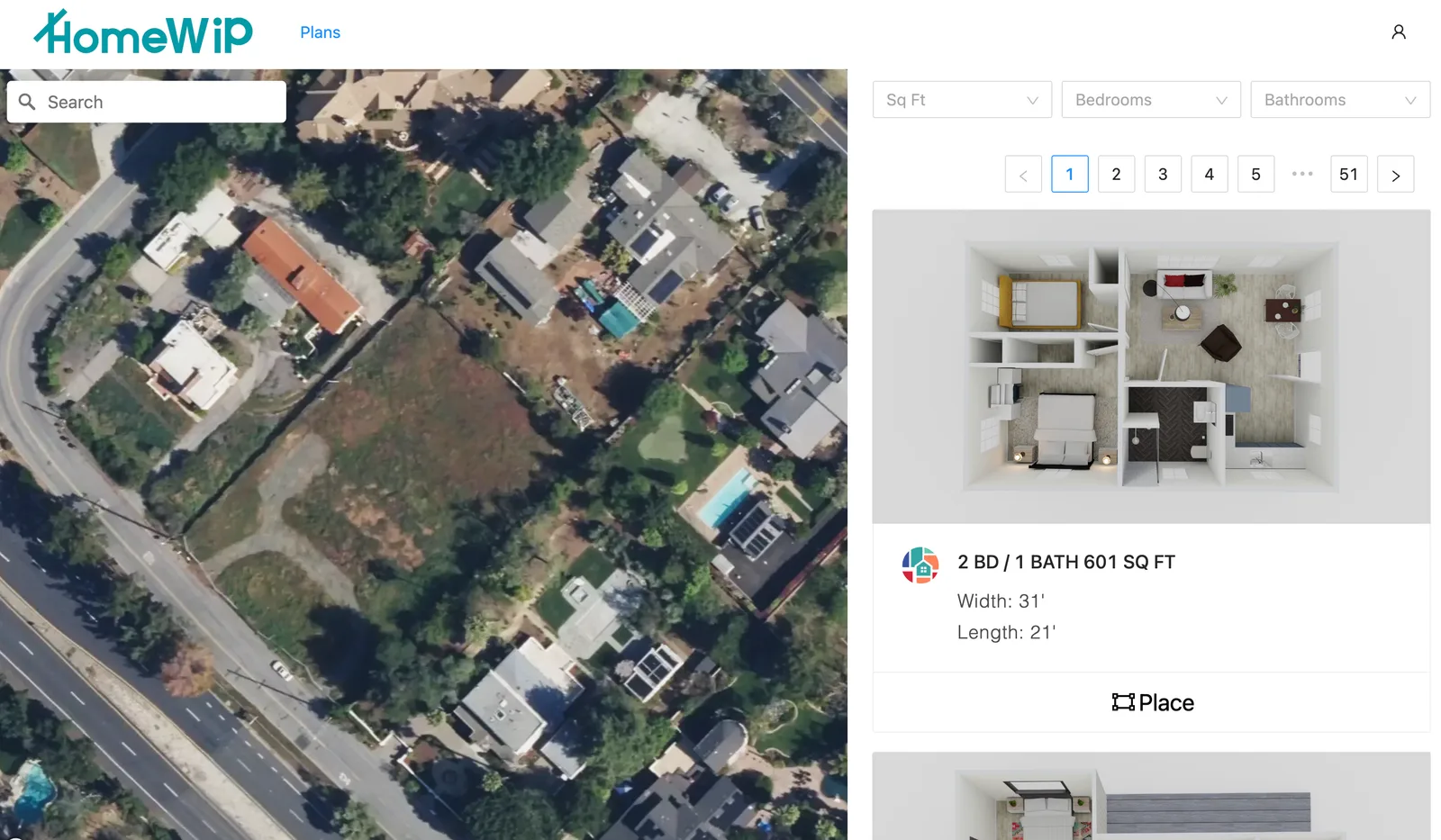
- View pre-designed plans in your backyard
Pick a free plan, then place it
Choose a pre-designed plan on adu.homewip.com and see how it fits your New Mexico lot with the site visit tool.
- Contact us
Take the plan to your city
Bring the plan and site layout to your city or county planning staff. We don't handle New Mexico permits.
FAQ
New Mexico ADU Laws: Common Questions
It depends on your city or county. New Mexico has no statewide ADU law; the latest bill, HB 17, was tabled in February 2026. The one state zoning rule that touches ADUs makes every zoning authority offer a way to allow up to two kitchens in a single-family zone for a multigenerational household.
New Mexico doesn't require it statewide, but your city may. HB 17 would have barred owner-occupancy rules, and it was tabled in 2026. Check the accessory dwelling or casita section of your zoning code, and ask whether the rule covers the main house, the ADU or either one.
Possibly. No state ADU law overrides HOA covenants. HB 17 would have kept new HOA restrictions from delaying or denying a building permit, but it was tabled in 2026. Read your covenants before paying for design, and if the wording is unclear, ask the HOA to answer in writing.
No state ADU law sets a deadline, so it depends on your city. In Albuquerque, a casita goes through administrative site plan review, then building permits and inspections. Ask whether your city, county or the state Construction Industries Division reviews the building permit, and get current review times before setting a construction date.
The state sets construction standards through the 2021 New Mexico Residential Building Code, plus the two-kitchen option for multigenerational households. Your city or county sets the rest: whether ADUs are allowed, size, setbacks, parking, owner-occupancy and fees. Most of what decides your project is in the local code.
Often, yes. Albuquerque's rules use "casita" for a backyard ADU. State law speaks of "multigenerational" housing with up to two kitchens in a single-family zone. Search your city's code for all three terms, "accessory dwelling unit" included, so you don't miss a rule.
It can. According to the Governor's Office of Housing, quoted in the Legislative Finance Committee's fiscal report on HB 17, residential tax increases are capped at 3% a year, but building an ADU "forces a current and correct property tax valuation." Long-time owners can see a shock increase, "often doubling or tripling" their tax. Ask your county assessor before you build.
Plan Your New Mexico ADU With a Free Pre-Designed Plan
Start planning
Pick a floor plan on adu.homewip.com, then use the site visit tool to see it on your New Mexico lot. You'll come away with a layout you can show your city.
Sources
- HB 17 (2026) bill history, New Mexico Legislature
- Fiscal Impact Report on HB 17, Legislative Finance Committee
- HB 554 (2025) bill text, New Mexico Legislature, which reprints the current § 3-21-1 wording
- NMSA § 3-21-1, zoning and multigenerational housing
- 14.7.3 NMAC, 2021 New Mexico Residential Building Code
- Mercatus Center, A Taxonomy of State ADU Laws 2025, which doesn't classify New Mexico
Last verified November 4, 2026. We review this page twice a year.