

Colorado ADU Laws (2026): What You Can Build, By Right
Colorado ADU laws require covered cities to allow one ADU on a single-family lot. Since June 30, 2025, HB24-1152 has required staff approval with no public hearing. Last verified Sep 2026.
- ADU-friendlyStatewide ADU law
- 500–750 sq ftSize cities must allow
- NoOwner-occupancy required
- NoExtra parking required
On this page
- Can you build an ADU in Colorado?
- Colorado ADU law at a glance
- Colorado ADU size and design limits
- Owner-occupancy and parking in Colorado
- Colorado ADU approval: staff review or public hearing?
- Colorado ADU grants and financing
- What your Colorado city still controls
- How to check your Colorado city's rules
- The State of Colorado in the news
- How HomeWiP helps Colorado homeowners
- Colorado ADU FAQ
Q1
Can you build an ADU in Colorado?
Yes, if your city is covered by the law. Colorado's ADU law is HB24-1152, now C.R.S. §§ 29-35-401 to -405. It took effect May 13, 2024, and its core rules have applied since June 30, 2025.
It covers two kinds of places: towns and cities with at least 1,000 people inside a metropolitan planning organization, and unincorporated county areas inside a census-designated place of 40,000 or more that is also inside one. In those places, the city must allow an ADU on any lot with a single-unit detached house. The ADU can be internal, attached or detached.
Some parcels are exempt: lots without public water or sewer (or with a well permit that can't serve a second unit), historic properties outside a historic district, and lots in a floodway or 100-year floodplain. Outside covered cities, local rules apply unless the city opts in as an "ADU supportive jurisdiction".
Covered cities can be more generous than the state, but they can't go below its minimums.
Law at a glance
Colorado ADU law at a glance
The six facts that decide whether and how you can build, as of September 2026.
Tier
ADU-friendly. Colorado has a statewide ADU law that bars owner-occupancy and extra-parking mandates in covered cities.
Statute
HB24-1152, C.R.S. §§ 29-35-401 to -405, effective May 13, 2024.
Approval
Administrative. City staff decide on objective standards, with no public hearing.
Timeline
State law sets no deadline for a decision. Your city sets its own.
Impact fees
Set locally. Cities may charge impact fees that apply to all development.
HOA override
Conditional. See the FAQ below.
Q2
Colorado ADU size and design limits
Colorado doesn't cap ADU size. It says what cities must allow. A covered city can't ban ADUs between 500 and 750 sq ft, and it can't hold factory-built ADUs to stricter rules.
Detached
Size cities must allow
- No state maximum; cities may allow more
- Cities may cap an ADU at the main home's size
- Side setback no deeper than the house's
- Rear setback no more than 5 ft, or the accessory-building setback if that's larger
Attached
Size cities must allow
- Same rule as detached ADUs
- Internal conversions are covered too
- Design rules must be objective and no stricter than for the house
Height
Height limit
- State law doesn't address height
- Check your city's zoning code
Per lot
ADUs per lot
- Cities must allow one ADU and may allow more
- Minimum lot size can't exceed the one for a single-unit house
Q3
Owner-occupancy and parking in Colorado
In covered Colorado cities, you don't have to live on the property and you usually don't have to add a parking space. Mercatus rates Colorado's law the same way.

Owner-occupancy: No
A city can't require the owner to live in the house or the ADU. It can ask for proof that you live on the lot when you apply, except when the ADU is built together with a new house.
Extra parking: No, with narrow exceptions
A city may ask you to assign an existing driveway, garage or tandem space to the ADU. It may require one new space only if the lot has no off-street parking, the zone required parking for the house as of Jan 1, 2024, and on-street parking is banned on the block.
Q4
Colorado ADU approval: staff review or public hearing?
Staff review. Covered Colorado cities must approve ADUs administratively, on objective standards, with no public hearing.
City staff check your application against written, objective standards. It can't be sent to a public hearing. One exception: in a locally designated historic district, a certified local government's historic commission may review it. You can appeal a denial on objective grounds.
State law sets no deadline for a decision and no automatic approval if the city is slow. Ask your planning department for its current review times.
The state doesn't cap or waive fees. Cities may charge impact fees that apply to all development and may ask your water or sewer provider to confirm it can serve the ADU.
Know what your Colorado lot allows? Start with a plan.
HomeWiP has 700+ ADU plans. Browse ADU house plans by size and layout, or read about a garage conversion or a prefab ADU.
Q6
Colorado ADU grants and financing
Colorado has two active state programs. Neither pays homeowners directly: grants go to cities, and loans go through lenders.
Active
ADU Grant Program (ADUG), DOLA
- Paid to local governments, not homeowners
- For certified ADU supportive jurisdictions with a 25% local match
- Round 3 open Sep 28 – Oct 23, 2026
- Round 2 (May 2026): $603,942 to 8 communities
- Program ends Dec 31, 2030
Active
CHFA ADU Finance Programs
- Interest-rate buydown program
- Credit enhancement program
- For low- and moderate-income borrowers in ADU supportive jurisdictions
- Funded with $8M under HB24-1152
- Apply through a participating lender
Q7
What your Colorado city still controls
The state sets minimums. Your city still writes the details.
Exempt parcels
Floodways, 100-year floodplains, lots without public water or sewer, and historic properties outside a district fall outside the state rules.
Setbacks
Your city sets them, within the state limits on side and rear setbacks.
Water and sewer
Your city may ask your water or sewer provider to confirm it can serve a second unit.
Design standards
Cities can set design rules, but they must be objective and no stricter than for the main house.
Short-term rentals
Cities may regulate or ban ADU short-term rentals. Colorado Springs bans them.
Separate sale
Selling the ADU apart from the house isn't a state right. Colorado Springs generally prohibits it.
Checklist
How to check your Colorado city's rules
Five checks to run before you pick a plan.
Check whether HB24-1152 covers your city
Use the subject-jurisdiction map on DOLA's ADU page. If your city isn't covered, local rules apply.
Read your city's ADU code
Covered cities had to report compliance to DOLA by June 30, 2025, or Dec 30, 2025 with an extension. State law has no automatic fallback if a covered city hasn't updated its code, so ask your planning department how it applies HB24-1152. Colorado Springs, for example, adopted Ord. #25-45 in April 2025.
Check your parcel for exemptions
Look for floodplain mapping, historic status, and whether you have public water and sewer.
Check your CC&Rs
If you're in an HOA, read the covenants before you design. The FAQ explains what an HOA can still restrict.
Ask about fees and utility capacity
Get the impact fee schedule and ask whether your water or sewer provider must sign a capacity statement.
The State of Colorado in the news
Aurora weighs allowing ADUs citywide
Sep 17, 2026 · Colorado Politics
Aurora allows ADUs only in Original Aurora today. A proposed code change would allow internal, attached and detached ADUs across the city, and it goes to council by December.
State ADU grants reach 8 more communities; round 3 opens
May 2026 · Colorado DOLA
DOLA's second ADUG round awarded $603,942 to eight communities, including Fort Collins, Adams County and Silverton. Round 3 is open Sep 28 to Oct 23, 2026.
Basalt looks to allow ADUs everywhere
Jan 25, 2026 · The Aspen Times
Basalt plans to go from ADUs "barely allowed" to allowed "everywhere," paired with long-term rental deed restrictions. The paper connects the move to HB24-1152.
Q8
How HomeWiP helps Colorado homeowners
7+ years focused on ADUs, 700+ plans, and projects across 20+ cities and counties.
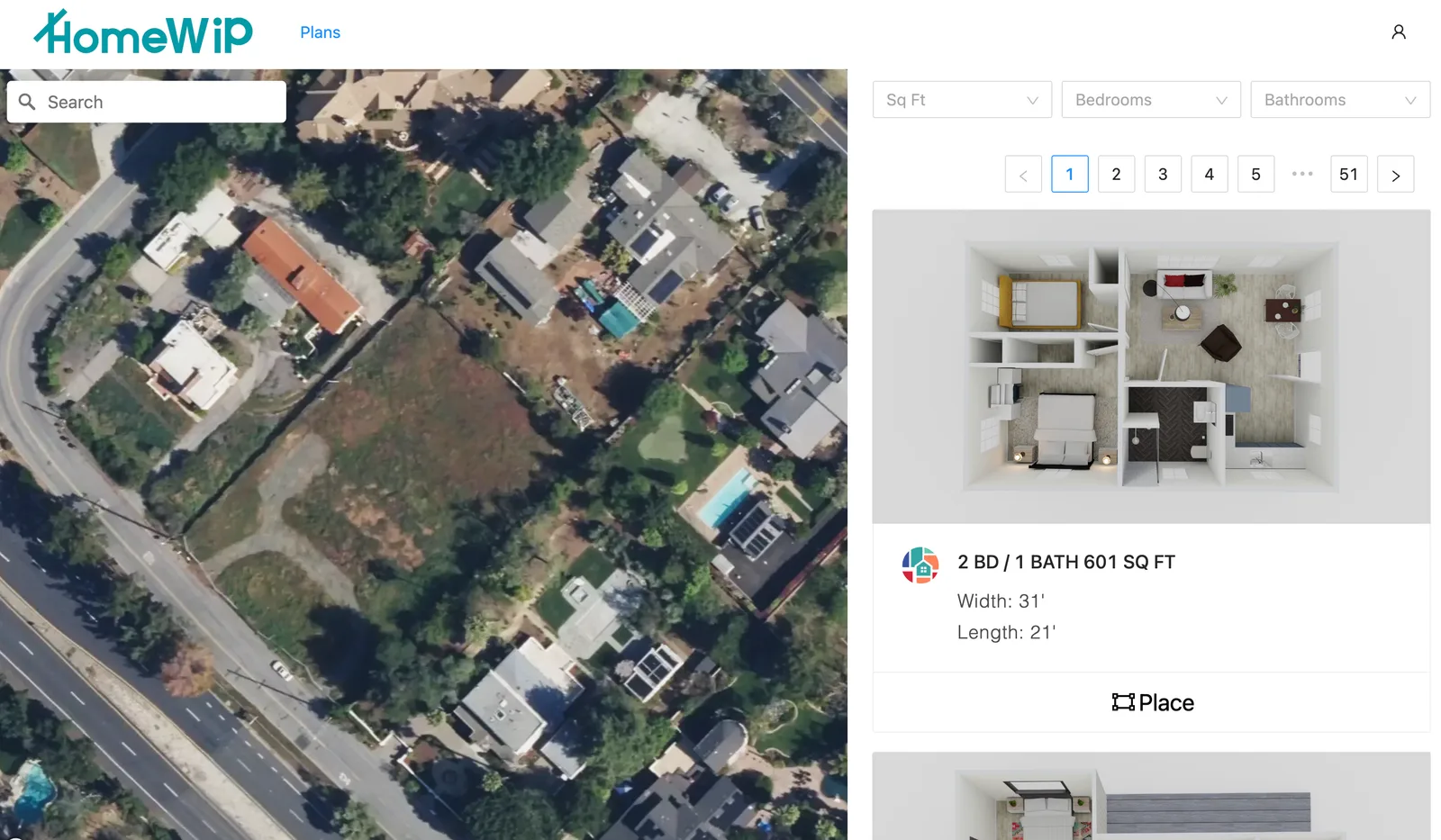
- View pre-designed plans in your backyard
Plans that start close to done
Pick from 700+ pre-designed ADU plans. Fit one to your lot, then check against the city's setbacks.
Built on ADU-only work
Our plans come from 7+ years of ADU-only work and are drawn to be ready for site customization. Your Colorado city's own rules still decide the details.
FAQ
Colorado ADU FAQ
It applies in "subject jurisdictions": towns and cities of at least 1,000 people inside a metropolitan planning organization, plus unincorporated county areas in census places of 40,000 or more inside one. DOLA publishes a map. If your city isn't covered, its own rules apply, unless it has volunteered as an ADU supportive jurisdiction.
The state sets no maximum. Covered cities must allow ADUs between 500 and 750 sq ft, attached or detached, and they can allow larger ones. A city may cap an ADU at the size of the main house. Height isn't in state law, so check your city's zoning code.
No. A covered city can't require you to live in the house or the ADU. It can ask for proof that you live on the lot when you apply, unless you're building the ADU together with a new house. It can also ask for that proof if you apply for a short-term rental license.
Not outright, in covered or supportive jurisdictions. Under C.R.S. § 38-33.3-106.5(4), HOA rules that restrict ADUs in ways the state law prohibits are void. An HOA can still set reasonable restrictions, as long as they don't raise the cost unreasonably or effectively ban the ADU.
State law doesn't set a deadline, and there's no automatic approval if a city is slow. What it does require is staff-level review on objective standards, with no public hearing. Ask your planning department for current review times before you commit to a schedule.
That depends on your city. State law lets cities regulate or ban short-term rentals of ADUs, and "short-term" means under 30 days unless the city defines it differently. Colorado Springs, for example, doesn't allow ADU short-term rentals. Check your city's rental rules before you plan around the income.
Not directly. DOLA's ADU Grant Program pays up to $15,000 per permitted ADU to certified ADU supportive jurisdictions, not to homeowners. CHFA runs interest-rate buydown and credit enhancement programs for low- and moderate-income borrowers in supportive jurisdictions. You apply through a participating lender.
Plan Your Colorado ADU With Pre-Designed Plans
Next step
Pick a plan that fits what your city must allow, then check it against your city's setbacks and parking rules before you apply.
More ADU guides for Colorado homeowners
Colorado ADU law sources
- HB24-1152, signed act (Colorado General Assembly)
- DOLA Division of Local Government: Accessory dwelling units (guidance, toolkit, subject-jurisdiction map)
- CHFA: ADU finance programs
- Mercatus Center: A Taxonomy of State ADU Laws 2025
- City of Colorado Springs: ADUs (Ord. #25-45)
Last verified Sep 29, 2026. [We re-check this page twice a year.]