
A 1,000 sq ft house gives you two bedrooms, a full kitchen, and real living space — without the price tag of a full-size build. Below you’ll find 1000 sq ft house plans in multiple layouts, what they cost to build, and how ready-to-permit plan sets save you months and thousands of dollars.
If you are working on a plan for 1000 sq ft house, you have a lot of decisions to make. Floor plans for 1000 sq ft houses come in many layouts. Most prefabs will be rectangular or square, I shaped or L shaped and at least 12-14 feet wide. You can often maximize your backyard potential with a custom shape.
What ADU floor plan will make the most of your backyard?
Hint: the ones that fit your backyard like a lost piece of a puzzle.
HomeWiP offers ready-to-permit plans in multiple configurations. Each plan set includes architectural drawings, structural engineering, and Title 24 energy calculations — everything your building department needs to start the permit review.

This two bedroom one bathroom ADU design makes efficient use of space with more emphasis on common living area, spacious primary bedroom and a smaller secondary bedroom (that could also be used as a guest room or home office).

This two bedroom one bathroom ADU design has a comfortable living area, two small bedrooms, laundry space and the bathroom with the shower/tub combo. Plus, it has a garage.
This two bedroom two bathroom ADU has a primary en suite bathroom and an additional bathroom with access from the living area.

This detached two bedroom two bathroom ADU has a primary en suite bathroom and an additional bathroom with access from the living area and a spacious laundry area. L-shaped kitchen, living and dining are an open space design.

This two bedroom two bathroom ADU has a primary en suite bathroom and an additional bathroom with access from the living area. The kitchen has an option to be a separate room.

This two bedroom two bathroom ADU has a primary en suite bathroom and an additional bathroom with access from the living area. Both bedroom have walk in closets, and there is an additional flex room that could be used as an office. Can easily be used as a main home for a small lot!
First of all, it is definitely not a tiny home. We will not ask you to think of tennis courts or sport fields to visualize how big is 1000 square feet or what a 1000-square-foot house would look like.
If we are to believe the United States Census Bureau, the median size of a new single-family home sold in 2022 was 2,383 square feet (not to confuse with the average size of a newly built home). The median size of multifamily units built for rent was 1,010 square feet, while the median of those built for sale was 1,311 square feet. As you can see, the market thinks 1000 square feet is enough space for a small family.
If you are looking for a shortcut – browse real estate listings and go to an open house in a newly built apartment complex. They will make great reference points. A real-life apartment will help you better visualize the amount of space than any reference to a volleyball court.
If you cannot go to an open house to see for yourself how big is 1000 square feet, the simplest way to visualize a 1000-square-foot house or apartment is to compare it with a garage. The typical size of a two-car garage is almost 400 square feet. This means a 1000 square feet apartment or house is the size of two-and-a-half two-car garages.
A sophisticated way to get an answer to a question “How big is 1000 square feet?”, is to use our ADU Viewer – an app that will show you in augmented reality how big is 1000 sq ft is – just select a 1000 square foot model. Or any small home of those 50 that we have there.

See below one of the 1000 sq ft models from our ADU Viewer – it actually fits 3 small bedrooms and 2 bathrooms. We are currently building it in San Jose. The beauty of it is – it’s a prefab model that we can ship anywhere!

A family moving an aging parent closer to home needed a wheelchair-accessible guest suite. The lot allowed a plan for 1000 sq ft house, but the location was restricted from all four sides: property line, main house, creek, and a public utility easement. On top of that, the site sat in a Wildland-Urban Interface (WUI) zone and had to be built fire-resistant.
Wheelchair access throughout. Vaulted ceilings in the living room. Deck facing the creek with a see-through fireplace. Matching the look and style of the main house. WUI fire-resistance requirements. One lucky break: two hydrants within 400 ft on both sides of the property.

A bigger bathroom accommodates wheelchair turnaround, has both a shower and tub, and houses the laundry. The living room features vaulted ceilings. The fireplace is surrounded by two windows, with a nearby exit to the deck facing the creek. The initial design had walk-in closets in both bedrooms; the homeowners opted for a larger one in the primary bedroom and a smaller guest room. Built with prefab steel-frame wall panels and completed in 2023.


If you’re hoping to house a larger family, this layout will cleverly serve the purpose. It’s like a regular home layout that fits into a much smaller space! Here, contemporary charm meets the timeless beauty of light oakwood. So, this is a space that’s big on style and functionality.
What does this 1000 sq ft plan look like?
Living Room
The unique part about this floor plan is that it dedicates a separate room for the living area. This contains ample seating space and an entertainment complex.
Kitchen and Dining
The kitchen and dining areas are blended together in an open space in this kitchen. There’s also a small space you could repurpose as a pantry!
Bedrooms
The two bedrooms in this floor plan are nice and spacious, with room for beds, bedside tables, and a dresser. Their windows—and window treatments—are also bigger than those you’d see in regular mother-in-law suites. The two rooms are joined with individual closet spaces for both rooms.
Bathroom
The bathroom for this suite is a tranquil heaven—especially with its powder blue hues. It has a bathtub and shower cubicle (a rare happening in compact spaces) and a vanity with ample countertop space. The toilet is segregated with a narrow wall. At the same time, one corner provides room to set up a laundry.
Average construction costs for 1,000 square feet house plans range from $250,000 to $450,000 depending on your location, site conditions, and finish level.
$250–$450 per sq ft in most California markets, or roughly $250,000–$450,000 all-in. This includes foundation, framing, plumbing, electrical, HVAC, finishes, and permit fees. Urban areas with complex utility connections push toward the higher end.
$150–$250 per sq ft, or $150,000–$250,000 total. The unit is built in a factory, trucked to your site, and craned into place. Faster timeline (4–6 months vs. 8–12 for site-built), but you’ll need crane access and a prepared foundation. This also means you need to add cost for transportation of unit to site, sale tax, traffic control permit and crane rental.
Custom architectural plans for a 1000 sq ft house typically run $15,000–$30,000 and take 3–6 months. That’s before you submit a single permit application. Ready-to-permit plans eliminate this cost entirely — the engineering is already done, and you skip straight to the permit application.
A ready-to-permit plan set is a complete package of construction documents that your city’s building department can review immediately. It includes architectural floor plans and elevations, structural engineering calculations, Title 24 energy compliance reports, and site-adaptation guidelines.
Without it, the typical timeline is: 4–8 weeks for schematic design, 4–6 weeks for design development, 4–8 weeks for construction documents, then 2–4 weeks for engineering. That’s 3–6 months before you even apply for a permit.
With a ready-to-permit plan, you skip straight to the permit application. Your designer adapts the plan to your specific lot — adjusting setbacks, utility connections, and site orientation — but the core design and engineering are already done. Most homeowners save $15,000–$30,000 in design fees and 3–5 months of timeline.
We already have a 2-bedroom, 2-bathroom, 1000 sq ft plan pre-approved for San Jose — meaning it’s been reviewed and accepted by the local planning and building department. That means super-fast permitting. Can you use this plan in a different city or county? Yes — we localize the engineering for your jurisdiction’s requirements, but it’s still faster than starting from scratch.
We have a 2 bedroom 2 bathroom 1000 sq ft plan pre-approved for San Jose. What does it mean? Super fast permitting. Why? It has already been checked by the local planning and building department.
Can you use this plan in a different City or County? Yes, we will need to localize engineering for your jurisdiction’s requirements. But it is still faster than starting from scratch.
What makes it even faster to build? It’s engineered for prefabricated panelized construction.
Can it be a small starter home on a vacant lot? SURE.


Requires a bigger lot since all 1,000 sq ft sit on the ground. Typical footprint: 25 ft × 40 ft or 30 ft × 34 ft. Easier to build, no stairs, fully ADA-adaptable, and less expensive per square foot. Best for wide, flat lots with generous setbacks.
Half the ground footprint — fits on tighter urban lots and leaves more backyard space. Typical footprint: 20 ft × 25 ft. Living area and kitchen downstairs, bedrooms upstairs. Costs more due to stairs, structural requirements, and a second-floor bathroom. Best for narrow lots or when you want to preserve yard area.
Both configurations work within most ADU ordinances. California’s statewide ADU law permits accessory dwelling units up to 1,200 sq ft, so a 1000 sq ft plan gives you room to breathe within the limit whether you build up or out.
Start with three measurements: your lot width, the setbacks your city requires, and the buildable area that’s left. A single-story 1000 sq ft floor plan needs at least a 25 ft × 40 ft buildable zone. If your space is smaller, a two-story plan halves the footprint.
Next, think about occupancy. A rental unit benefits from two bathrooms and a bedroom layout with exterior windows in each room. A family unit might prioritize a larger kitchen and open living area. A work-from-home layout trades the second bedroom for an office with a separate entrance.
Finally, check your city’s ADU rules. Some jurisdictions have height limits that rule out two-story plans, or parking requirements that affect foundation placement. HomeWiP’s plan pages include setback diagrams and city-specific notes to help you verify fit before you commit.
Have a look at our design of a 1000 square foot house pre-approved as a master plan in San Jose. A property of this size will include at least two bedrooms, a kitchen, two bathrooms, and a living room, making it fit for a family of four.
Remember, each home’s configuration may be different. For example, some properties might have a separate laundry room or a third bedroom. While others may situate the laundry in the kitchen with the dining and living room joined to create an open floor layout.
If you want more bedrooms in a 1000 sq ft house, you must compromise with smaller spaces or beds. After all, not everyone needs a king-sized bed. Legally, a bedroom must be at least 70 square feet in California and typically at least 7 feet in any dimension.
Smaller bedrooms can benefit from larger windows for larger living. Smaller spaces also tend to be multifunctional – a Murphy bed can turn a home office into a guest room in a second.


Not every real estate listing guides you about the exact square footage of a particular living property. So, it is best to learn how to measure the area yourself to make sure your decision to buy the home doesn’t bring any regrets down the lane. The best part? You only need a pencil, a piece of paper, and a measuring tape.
Start by drawing rough outlines of each room. Proceed by measuring the length and width of every room, label the measurements on the outline, and multiply them. The results will give you the square footage for each room. Add together all the values, and the final outcome will be the total square footage of the entire property.
Tip: Remember to include the outdoor space. In warmer climates, you may spend a lot of time outdoors, so the number of square feet of a patio really matters. It is like adding extra space to the total square footage of your apartment or house.
Best way to fit more in 1000 square feet? Eliminate hallways!


We’ve talked about the main rooms that are most likely to be found in a 1000-square-foot property. Now it’s time to answer questions and ambiguities like ‘What’s the size of each room?’, ‘Which kind and size of furniture will fit in?’, and so on.
Depending on the layout, the dining and living might be the same size as the bedroom, or the bedrooms may be larger than the main living spaces. Whatever the floorplan, at least one bedroom will be large enough to fit a king bed, and the lounge will accommodate a sofa, a few accent chairs, and 2 to 3 tables (console, end, etc.). The dining area will be spacious enough for a kitchen table with 4 chairs.
Apart from essential items, a 1000-square-foot home can accommodate sizeable accessories, such as bookshelves, dressers, and TV tables.

Want to see the images of three bedrooms and two bathrooms in a 1000 sq ft ADU? This prefabricated steel-frame panel design has been permitted in San Jose. Bedrooms are compact but functional, and the open living/kitchen area keeps the plan from feeling cramped.
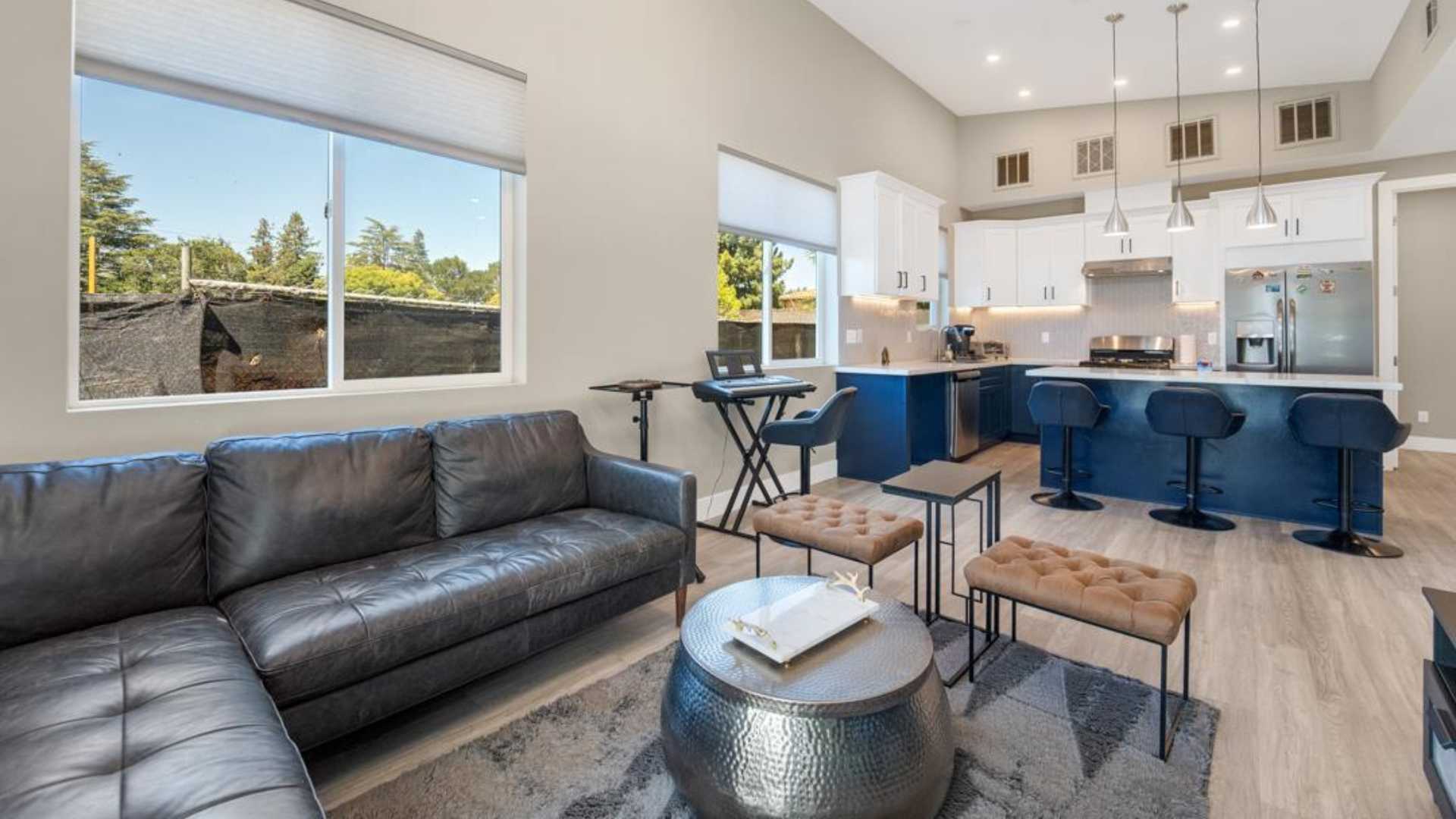


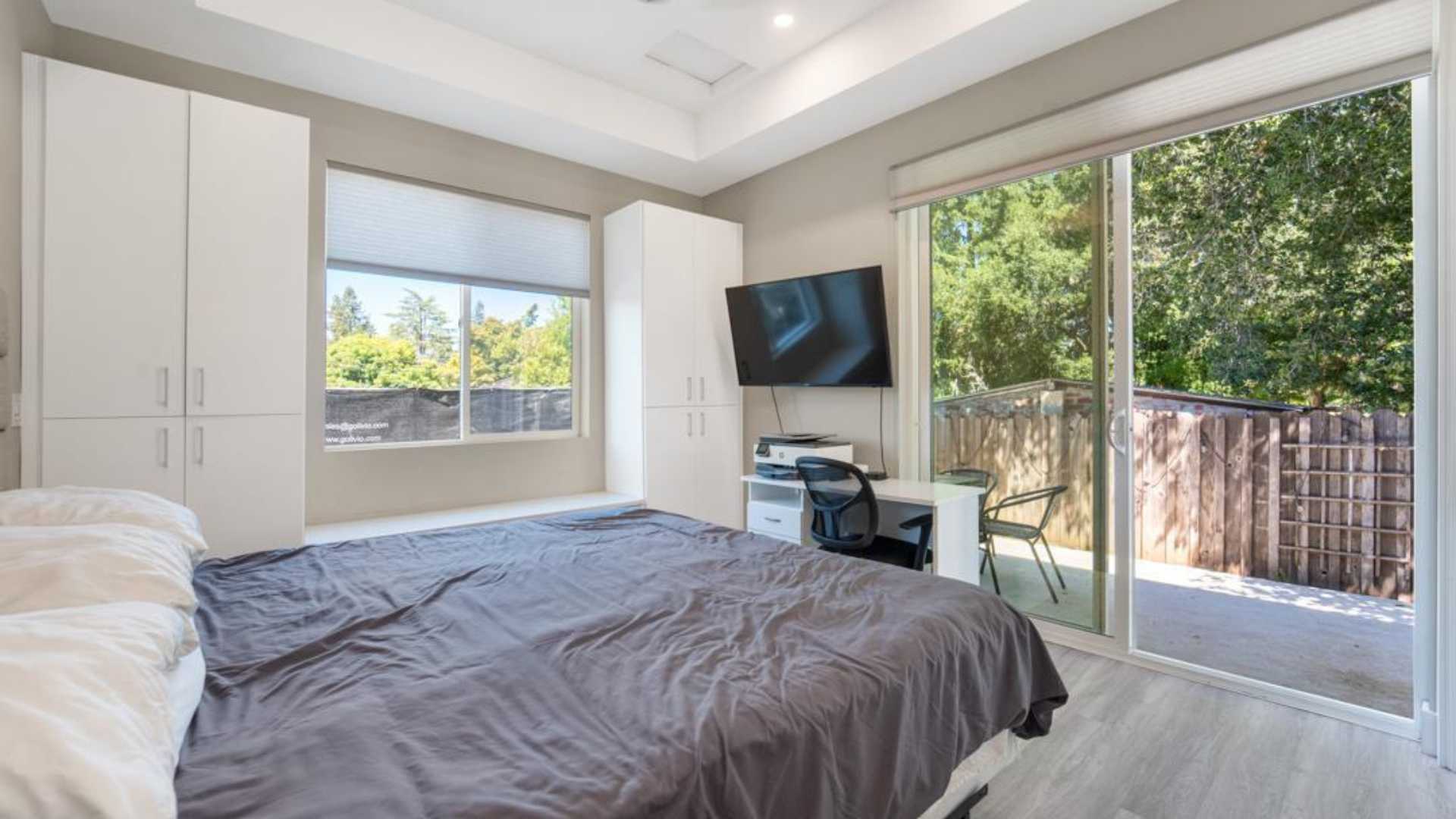

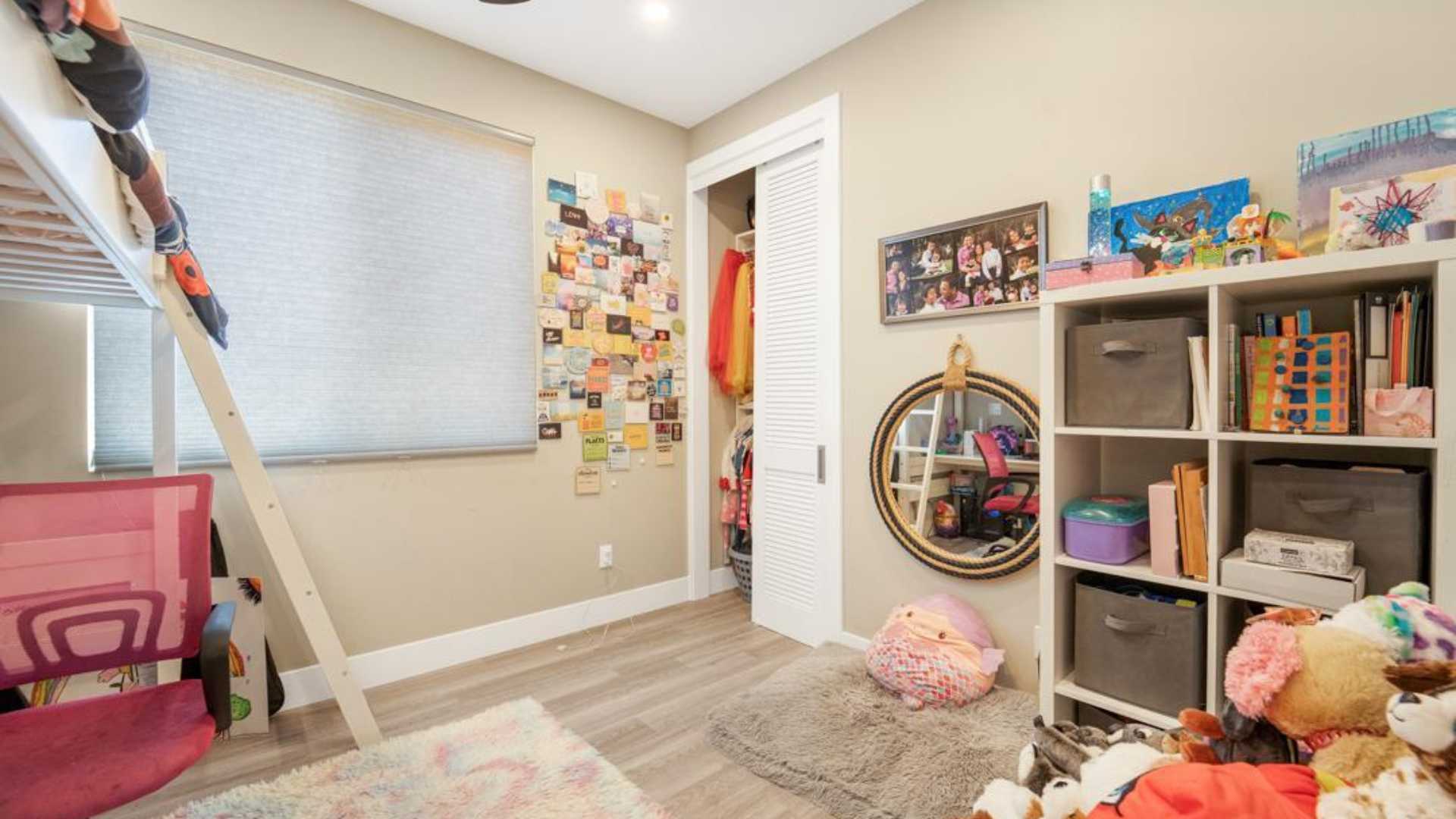

The answer can be both yes and no. Each apartment or house is built with a distinct layout. The rooms are sized differently, and the interior may or may not include features like floor-to-ceiling windows, a firepit, or an open floor plan that increases the value of a home and expands the space visually. The land on which a house sits also impacts how spacious the property appears. Some might have a deck or backyard, while others may skip out on this part entirely.
Apart from the way a 1000-square-foot apartment or house is constructed, considering the decor and furniture you’ll bring in can also help. Will you use light window treatments? Is your furniture multi-purpose and streamlined? Does your aesthetic include mirrors and light colors?
Once you’ve done a detailed walkthrough of the home, it’ll become much easier to see how big 1000 square feet is and decide whether it meets your family’s needs comfortably.
A 1000-square-foot apartment offers plenty of room — or maybe a bit too extra — for a single person. Of the 368,000 apartments completed in 2022, 38% had two bedrooms (Census again). Ideally, such houses fit a couple looking to start their life together. Empty nesters planning to downsize to a smaller apartment will also find this size perfect.
Additionally, if you’re a couple with an infant or two children under 8 (or even two teenage kids), a 1000 square feet apartment will do great for a pleasant living without crowding each other.


Investing in a large house may seem like a priority. Still, if you compromise a bit on the square footage, the incredible benefits of a 1000-square-foot apartment will make up for it. Do you know that more and more people are getting rid of their dedicated dining rooms for a more spacious living area?
You’ll have extra space for storage. If, for example, you decide to use the second room as a guest room or an office, the closet and bathroom vanity can be used to store your personal items. And, of course, you can always save a cabinet or two for any visitors you’ll have.
You’ll have to put in less effort for cleaning and maintenance. Creating and following a cleaning schedule in a smaller home is much easier and requires less time. Upkeep and maintenance will also be more affordable than a larger home, be it a leaking pipe or broken tiles.
You can save on utility costs. A smaller home requires less energy to maintain a well-balanced temperature. Practices like keeping the curtains closed in winter can add to the savings.
You can create a cozy and homely space. Designing and transforming a 1000-square-foot house into an inviting and unique home is fun and straightforward — especially when compared to properties with large rooms that feel empty and impersonal.
1000-square-foot apartments can easily start to feel cramped and cluttered. The key is to decorate the space smartly and maintain good hygiene and organization. In a small space, every design element counts.
There’s that! We hope you’ve fully understood and visualized how big 1000 square feet is when applied to homes and apartments. Remember, a size that is perfect for one might not be the best for someone else. It all comes down to your personal needs and preferences.
When broken into three to four rooms, a 1000-square-foot home becomes a very comfortable and cozy space for many — and pairing this with intelligent design solutions and good organization will make the interior much more aesthetic and functional. So, if you plan on purchasing or building a property of this size, follow all the tips and tricks for making a small home appear bigger. Don’t forget to let us know how your experience is coming together in the comments below!
Your Future ADU in Augmented Reality – Now in Your Backyard, with the help of your (or your friend’s) iPhone or iPad. See for yourself how big IS 1000 square feet.