
Augmented reality building makes property owners confident when starting construction projects. AR brings houses to life before construction begins, before any money is spent on design and permits.
Let us explore the power of Augmented Reality in design and construction of smaller homes. In recent years, technological advances have reached the construction industry.
Today, augmented reality technologies are available without AR hardware. No smart glasses or AR headsets are needed – use your iPhone or iPad to see a digital model in the physical world. With construction costs sky-high, immersive technology gives homeowners a better understanding of the construction plan.
In our practice, the best value comes during the planning phase – understanding the scale and how much space the new dwelling will take up in your backyard. How would it look next to the neighbor’s garage? Will the oak tree be an issue?
Consider a homeowner adding an attached ADU to their house. Without visualizing the proposed extension in the actual space, the homeowner and the contractor proceeded with the construction based solely on architectural plans. However, once the building was completed, it became apparent that the new extension blocked natural light from entering the existing rooms, creating a dark and unwelcoming atmosphere. If the homeowner had been able to visualize the extension in AR before construction began, they could have adjusted the design to ensure that it preserved the existing home’s natural light and overall aesthetics.
Another example is considering the exterior look of the ADU – should it be the same as the main house? Or would a more contemporary look work?
Instances like these highlight the importance of leveraging technologies like augmented reality to mitigate risks and avoid costly mistakes during home design and construction.
Augmented Reality (AR) enhances the home design experience. It lets us visualize virtual homes in the real-world environment, right in the backyard. It eliminates surprises and reduces the likelihood of change orders.
Homeowners can give feedback to designers and architects in real time.
AR empowers users to make informed decisions before construction starts, reducing the need for costly change orders during construction.
We have all heard horror stories about construction gone bad. Here are some standard complaints:
Ensuring client satisfaction can be challenging when there’s a disconnect between the client’s expectations and the final outcome. Addressing these challenges is crucial for improving the home design and construction process’s efficiency, transparency, and overall success. The use of AR lets you eliminate potential hazards before the actual construction starts.
Visualizing virtual homes in real-world environments through augmented reality (AR) offers numerous benefits, enhancing the home design and construction process.
AR allows users to superimpose virtual home designs onto the actual physical space where the construction will occur. This provides a realistic sense of how the structure will fit into its surroundings.
Users can better understand the spatial relationships between various elements in the design, such as room sizes, furniture placement, and overall flow. This improves the overall design decision-making process.
AR enables architects, builders, and homeowners to consider site-specific factors, such as sunlight exposure, shadows, and views. The design is optimized for the unique characteristics of the location.
Even someone building a house for the first time can receive immediate visual feedback on design choices, allowing for on-the-spot adjustments and reducing the likelihood of misunderstandings or misinterpretations.
Visualizing the virtual home in the actual environment can identify potential issues early, minimizing the need for costly and time-consuming change orders during construction.
Homeowners with zero construction experience can actively participate in the design process by visualizing and experiencing the virtual home in their own space. This reduces the chances of post-construction disappointment. Imagine the horror of regretting a $150,000 purchase…
The ability to identify and address design issues early in the process means time and cost savings. It reduces the need for revisions and adjustments during construction.


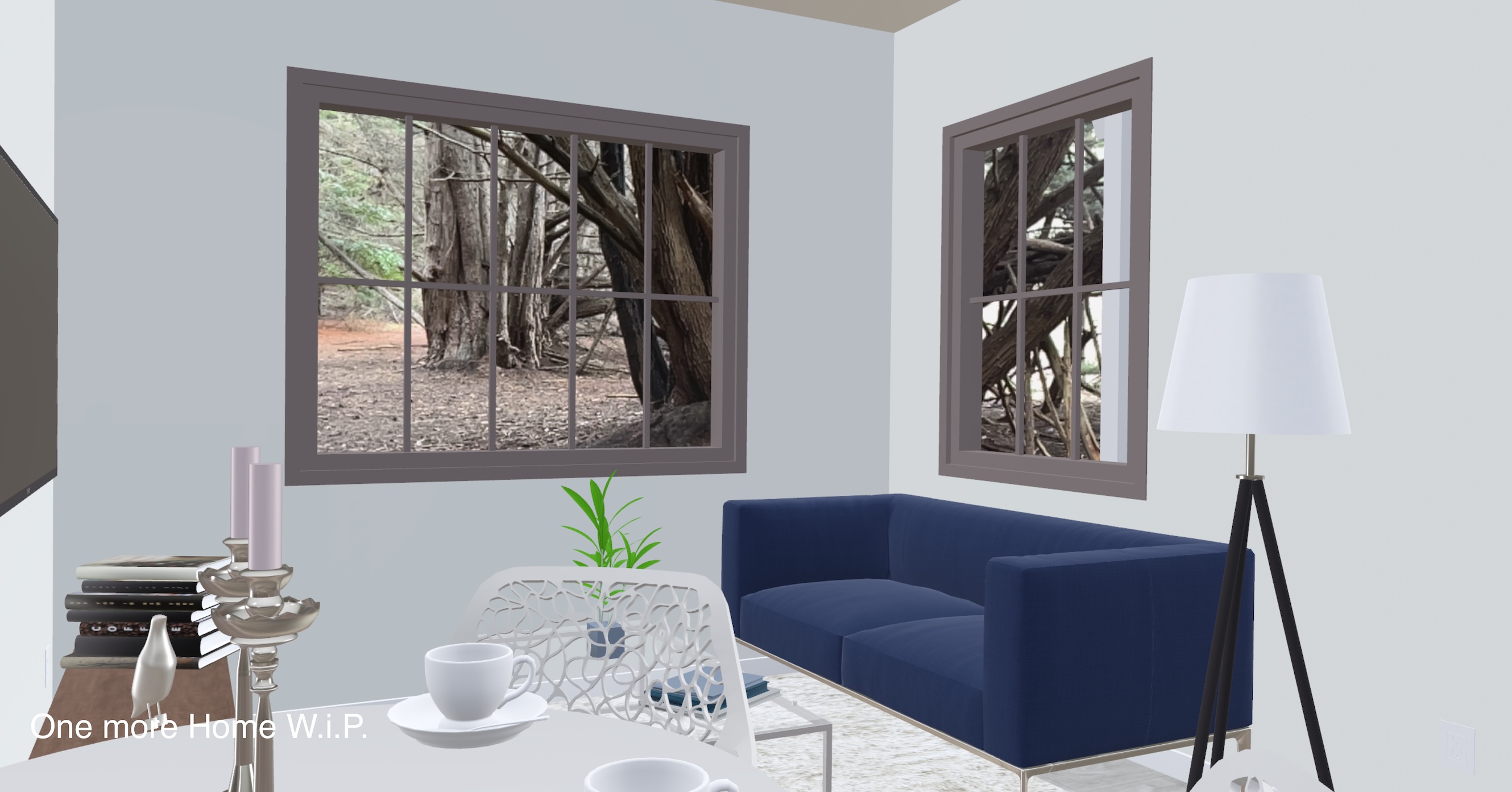

Every homeowner wants to know how much money they need for ADU.
Cost estimation is only possible with a detailed project’s scope. How can you determine the budget before communicating what you want built? What can you build? What will fit in your backyard?
With current technology from Apple, anyone can visualize what an ADU may look like on their property. This type of visualization used to be possible only for new luxury residences. Today, pre-designed options are available for free for any homeowner or builder. The immersive experience is free before your backyard becomes a construction site.
Let me introduce our ADU Viewer, an augmented reality app in Appstore.
Select an ADU, select its location, push a button, and see it through your iPhone or iPad. Voila! No technical expertise is needed.
Too big? Delete and try a smaller one. Have space for a bigger house? Can you add some square footage? Hit “delete” and try a bigger accessory dwelling unit. We offer 58 AR models of different architectural designs for you to browse.
Take a better look – do you like the size of the bathroom and the location of the laundry? Something to discuss with your designer.
The ADU Viewer allows you to place the virtual (AR) version of an ADU in a backyard for some real-life magic:
Are you a homeowner considering an ADU? Take some pictures and show them to your contractor.


A successful construction project consists of multiple aspects. The activities during the pre-construction phase guarantee that your expectations are satisfied and that the project is completed within the budget and schedule decided upon.
Construction projects are notoriously hard to estimate.
The project scope precisely defines what the project is (a detached or attached accessory dwelling unit), the lot size and structure, the limitations associated with the project, and the objectives required for the project’s success. ADU Viewer helps you clarify your vision. Design teams receive real-time information and feedback on the original design based on trying a virtual model on a future building site.
Once you have determined the scope of work, you can move on to cost estimating.
Setting a budget in the pre-construction phase after discussing the project scope gives homeowners an accurate idea of what they can expect to spend. Contractors use multiple strategies to establish an estimate, such as:
Clients can then decide the quality of materials that can be used and the luxe features that can be included in the final design.
There are still some unknowns until the construction drawings are prepared and the permit issued. The homeowner may add a skylight or a loft during the design phase. The structural engineer may call for a different type of foundation. The energy consultant may specify the verification of measures. The plan checker may ask for fire-rated walls or tempered windows. This will impact the contractor’s final bid.
However, an experienced professional will give you a reasonably accurate idea once they see your site and future ADU.
As the name suggests, the pre-construction phase includes everything that goes on from the beginning of the project to the first day of construction. It provides you with preliminary planning, construction drawings, and a strategic plan for the project.
Augmented reality experiences allow the entire construction team to see the scope of work visually presented on a mobile device.
Make our ADU Viewer a part of your process, and build an ADU faster, to budget, and on schedule.
